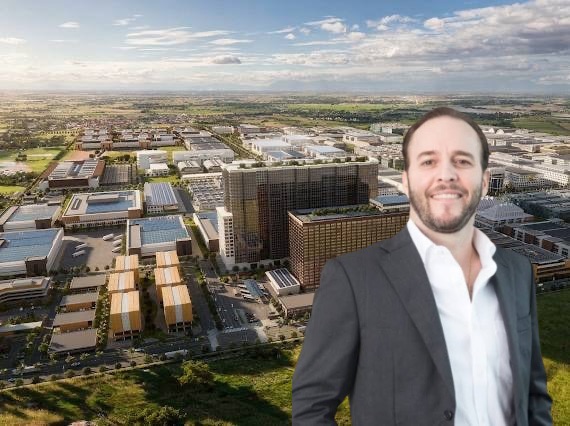
Aboitiz Estates is focusing on integrated industrial platforms as global supply chain realignments drive rising demand for resilient, multi-country operations, according to company leadership.
Rafael Fernandez de Mesa, president and chief executive officer of Aboitiz Economic Estate and Aboitiz Land, said the Philippines is starting to benefit from the ongoing reconfiguration of global supply chains, as companies move away from pure cost efficiency toward resilience and redundancy.
“They’re optimizing for resilience and redundancy, and that’s driving a multi-country approach to supply chains,” he said, noting that the shift is translating into sustained industrial activity across Aboitiz Economic Estates.
In response, the company has repositioned itself beyond traditional land development, building what it describes as an integrated industry platform. Rather than simply offering land, Aboitiz Estates aims to provide a full operating environment designed to support locators from setup through scale.
“We deliberately moved beyond being a traditional developer… providing not just land, but a full operating environment,” Fernandez de Mesa said, adding that in an increasingly fragmented global landscape, execution has become a critical differentiator.
Central to the strategy is reducing friction and de-risking operations for investors. Fernandez de Mesa said foreign firms are now prioritizing locations that enable faster and more predictable business setup, with minimal disruption.
“Locators are looking for more than just land,” he said. “They want environments where they can move from decision to operations with certainty, speed, and minimal friction.”
To meet these expectations, Aboitiz Estates is investing in integrated infrastructure, utilities, housing, and workforce support—components it sees as essential to attracting and retaining foreign direct investment.
Looking ahead, Fernandez de Mesa described the outlook as “mixed but constructive.” While residential demand faces affordability pressures, he said industrial fundamentals remain strong, underpinned by structural shifts in global trade and manufacturing.
“The shift is clear. It’s no longer just about land, but about supporting operations at scale,” he said, adding that platforms anchored on execution and real economic activity are best positioned to outperform over the next five years.