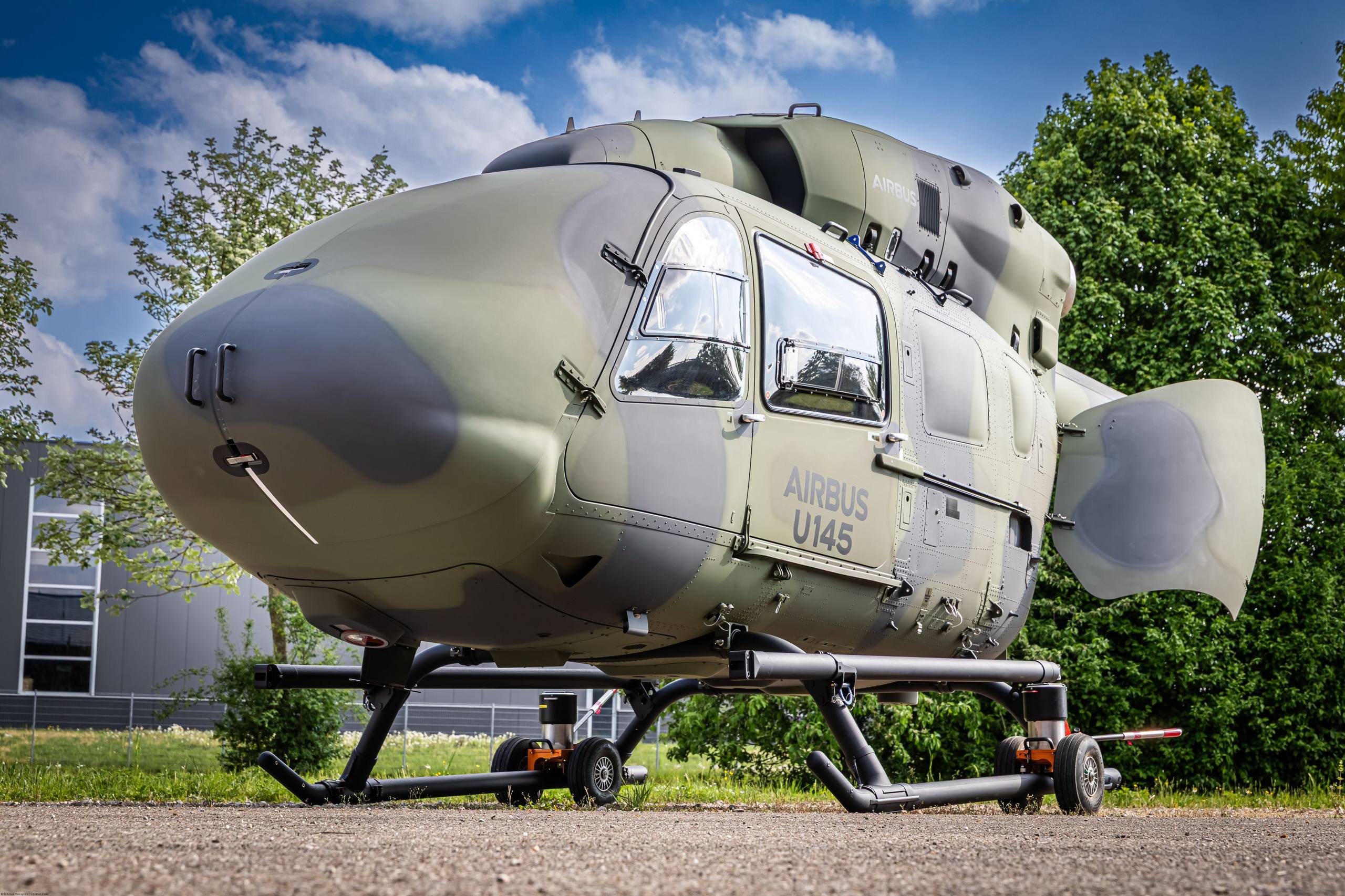
At the ILA Berlin Airshow, Airbus Helicopters launched the U145, an uncrewed version of its widely used H145 model, displaying a full-scale mock-up of the new aircraft. The addition expands the company’s portfolio of both crewed helicopters and uncrewed aerial systems (UAS). A first flight with a safety pilot aboard is targeted for late 2026, with commercial and operational rollout set for the early 2030s.
As the second crewed model converted for autonomous operation—following the VSR700—the U145 keeps the H145’s robust airframe, power, and load capacity but removes the cockpit. It features specialized sensors and artificial intelligence for full autonomy, plus design changes like a nose door, foldable loading table, and reinforced floor optimized for cargo work. With a maximum take-off weight of 3,800 kg, it is built to handle civil and military tasks, from heavy logistics and disaster response to surveillance, firefighting, and teaming with other aircraft; Airbus is collaborating with partners including MBDA to broaden its capabilities.
In the United States, Airbus and its partners are offering the MQ-72C—an autonomous variant of the UH-72B Lakota—tailored for the U.S. Marine Corps. The broader H145 family counts over 1,800 units globally, recording more than 8.5 million flight hours, and is recognized for low noise and low emissions. Airbus has also standardized the naming of all its UAS products to align with its existing aircraft lineup.
The U145 bridges proven, reliable helicopter technology with autonomous systems, opening new possibilities for safer, more efficient operations in high-demand or high-risk roles, while strengthening Europe’s and allied nations’ capabilities in uncrewed aviation.