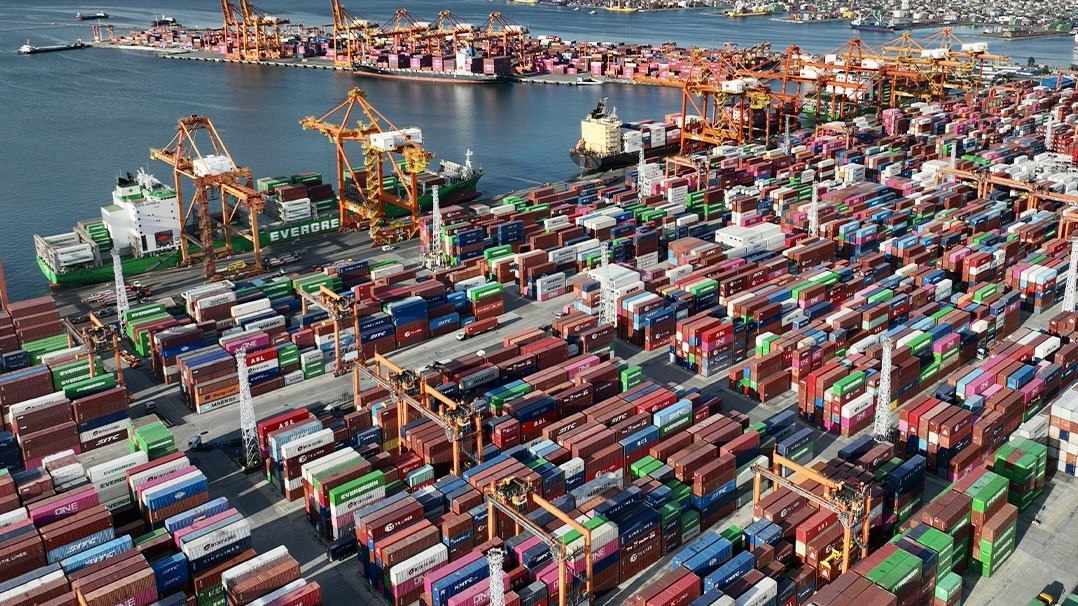
The country’s persistent port congestion stems less from empty containers than from thousands of overstaying laden boxes occupying valuable terminal space, according to the Association of International Shipping Lines (AISL), which is urging faster action from the Bureau of Customs (BOC).
AISL President Patrick Ronas said unclaimed import containers have become the main bottleneck in the country’s major ports, preventing terminals from clearing space for incoming cargo and disrupting the movement of empty containers needed by exporters.
“The congestion starts with the laden containers. If those boxes do not move out of the terminals, the space cannot be freed up, and the movement of empty containers is also restricted,” Ronas said.
He said terminal operators are awaiting Customs’ approval for a mechanism that would allow overstaying laden containers to be transferred to off-dock depots or other storage facilities, freeing up capacity inside the ports.
Ronas cited estimates showing that Asian Terminals Inc. (ATI) alone has about 6,500 overstaying laden containers occupying its yards.
The issue has broader economic implications. Congested ports force vessels to wait between four and 10 days for berthing, raising shipping costs that eventually ripple through supply chains. Delays also defer government revenue, as duties and taxes on unclaimed cargo cannot be collected until shipments are processed.
“We need the go signal from Customs to move these boxes out. The terminals and the BOC need an efficient arrangement so that these containers can be transferred and terminal space can be recovered,” he said.
The comments come as industry stakeholders seek structural solutions to recurring congestion episodes instead of temporary fixes focused on empty containers. Clearing long-idle import cargo would not only improve terminal productivity but also restore container availability for exporters, ease vessel turnaround times and strengthen the efficiency of the country’s trade gateways at a time of growing cargo volumes.