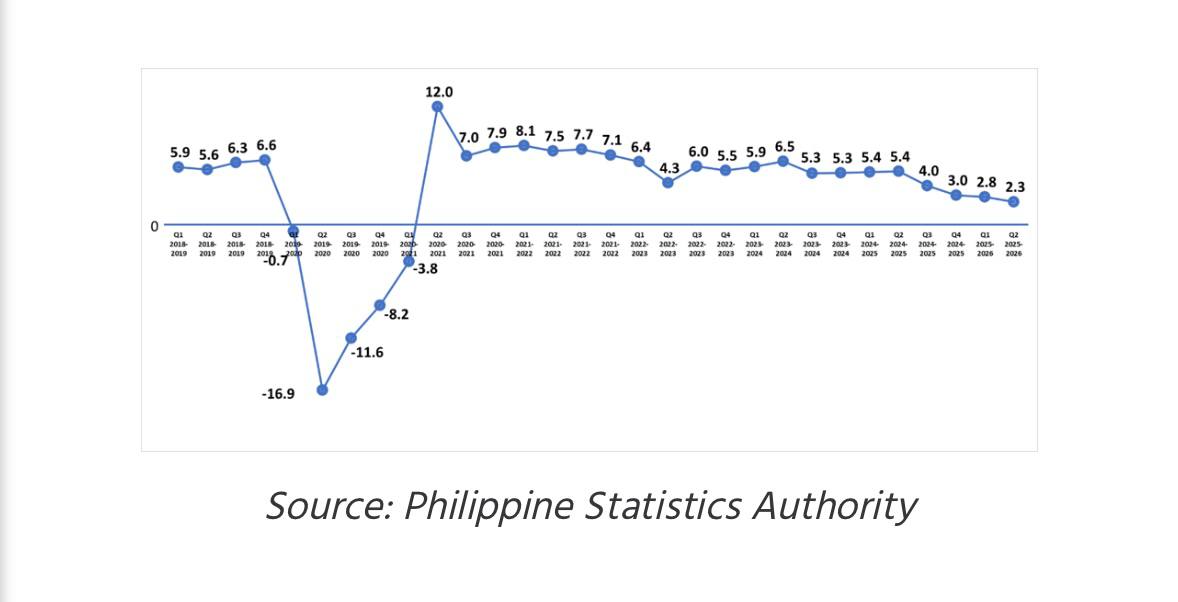
The economy recorded a 2.3 percent expansion in the second quarter this year, according to data released by the Philippine Statistics Authority (PSA). The performance fell short of market expectations, slowing from the 2.8 percent growth recorded in the first quarter of the year. Excluding the severe disruptions caused by the COVID-19 pandemic, this represents the softest quarterly growth since the fourth quarter of 2009.
For everyday Filipinos, the slowdown signals a challenging economic climate ahead. Household consumption growth eased slightly from 3.0 percent in the previous quarter to 2.8 percent, reflecting tighter family budgets as households adapt to broader cost pressures. At the same time, factory and industrial output contracted by 2.4 percent, while services sector growth moderated to 4.5 percent, trends that typically point to weaker hiring activity and reduced wage growth. The general economic backdrop continues to be weighed down by higher energy prices caused by ongoing conflict involving Iran, alongside the fallout from a major domestic corruption scandal.
The economic print highlights significant contractions in key investment sectors alongside pockets of stability. Fixed investment experienced its sharpest drop in more than five years, contracting by 13.7 percent compared to a 2.5 percent decline in the first quarter, signaling reduced business confidence and delayed expansion plans. Conversely, the agricultural, forestry, and fishing sector provided a rare bright spot by rebounding to 2.0 percent growth after falling 0.3 percent in the previous period, helping to stabilize food supply chains.
Government interventions and international trade helped cushion the broader economic slide. Public spending increased by 8.3 percent during the quarter, up from 4.8 percent in the first three months of the year, as state spending was mobilized to counter weak private sector activity. Net trade also provided support, driven by a 12.2 percent surge in exports alongside a modest 5.5 percent rise in imports. Despite these stabilizing factors, the PSA’s second-quarter GDP print remains well below the government’s official full-year growth target of 5.0 to 6.0 percent.