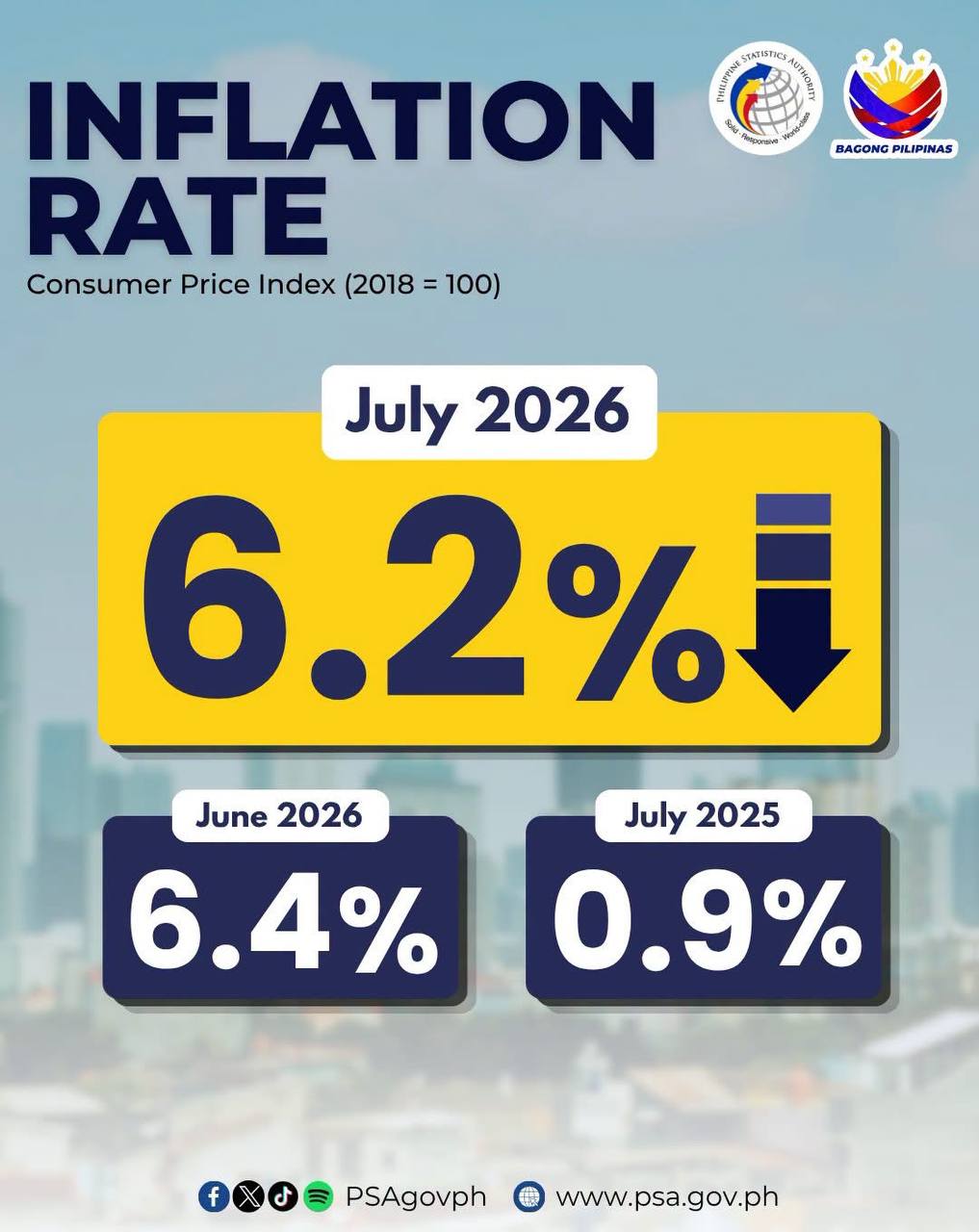
Philippine inflation slowed for a second straight month in July, reinforcing expectations that price pressures are gradually easing even as households continue to grapple with elevated costs for food, electricity and transport.
Data released by the Philippine Statistics Authority showed headline inflation eased to 6.2 percent in July from 6.4 percent in June, landing comfortably within the Bangko Sentral ng Pilipinas’ forecast range of 5.6 percent to 6.6 percent. Average inflation for the first seven months settled at 5.0 percent, still well above the central bank’s target but signaling that the worst of this year’s price surge may be passing.
The moderation was driven mainly by slower increases in transport costs, where inflation decelerated to 11.9 percent from 12.8 percent in June as fuel price pressures eased. Softer increases in education services and restaurant and accommodation prices also helped temper overall inflation.
The latest reading suggests inflation is becoming less broad-based, with some of the biggest pandemic-era and supply-driven price shocks beginning to fade. Yet the decline remains gradual, highlighting that consumers have yet to see a meaningful reprieve from high living costs.
Food inflation held steady at 5.3 percent, underscoring the persistent pressure from staple goods. Cereals, led by rice, remained the single biggest driver of food inflation, accounting for nearly three-fourths of the increase, followed by fish and vegetables.
Housing and utility costs continued to climb, with inflation for electricity, water and fuel inching up to 8.2 percent from 8.1 percent, reflecting the lingering impact of higher power and energy prices.
Meanwhile, core inflation, which strips out volatile food and energy items to better capture underlying price trends, eased to 4.2 percent from 4.4 percent. The slowdown suggests demand-driven inflationary pressures are also beginning to moderate.
Food and non-alcoholic beverages remained the biggest contributor to headline inflation, followed by housing and utilities, and transport.
The July reading strengthens the case that inflation is on a gradual easing path. However, the pace remains uneven, with supply-side risks and volatile global commodity prices continuing to cloud the outlook for the rest of the year.
Meanwhile, the inflation rate for the bottom 30 percent of income households edged up to 8.2 percent in July from 8.0 percent in June, underscoring how lower-income families remain disproportionately affected by rising food, electricity and fuel costs even as headline inflation continues to ease. From January to July, inflation for this income group averaged 5.9 percent.