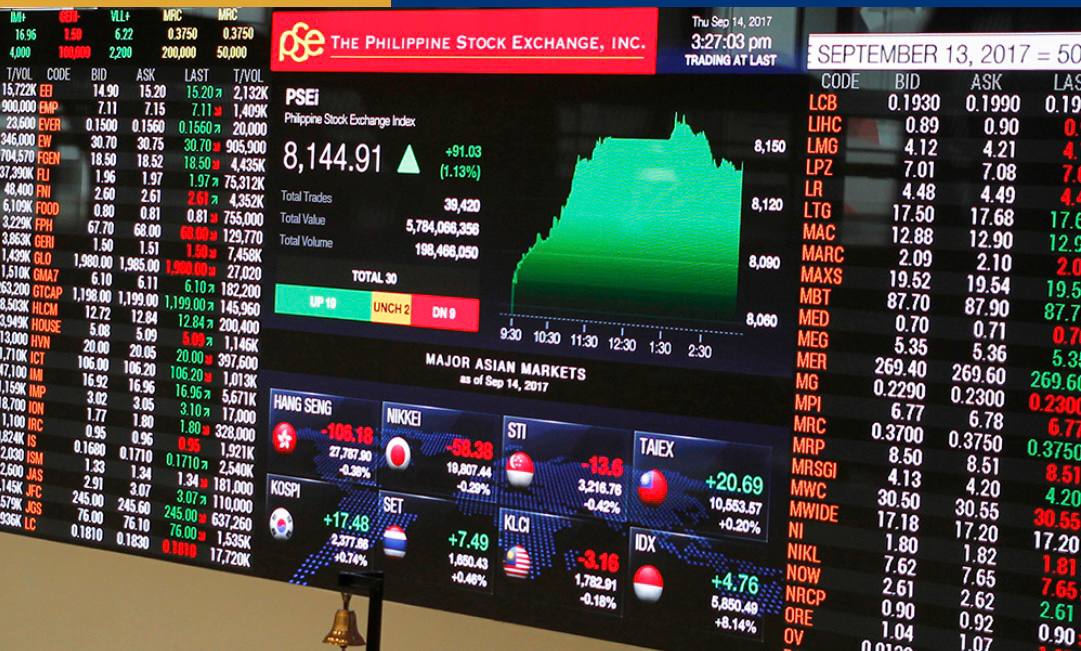
Aboitiz Power Corporation and Synergy Grid and Development Philippines Inc. may qualify for the Philippine Stock Exchange index or PSEi by February next year, following the implementation of updated liquidity and listing rules. For the upcoming rebalancing next month, stock brokerage firms Abacus Securities Corporation and COL Financial Group Inc. project that west zone water concessionaire Maynilad Water Services Inc. will take the place of Converge ICT Solutions Inc. in the 30-company benchmark index, noting that Maynilad’s market value is roughly twice that of Converge.
Abacus Securities said that more adjustments are expected during next year’s rebalancing cycle. Aboitiz Power meets requirements under a new exception to the 20 percent free float rule, which now allows entry into the index with a minimum 15 percent public share ownership and a market capitalization of at least 250 billion pesos. COL Financial analyst Paolo Miguel Manansala also cited Aboitiz Power as a strong candidate, and noted it could replace online gaming firm DigiPlus Interactive Corporation, which faces possible removal from the index next year. DigiPlus may fall below eligibility thresholds as higher stock prices recorded in 2025 are no longer factored into calculations for its average trading value and market standing.
Synergy Grid meanwhile is seen as a likely replacement for China Banking Corporation, which currently does not meet updated liquidity standards or median trading activity requirements. Abacus added that Aboitiz Equity Ventures Inc., San Miguel Corporation and China Banking Corporation all face risks of exclusion under the stricter liquidity rules, though they have until the end of December to boost trading activity and retain their spots before the new rules take effect in February.
Many investors are also watching the possible entry of Mynt Inc., the parent company of financial technology platform GCash. If Mynt proceeds with its planned initial public offering this October, the earliest it can be considered for inclusion is the August 2027 rebalancing, due to a required minimum six-month trading track record. The firm is currently offering only 12 to 13.8 percent of its shares to the public, falling short of the 15 percent minimum free float requirement. It has until the end of June next year to raise this ratio, a timeline that lines up with the end of majority shareholders’ lock-up period, though market capacity to absorb the additional shares needed to reach the threshold remains uncertain.