The US and the Philippines are widening their alliance beyond military cooperation, with infrastructure, technology, supply chains, and health security emerging as new pillars of a partnership increasingly shaped by economic resilience.
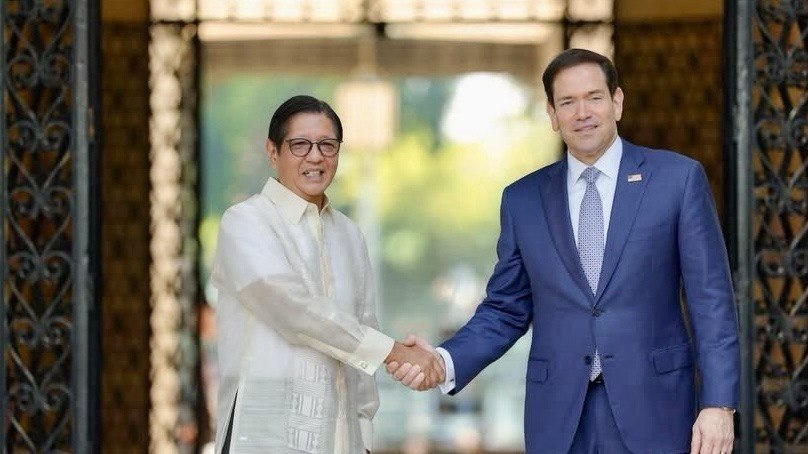
The meeting between US Secretary of State Marco Rubio and President Ferdinand Marcos Jr. reinforced what officials described as an “ironclad Alliance,” while signaling a broader shift toward strategic economic cooperation in the Indo-Pacific.
US State Department spokesperson Tommy Pigott said the two leaders reaffirmed their commitment to a free and open Indo-Pacific, including support for freedom of navigation and overflight in the South China Sea. The discussions came as the two countries mark the 10th anniversary of the 2016 Arbitral Award, which confirmed there is no legal basis for China’s sweeping maritime claims.
Yet the bigger story extends beyond defense. The alliance is increasingly being built around economic security, with both countries seeking to strengthen infrastructure networks, secure supply chains, and attract investments in strategic industries.
A key focus was the Luzon Economic Corridor, where the US Department of State, in coordination with Congress, committed more than USD100 million in new foreign assistance for infrastructure, logistics, and energy projects in Subic. The initiative is expected to take center stage at the first Luzon Economic Corridor Investment Forum scheduled for September.
The corridor reflects a broader push to position the Philippines as a more resilient node in regional supply chains, especially as businesses reassess risks from geopolitical tensions and global disruptions.
The discussions also highlighted the Philippines’ participation in Pax Silica and its hosting of the initiative’s first Economic Security Zone in Clark, strengthening Manila’s role in developing secure technology ecosystems and advanced manufacturing networks.
On the security front, Rubio welcomed the deployment of the Expeditionary Cutter Squadron from forward locations in Singapore and the Philippines to improve maritime interoperability and regional readiness.
The partnership is also expanding into public health, with both countries committing to a jointly funded five-year Health Strategic Objective Agreement aimed at preventing infectious diseases, improving healthcare outcomes, and building a more resilient health system.
The evolving US-Philippine alliance reflects a modern strategic playbook where security is measured not only by military capability but also by economic strength, infrastructure capacity, and technological competitiveness.