For generations, the Filipino dream came with a familiar checklist. Build a house. Buy land. Leave something tangible for the children.
Today, that definition of legacy is quietly being rewritten.
Instead of asking, “What can I leave my children?” more Filipinos are asking, “How can I avoid becoming their biggest expense?”
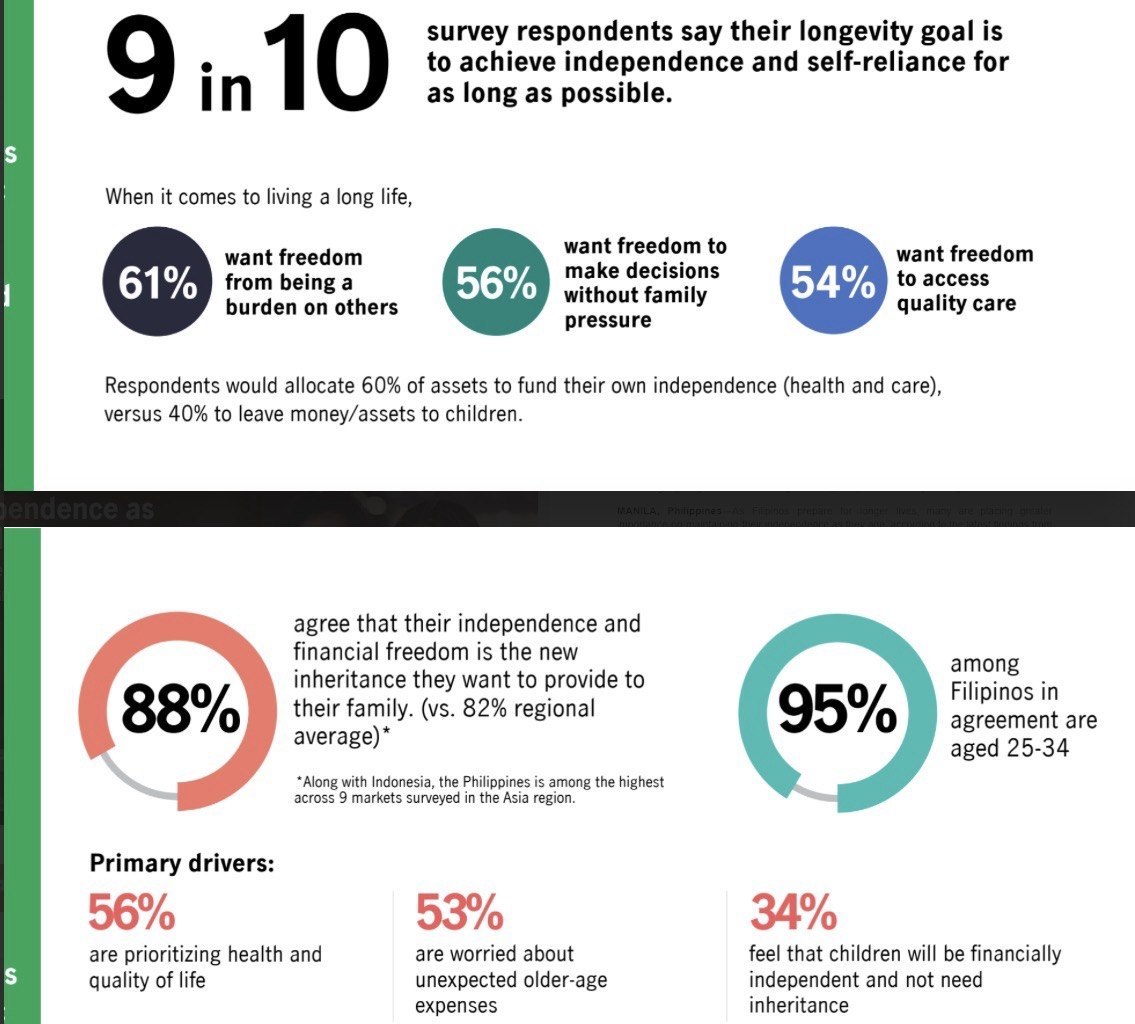
That emerging mindset is one of the clearest findings from the Manulife Asia Care Survey 2026, which suggests that financial independence—not inherited wealth—is becoming the inheritance many Filipinos value most.
Nearly nine in 10 respondents, or 88 percent, said remaining financially independent is the legacy they want to leave behind. Among Filipinos aged 25 to 34, the figure climbs to an overwhelming 95 percent.
The shift reflects a generation learning firsthand how expensive caregiving can be.
Many belong to the so-called sandwich generation, balancing the costs of raising children while helping support aging parents. For them, retirement is no longer simply about saving enough to stop working. It is about ensuring their children will not have to put their own lives on hold.

“People increasingly view legacy not only as what they leave behind, but also as the choices they make to stay healthy, independent and able to enjoy life for longer,” said Rahul Hora, president and chief executive officer of Manulife Philippines.
The change is also showing up in financial priorities. Survey respondents said they would devote 60 percent of their resources toward maintaining their own independence, compared with 40 percent for assets intended as inheritance.
That is a notable reversal in a culture where sacrificing for one’s children has long been considered the ultimate measure of success.
The numbers explain why.
Respondents estimate they will need about P34,485 a month to cover future care expenses, while 82 percent worry they may not be able to afford it. Already, 67 percent spend an average of 32 hours each week caring for relatives, and 68 percent provide financial support to family members, using nearly half of their monthly income.
For those supporting both children and aging parents, the squeeze is even tighter. Nearly three-fourths said those responsibilities make it harder to build their own financial security, while more than seven in 10 admitted postponing their own medical care.
Ironically, the most selfless act may no longer be leaving behind the biggest estate.
It may be making sure there is no financial burden to inherit.
In an aging Philippines, where healthcare costs continue to rise and families remain the country’s largest social safety net, independence is becoming more than a personal aspiration. It is emerging as a new form of wealth, one measured not by what parents pass on, but by the freedom they leave their children to build lives of their own.