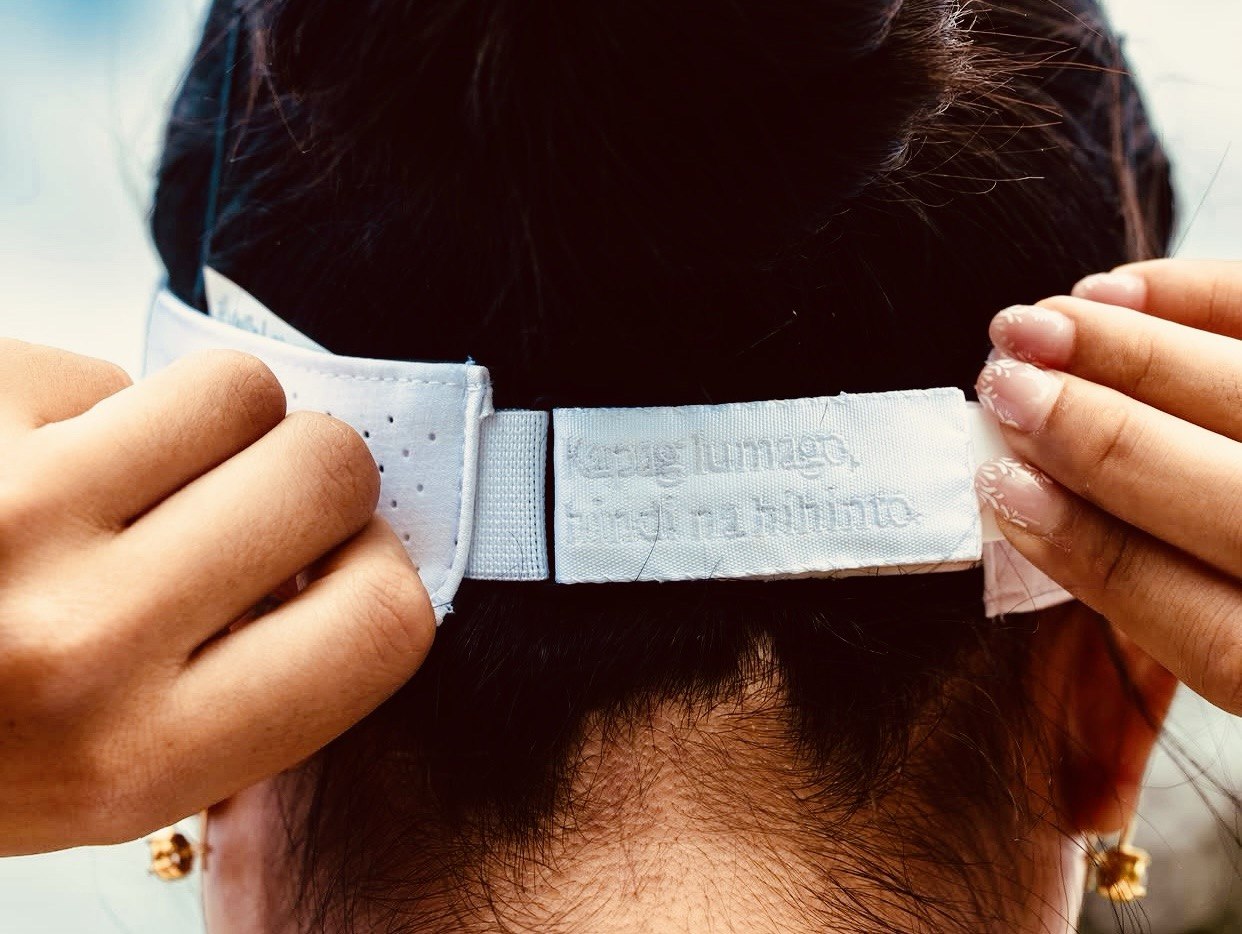
The phrase first appeared almost quietly, embroidered on the back of Alex Eala’s visor during her breakthrough run at Wimbledon. They have followed her ever since, becoming as much a part of her game as the shadow swings she takes between points.
“Kapag lumago, hindi na hihinto.”
After dethroning defending champion Leylah Fernandez at the Mubadala DC Open in straight sets to set up a quarterfinal clash with World No. 10 Elina Svitolina—a hurdle she cleared with another straight-sets masterclass to reach the semifinals—the 21-year-old Filipina revealed that the phrase, created with Nike, was never meant to predict victories. It was meant to explain dreams.
“It means that once it grows, it cannot be stopped,” Eala said. “It’s a beautiful message.”
Beautiful because it is bigger than tennis.
The line is less a marketing slogan than a philosophy. Every dream begins as something fragile, uncertain, almost invisible. But once it takes root, nourished by discipline, sacrifice, and stubborn belief, it develops a momentum of its own. Success is never guaranteed. Growth, however, has a way of becoming difficult to contain.
That message mirrors Eala’s own journey.
She has lived abroad since she was 13, leaving home to train at the Rafael Nadal Academy in Spain. Yet the farther she has traveled, the more deliberately Filipino she has become.
She walked the red carpet at the Laureus World Sports Awards in Madrid wearing a modern Filipiniana terno created by her uncle, fashion designer Rhett Eala. She has also celebrated milestone victories draped in a sampaguita garland, carrying symbols of home onto some of the world’s biggest sporting stages. At Malacañang, following her Wimbledon breakthrough, she admitted she “never in my wildest dreams” imagined being honored by the President, saying she finally felt “seen.”
“It warms my heart,” she said. “Lubos kong ipinagmamalaki ang pagiging Pilipino.”
Her victories, she insists, belong to the country as much as to her.
“Tagumpay natin itong lahat.”
That perspective has become increasingly evident in Washington, where Eala has defeated defending champion Leylah Fernandez, Olympic champion Zheng Qinwen, and Svitolina in succession to continue the finest run of her young professional career. The surge is projected to lift her to a career-high World No. 25, with the Top 20 within reach should she capture the WTA 500 title.
The victories have also changed her mindset.
“You always want to win,” Eala said earlier in the tournament. “Now I have more ammunition to back it up.”
Confidence, however, is not what she considers strength.
“Having a lot of wins is experience in my bag. It helps with confidence and self-esteem,” she said. “But strength is defined by your toughest moments and how you handle them. So the phrase is not so much about results. It refers to dreaming. I’ve always been very ambitious. Once you start dreaming, and your dreams begin getting bigger—and you begin achieving parts of them—it becomes difficult for them not to flourish.”
That explains why Eala still talks more about improvement than trophies.
Her serve, she says, remains “a constant workshop.” She wants to attack the net more, step inside the baseline more often, and continue building the physical endurance demanded by the WTA Tour. Recovery has become part of the routine, with tour medical staff helping her navigate the demands of consecutive high-level matches. Even the tape on her leg, she says, is mostly preventive—”for peace of mind.”
She also laughs at the superstitions she once carried as a junior. The familiar shadow swings between points have survived, evolving from ritual into rhythm.
“I’ve come to terms with being superstitious,” she joked.
Perhaps that is the real triumph behind Nike’s campaign.
Eala’s tennis has flourished, but so has her identity. Living thousands of miles from home has not diluted her being Filipino. If anything, it has deepened it.
The seed never left its roots.
It simply grew tall enough for the rest of the world to notice.