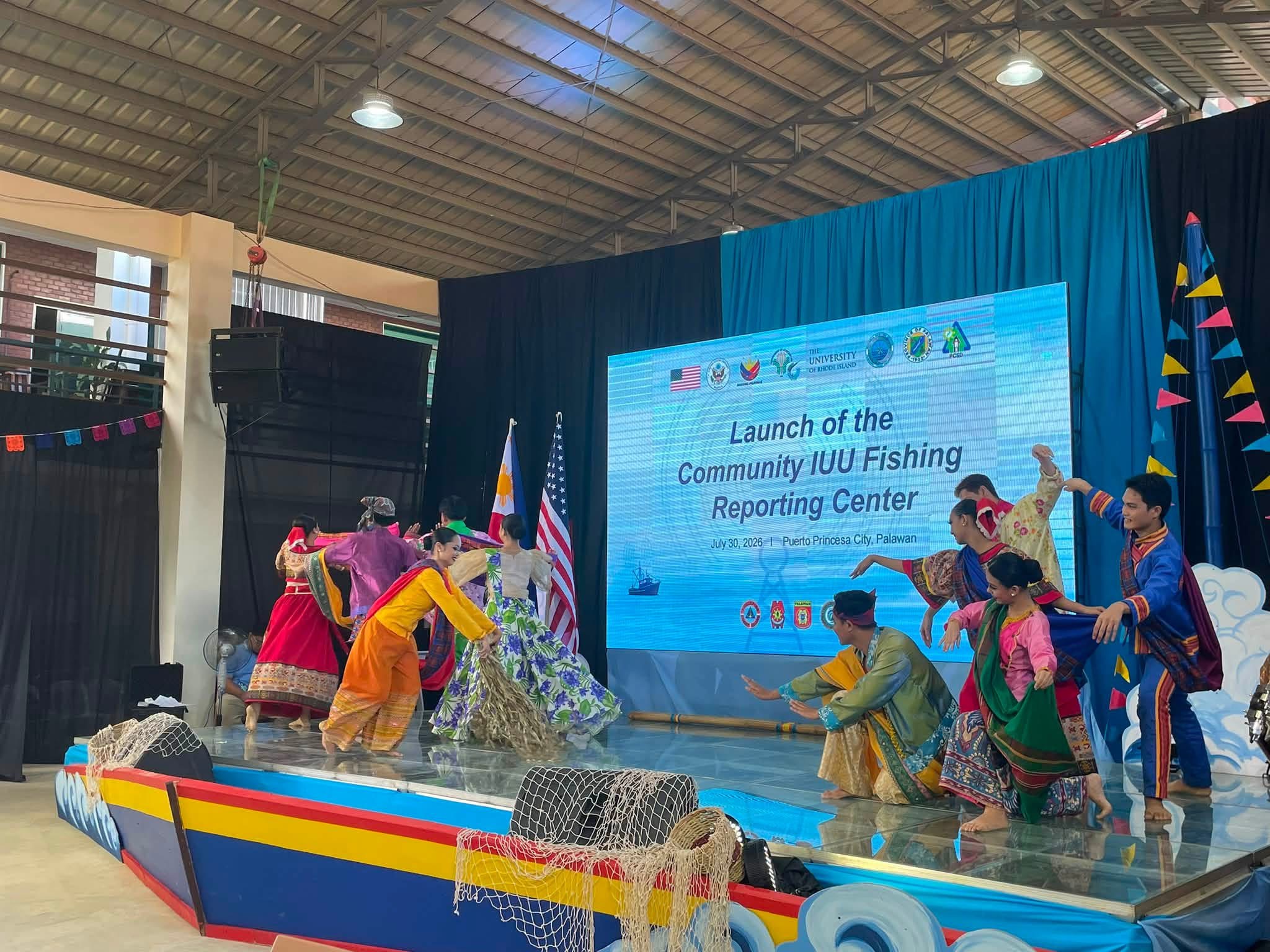
PUERTO PRINCESA CITY, Palawan – The government is stepping up its campaign against illegal and unregulated fishing by putting coastal communities at the center of fisheries enforcement, launching a new reporting hub in Palawan to help curb a practice that drains more than P5.3 billion from the economy each year.
The Department of Agriculture’s Bureau of Fisheries and Aquatic Resources (BFAR), together with the US Embassy Manila’s Fish Right Program, the Palawan Council for Sustainable Development and the University of Rhode Island, on Thursday launched the Community Illegal, Unreported and Unregulated (IUU) Fishing Reporting Center in this provincial capital.
The facility gives fisherfolk and coastal residents a direct channel to report suspected illegal fishing and other unlawful maritime activities, allowing authorities to validate reports and respond more quickly.
Agriculture Undersecretary for Fisheries Drusila Esther E. Bayate said the initiative recognizes that local communities are often the first to witness illegal activities at sea.
“Illegal, unreported and unregulated fishing is a local and global menace that persistently threatens our marine resources, undermines food security, and takes away opportunities from the very communities that depend on the sea for their livelihood,” Bayate said.
The stakes are high.
The 2022-2023 IUU Fishing Assessment estimates that the Philippines loses around 107,000 metric tons of fish annually to illegal, unreported and unregulated fishing, with economic losses exceeding P5.3 billion.
Those losses also mean shrinking fish stocks, damaged marine ecosystems and lower incomes for municipal fisherfolk.
Agriculture Secretary Francisco P. Tiu Laurel Jr. said curbing illegal fishing is as much an economic imperative as it is an environmental one. “Every fish caught illegally is food taken away from Filipino families and income lost by our municipal fisherfolk who play by the rules,” he said.
“By empowering coastal communities to help protect our fisheries, we are safeguarding a vital source of affordable protein, strengthening rural livelihoods, and preserving an industry that supports millions of Filipinos,” said Tiu Laurel. “Healthy and well-managed fisheries are essential not only to food security but also to sustaining economic growth in our coastal communities and ensuring future generations continue to benefit from our marine resources.”
The reporting center is part of the DA’s broader strategy to strengthen fisheries governance through technology, improved monitoring and greater public participation as the sector faces mounting pressure from climate change, overfishing and tougher export market requirements.
Bayate said no single institution can solve the problem alone, underscoring the need for closer collaboration among government agencies, scientists, development partners, technology providers and fishing communities.
As global buyers increasingly demand sustainably sourced and traceable seafood, stronger community-based enforcement could yield dividends beyond conservation.
By protecting fish stocks and deterring illegal fishing, the Philippines strengthens food security, supports higher incomes for law-abiding fisherfolk, and enhances the long-term competitiveness of one of the country’s most important food industries.