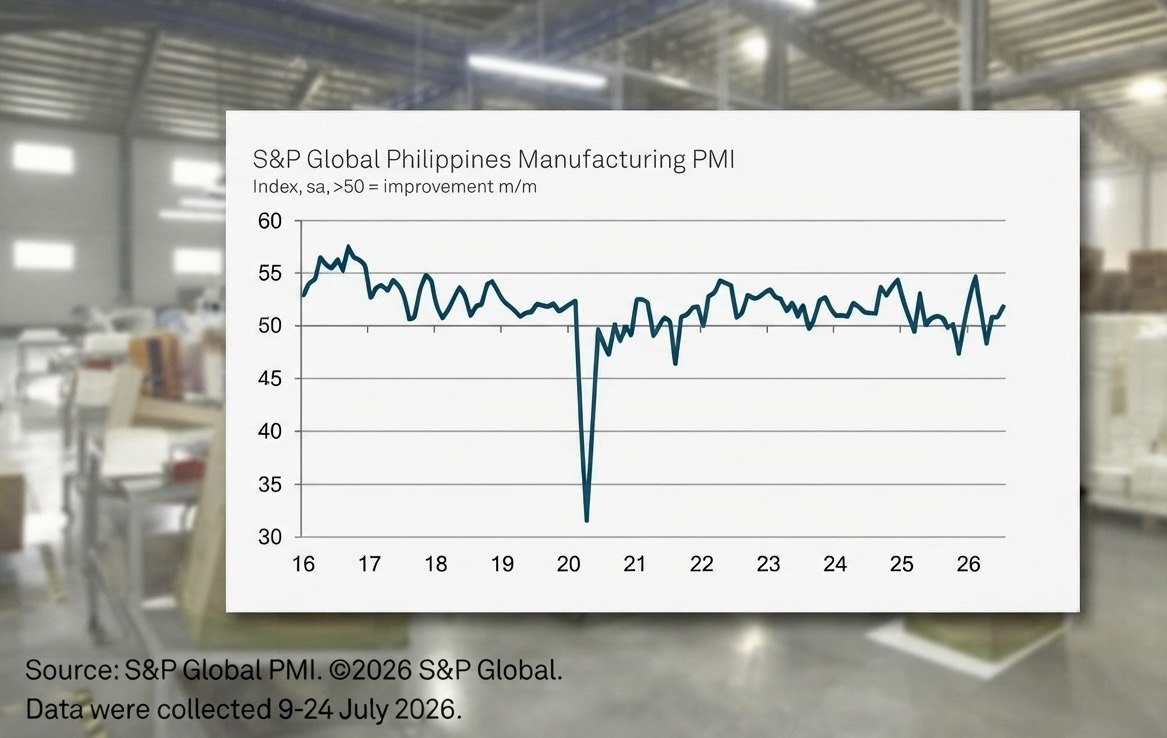
Philippine manufacturers started the second half of 2026 on stronger footing, with factory output and new orders posting their fastest growth in five months as businesses tapped existing inventories to keep up with improving demand.
The latest S&P Global Philippines Manufacturing Purchasing Managers’ Index (PMI) climbed to 51.8 in July from 50.9 in June, marking the third consecutive month of expansion and signaling a modest recovery in factory activity.
The improvement was led by the strongest increase in new orders since February, driven by firmer market demand and fresh project wins. In response, manufacturers increased production and raised purchasing activity to support higher sales volumes.
However, companies relied more on existing stockpiles rather than building new inventories. Both raw material supplies and finished goods stocks declined during the month, partly due to renewed supply chain disruptions affecting production planning.
S&P Global Market Intelligence economist Maryam Baluch said manufacturers continued to face longer supplier delivery times, with delays reaching their highest level since December 2024 as geopolitical tensions, including the conflict in the Middle East, disrupted global trade routes.
Rising logistics expenses also pushed up production costs, prompting manufacturers to increase selling prices. Input cost inflation and output price growth both accelerated above their long-term averages in July.
Despite the stronger headline numbers, businesses remained cautious. Employment declined during the month as firms chose not to immediately replace workers who left, reflecting continued uncertainty over costs, demand conditions and the broader economic environment.
Business sentiment improved from June’s five-month low as manufacturers anticipated stronger demand over the coming year. However, confidence remained below historical levels, with geopolitical risks and inflation concerns continuing to weigh on expectations.
The latest PMI reading suggests the manufacturing sector is gaining momentum, but the recovery remains uneven as companies balance improving orders with persistent cost pressures and supply chain challenges. The next phase will depend on whether stronger demand translates into sustained production growth and new hiring.