Luxury cars have long treated black as a kind of automotive shorthand for money, power, and seriousness. Now, scientists in China are trying to make the color so black that even black may have to make room.
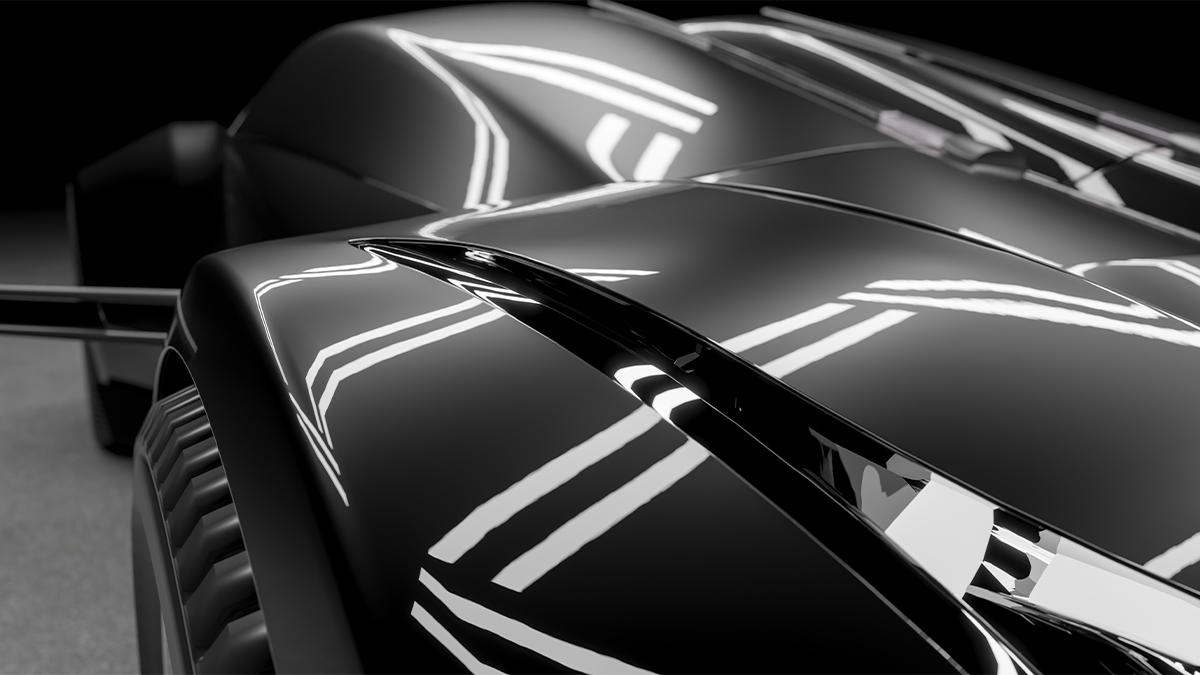
Researchers have developed an ultra-black automotive coating that absorbs an average of 99.90 percent of visible light, creating a deep jet-black finish that could give luxury vehicles a striking new look without abandoning the practical demands of automotive paint.
The breakthrough, detailed in a research paper recently published in the Cell Press journal Matter & Light, combines carbon black pigment with carbon nanotubes. The result is a coating that does more than look black. It is designed to absorb light through structural absorption rather than relying solely on pigment.
That could be a big deal in China, where vehicle color has become an increasingly important selling point, particularly in the premium market.
“Deep black finishes” have long been associated with luxury cars, said Zhiwei Liu, a chemist with NIPSEA Group in Shanghai and an author of the study. The automotive industry, he added, has been searching for ultra-black coatings that can move beyond laboratory novelty and into mass production.
The search gained momentum in 2019, when BMW unveiled a concept car covered in vertically aligned carbon nanotubes that produced an almost black-hole-like appearance. The catch was that making something extraordinarily black in a laboratory is one thing. Making it durable, sprayable, and manufacturable is another.
Liu’s team tackled that problem by creating a stable, nanosized composite of carbon black pigment and carbon nanotubes, mixing it into a coating binder, and spraying it onto a car model.
The coating survived water and humidity testing, strengthening its case for industrial applications. But it is not ready for the showroom just yet.
Adding more carbon nanotubes could make it even darker, but would also complicate industrial processing. Researchers are still validating application conditions and overall film performance.
Future versions could use multilayer structures and graded refractive indexes to absorb even more light.
For automakers, the appeal is obvious. When every luxury car is competing to stand out, sometimes the best way to make a statement is to make the car disappear into the darkness.