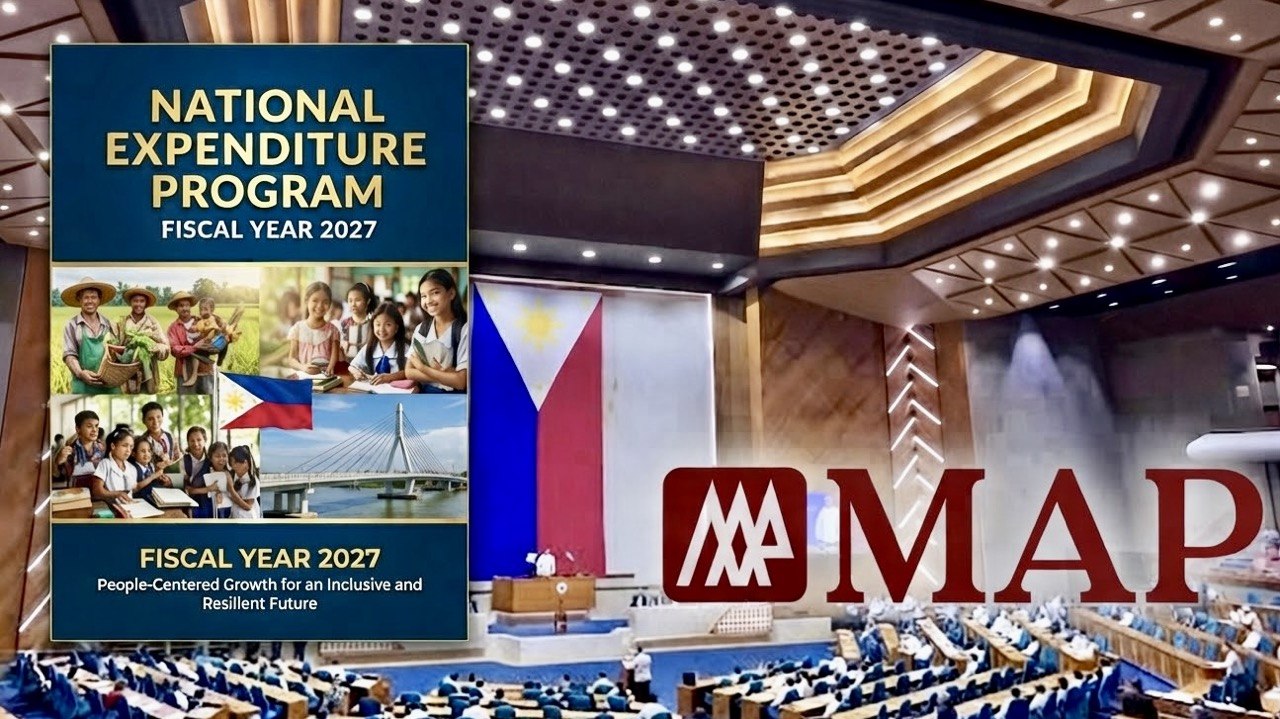
The Management Association of the Philippines (MAP) has called for full transparency and accountability in the proposed 2027 national budget, warning that questionable spending practices could further erode public trust and investor confidence.
MAP urged the Executive, Congress, and government agencies to ensure every peso in the budget can be traced from appropriation to implementation, amid allegations of corruption, irregular projects, and misuse of public resources.
“The National Budget is not government money. It is the people’s money,” MAP said, noting that public funds come from taxes and borrowings ultimately shouldered by present and future generations.
The business group called for “zero tolerance” for hidden insertions, questionable appropriations, favored contractors, ghost or substandard projects, unexplained realignments, and spending intended for political accommodation or personal gain.
MAP said material amendments and insertions during congressional deliberations and the bicameral conference should identify their proponents, amounts, and purposes.
It also pushed for end-to-end digital tracking of government expenditures, supporting reforms such as the Citizen Access and Disclosure of Expenditures for National Accountability (CADENA), which seek to make public spending transparent, traceable, and tamper-resistant.
For major infrastructure projects, taxpayers should be able to track appropriations, contractors, actual disbursements, project deliveries, and outcomes, MAP said.
The group warned that corruption carries economic costs beyond lost public funds. It diverts resources from infrastructure, health, education, and job-generating programs while weakening investor confidence and raising perceptions of country risk.
MAP said the 2027 budget gives the Marcos administration and the 20th Congress an opportunity to “mark a decisive break from opacity and business as usual” through greater disclosure, investigation, and prosecution of wrongdoing.
For the business community, MAP said, transparency is not merely a governance principle. It is essential to protecting public resources and maintaining the confidence businesses need to invest, expand, and create jobs in the Philippines.