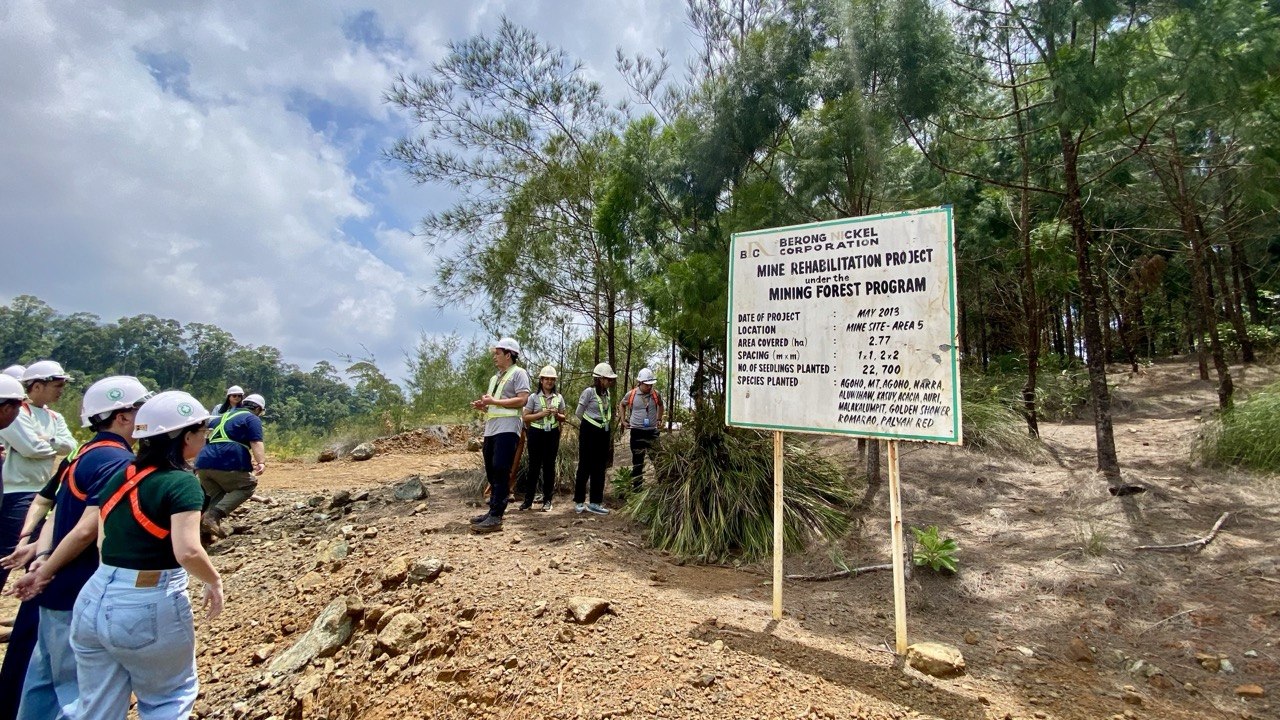
When the ore runs out, the work continues
QUEZON, Palawan (September 3, 2026) — A mine may eventually run out of ore, but for a responsible mining company, the job does not end when the last truck delivers the final haul.
At the decommissioned Berong Nickel Mine in this coastal Palawan town, DMCI Mining Corp. is putting that principle to work, investing P160 million to restore land once used to extract nickel and iron ore.
Berong’s development began about two decades ago as global demand for nickel grew alongside the transition to cleaner energy. The metal is used in electric vehicle batteries and other green technologies, putting renewed focus on the Philippines’ mineral deposits.
But extracting the ore is only part of the mining business. How a company manages a mine after production ends is becoming increasingly important to its environmental record, community relationships, and ability to develop future projects.
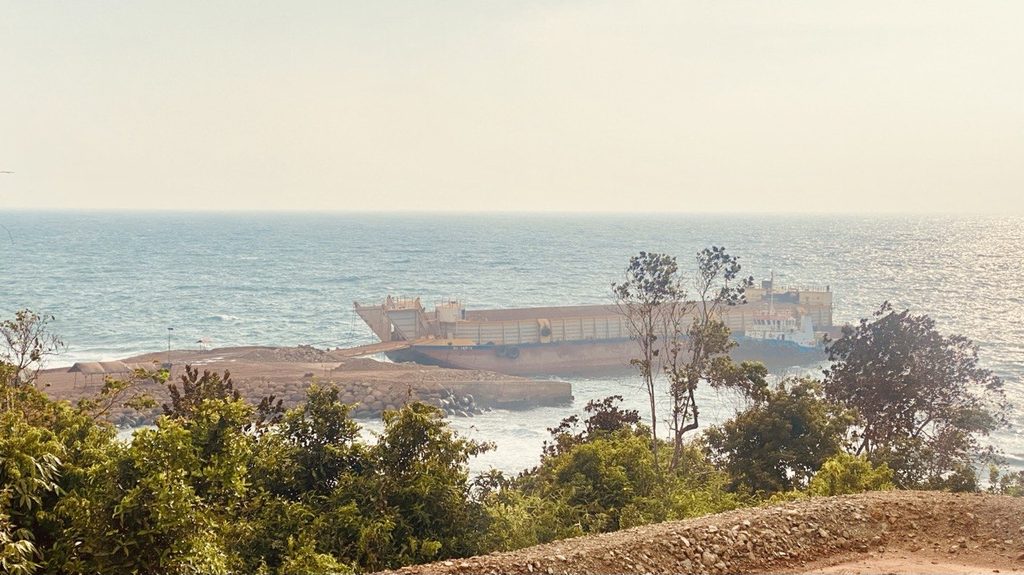
A bulk carrier awaiting its ore load at Long Point
Berong secured clearance for its Final Mine Rehabilitation and Decommissioning Plans in 2021, with the six-year rehabilitation program beginning in 2022. The work goes beyond planting trees. Engineers first had to stabilize slopes, control erosion, and improve drainage before returning topsoil stripped during mining and replanting vegetation.
Rehabilitation had actually begun as early as 2013, when a small section of the mining claim was gradually restored. The experience provided lessons for the larger program.
Of Berong’s 288-hectare mining claim, 137 hectares were utilized between 2007 and 2022. DMCI Mining has planted 352,000 seedlings, including indigenous almaciga and agoho, and produced nearly half a million seedlings in its nurseries.
The company has also planted nickel trees, or plants capable of accumulating heavy metals from the soil. It also seeded the area with pitcher plant to attract insects that serve as food for other wild life.
The early ecological results are encouraging. Biodiversity monitoring has detected four bird species and the return of the Palawan horned frog in areas reforested more than a decade ago, indicating that ecosystems are beginning to recover.
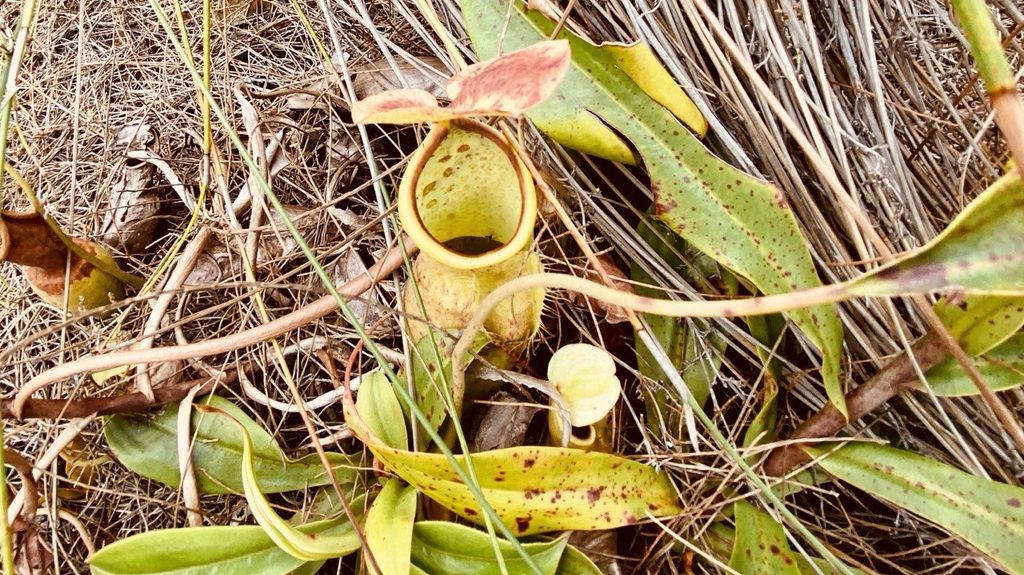
A pitcher plant that draws insects to the area
For the mining industry, the significance goes beyond biodiversity.
Mine closure is increasingly part of a company’s license to operate. Environmental rehabilitation and community obligations continue after production ends, making closure planning an important part of responsible mining.
Berong also illustrates the broader economic footprint of a mine. During its operating years, it employed 597 workers, mostly from the host community, while nearly P200 million was spent through its Social Development and Management Program on education, healthcare, infrastructure, livelihood, and cultural initiatives.
DMCI Mining has also supported mangrove rehabilitation, sea turtle conservation, and coral gardening around the mining area.
The timing gives Berong’s rehabilitation a clear business context. As the company winds down the former mine, DMCI Mining has begun operations at Long Point, another Palawan nickel property nearly 10 times larger, with higher-grade ore and closer access to the West Philippine Sea.
That makes responsible closure more than an environmental requirement. It is also a measure of corporate credibility.
A mining company moving on to its next project carries the record of its previous one. In an industry where regulatory approval, community acceptance, and public trust matter alongside geological prospects, how a company closes a mine can influence how its next project is received.
For DMCI Mining, Berong reflects its stated approach to responsible mining.
“At DMCI Mining, we believe that a mine well managed is a community empowered; that a land restored is a legacy renewed; and that mining, done right, is nation-building in action,” the company said.
At Berong, the final haul was not the end of the business.
It was the start of the accountability.