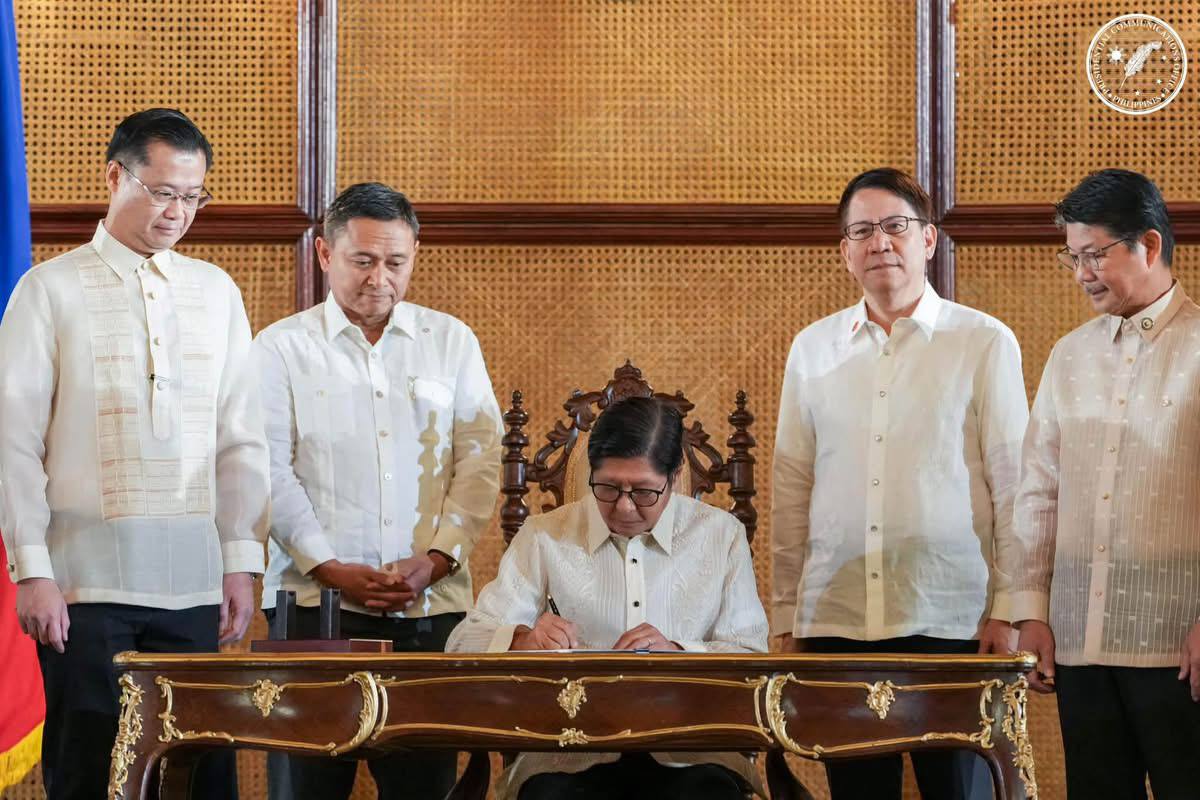
President Ferdinand Marcos Jr. on Friday signed amendments to the Universal Access to Quality Tertiary Education Act, expanding government assistance beyond free tuition to help poor and disadvantaged students stay in college or technical-vocational training and build a larger skilled workforce.
The enhanced law recognizes that tuition is only one of the costs that can push students out of tertiary education. Government support will also address expenses such as books, transportation, daily needs, and other requirements that can make completing a degree or technical-vocational education and training (TVET) program difficult for low-income families.
“Free tuition removed a major barrier to tertiary education, but families still face the cost of books, transportation, daily expenses, and other requirements,” Marcos said.
Assistance will be targeted particularly at students from poor and disadvantaged families, including qualified beneficiaries of the Pantawid Pamilyang Pilipino Program.
Poor and deserving students enrolled in priority programs who are not covered by existing grants may also receive assistance to study in qualified private higher education and technical-vocational institutions, giving them options beyond public schools.
Marcos said expanding access must go hand in hand with improving completion, as students who leave school before earning qualifications are less able to translate education into better employment opportunities.
The expanded support comes as the number of beneficiaries under the government’s Free Higher Education program reached 2.6 million in the first semester of the current academic year, up from two million previously.
“Every learner who completes a college degree or a TVET program brings greater opportunity to a family and strengthens our nation with a more skilled, productive, and empowered citizenry,” Marcos said.
The President directed the Commission on Higher Education, Technical Education and Skills Development Authority, Unified Student Financial Assistance System for Tertiary Education, and other agencies to complete the implementing rules within the period prescribed by law and ensure smooth implementation.
The expanded law effectively shifts the focus from making tertiary education accessible to making it attainable through completion, potentially strengthening the country’s pool of workers with the qualifications demanded by employers.