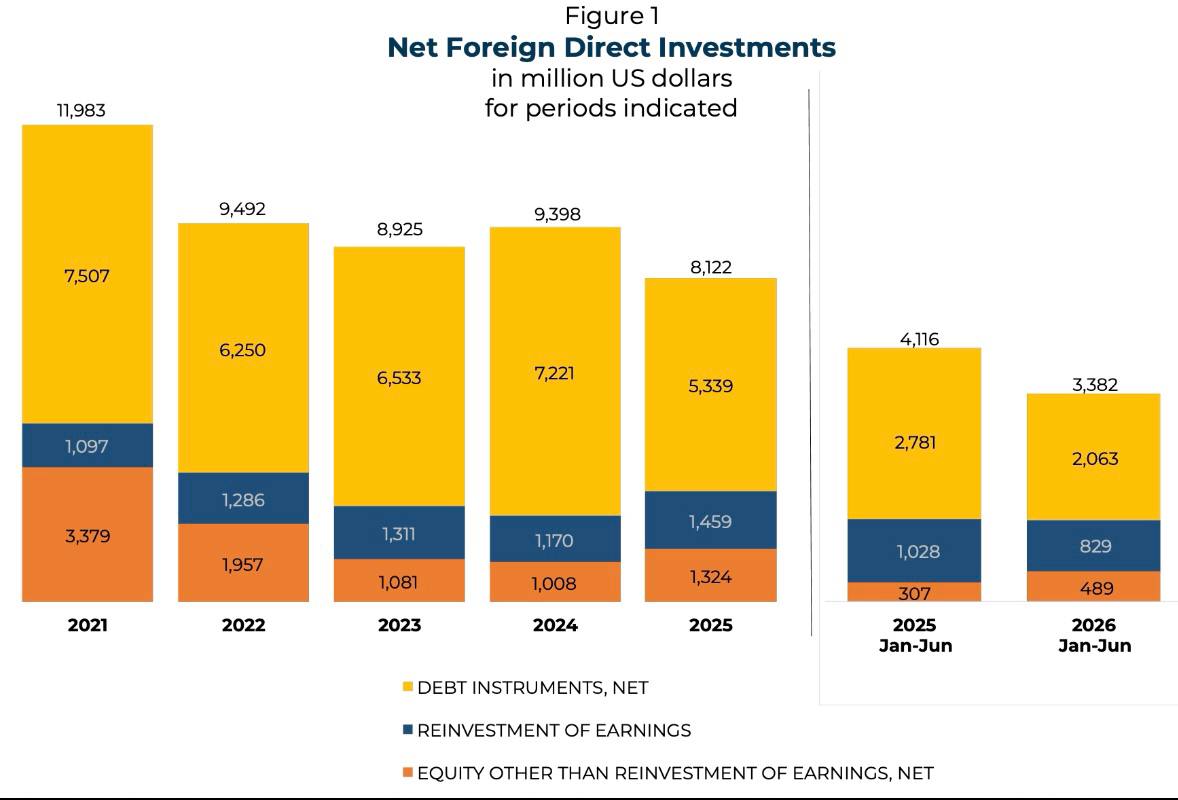
Foreign direct investment (FDI) into the country slowed in the first half of 2026 compared to the same period last year, driven primarily by lower intercompany loans and reduced reinvestment of earnings by foreign companies. Despite the overall decline in total net inflows, fresh equity capital placements actually increased year-on-year. This capital—flowing mainly from Japan, the United States, and Singapore—was largely fed into manufacturing, financial and insurance, and real estate sectors.
Foreign direct investments represent far more than simple short-term financial transactions; it actively builds the long-term productive foundation of the economy. Unlike volatile short-term capital that can be withdrawn at the merest sogn of trouble, net FDI inflows continuously pool money into permanent assets, expanding local factories, modern machinery, and major commercial facilities over time.
By directing fresh capital into key sectors like manufacturing, real estate, and financial services, foreign investors directly boost national employment, expand domestic supply chains, and build up industrial capacity. These investments also bring advanced technology, specialized managerial expertise, and modern workplace practices, raising the technical standard of the entire local workforce. Over time, this cumulative buildup of foreign capital increases the country’s potential gross domestic product, boosts foreign exchange reserves, and strengthens the broader financial system against global market volatility.
While reduced intercompany borrowing temporarily pulled down the total FDI figure for the first half of the year, the steady growth in new equity capital demonstrates that international investors remain focused on funding long-term economic growth in the country.