



Maharlika Investment Corp. (MIC) has deployed about P25.4 billion since it began investing, with its acquisition of listed port operator Asian Terminals Inc. (ATI) forming the foundation of a broader port and logistics platform for the Philippines.
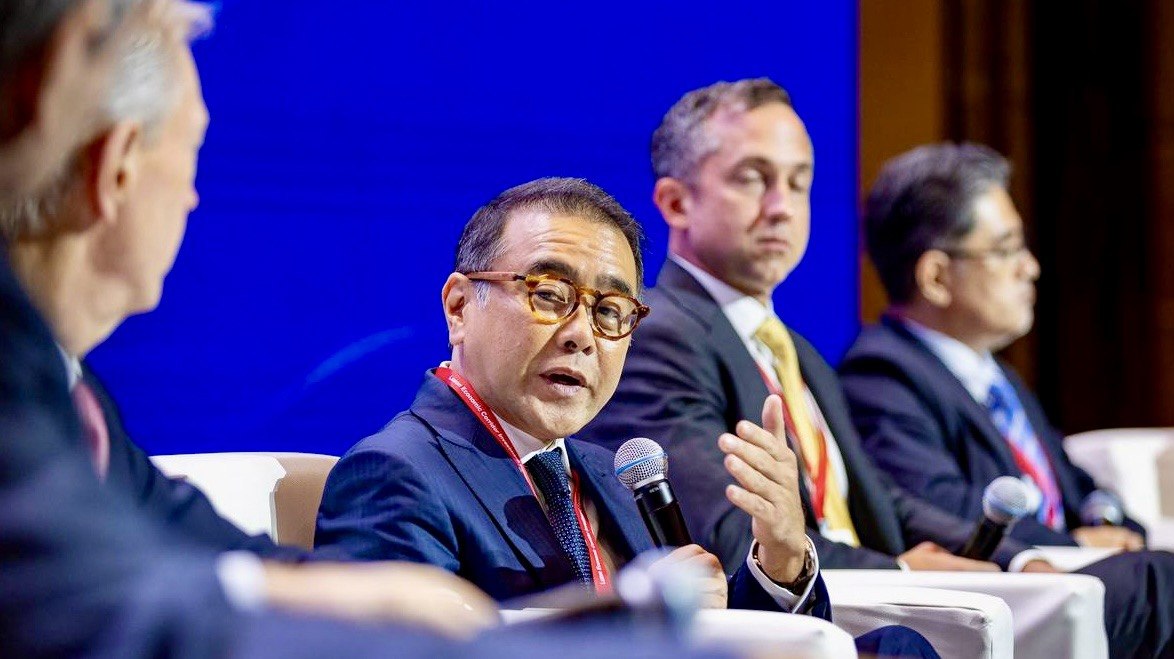
MIC president and chief executive officer Rafael Consing said at the Luzon Economic Corridor (LEC) Investment Forum on Thursday that the sovereign wealth fund generated an effective return of about 24 percent in its first year and a half, after initially focusing on building its institutional foundations.
“Our biggest investment thus far is we bought a public company, Asian Terminals Incorporated, private, last January,” Consing said. “We are using that to build our port and logistics platform in the Philippines.”
Consing said MIC could play four roles in major projects, serving as an anchor investor, co-investor, project aggregator, and provider of patient capital, particularly for investments aligned with national priorities such as the LEC.
As an anchor investor, MIC can take portions of a project’s capital structure that may be too early-stage or require longer investment horizons for other investors. It can then bring in foreign investors, export agencies, and development finance institutions as co-investors.
MIC can also aggregate smaller or bespoke LEC projects into investment products that could be considered by large institutional investors.
“Patient capital, absolutely, all throughout,” Consing said, while stressing that this should not be mistaken for “concessionary pricing.”
He said MIC applies four tests before investing: whether its participation is necessary, whether it avoids displacing private capital, whether returns adequately compensate for risk, and whether a clear exit can be defined within five to seven years.
Consing said standardized, properly priced, and potentially rated investment instruments could allow MIC to mobilize substantially more private and institutional capital for infrastructure.
The strategy would allow Maharlika to use its own capital not simply to fund projects, but to structure investments that can bring significantly larger pools of private money into the country’s infrastructure pipeline.




