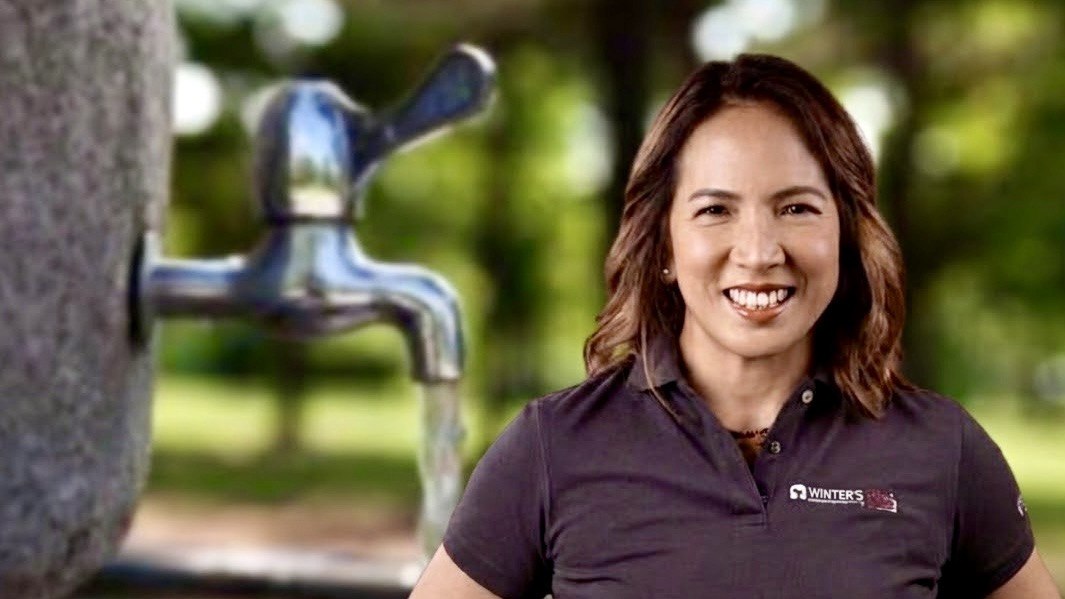
Aboitiz InfraCapital is seeking alternative water sources and strengthening contingency measures for its Davao City bulk water operations as intensifying El Niño conditions threaten supply reliability through 2027.
President and CEO Cosette Canilao said declining river flows have already affected production, prompting closer coordination with the Davao City Water District (DCWD) to help maintain supply amid prolonged dry conditions.
“We already felt it at the beginning of this year. Maybe in the second quarter, we already felt the low flow of water in the river where we get our water for production,” Canilao said.
She said daily production fell to around 260 million to 270 million liters before recovering, although the company remains concerned about the prospect of an extended dry spell.
“We’re making sure that our operations are efficient. Then we’re looking for other water sources,” she said.
DCWD is also preparing reserve wells to supplement supply during shortages, Canilao said, as water providers brace for potentially tighter conditions.
Aboitiz subsidiary Apo Agua operates the 300-million-liter-per-day Davao City Bulk Water Supply Project, which draws water from the Tamugan River and serves more than one million residents. The facility began operations in December 2023.
The supply risks could persist beyond the current dry period. The Philippine Atmospheric, Geophysical and Astronomical Services Administration (PAGASA) warned in October that strong to very strong El Niño conditions could continue into the first half of 2027, raising the risk of drought.
Beyond immediate supply concerns, Canilao sees opportunities to expand investment in water infrastructure and explore emerging water-harvesting technologies as demand for reliable supplies grows.
“Water is so important. I think there’s still a lot of opportunity,” she said.
For Davao, the challenge is increasingly twofold. It must keep taps supplied today while developing alternative sources to help cushion the impact of future droughts.