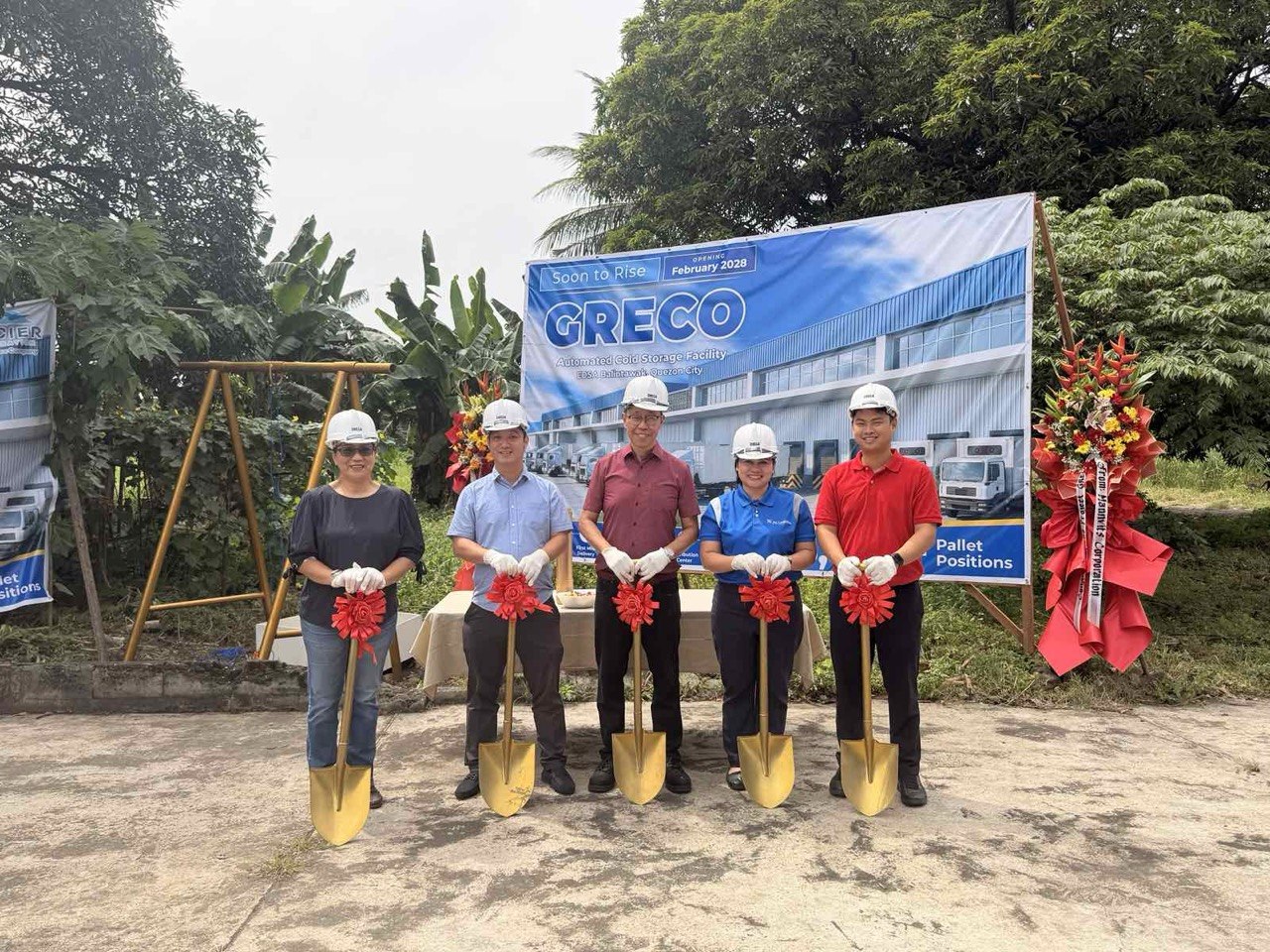
AC Logistics Holdings Corp. and Glacier Megafridge Inc. have broken ground on a 25,000-pallet automated cold storage and distribution facility in Balintawak, Quezon City, as demand for temperature-controlled logistics puts a premium on capacity near Metro Manila’s major consumer markets.
The project, named GRECO (Green Rise Engineered Cold Chain Logistics), will combine high-density storage with four-way shuttle technology in an automated storage and retrieval system. The setup is designed to improve inventory visibility, accelerate order fulfillment and reduce manual handling in freezer chambers.
Its location at the junction of EDSA and the North Luzon Expressway offers access to Metro Manila’s retail and food service networks, while linking distribution operations with production centers in Central and Northern Luzon. The site positions the facility to serve businesses moving perishable goods between farms, processors and urban markets.
“Through investments in modern, strategic infrastructure, we are strengthening the country’s cold chain network and enabling businesses to move products more efficiently, reliably, and sustainably,” AC Logistics President and CEO Erry Hardianto said.
GRECO’s planned environmental features include natural refrigerants and energy-efficient systems. A rooftop solar installation is also envisioned, alongside the option to source renewable electricity through available green energy programs. These measures could help manage the energy demands associated with refrigerated storage, although the project’s eventual environmental performance will depend on implementation and operating conditions.
The development is expected to add modern cold storage capacity near a major population center, potentially supporting food distribution and supply chain resilience. It is also expected to generate employment in automation, refrigeration, engineering and logistics during construction and operations.
The companies held the groundbreaking on Oct. 23. GRECO is targeted to begin operations in February 2028, subject to regulatory approvals and construction progress.
The investment reflects a broader logistics priority: expanding infrastructure that can preserve product quality while moving perishable goods more efficiently. Its contribution will ultimately depend on operational reliability, customer uptake and how effectively the added capacity connects producers with end markets.