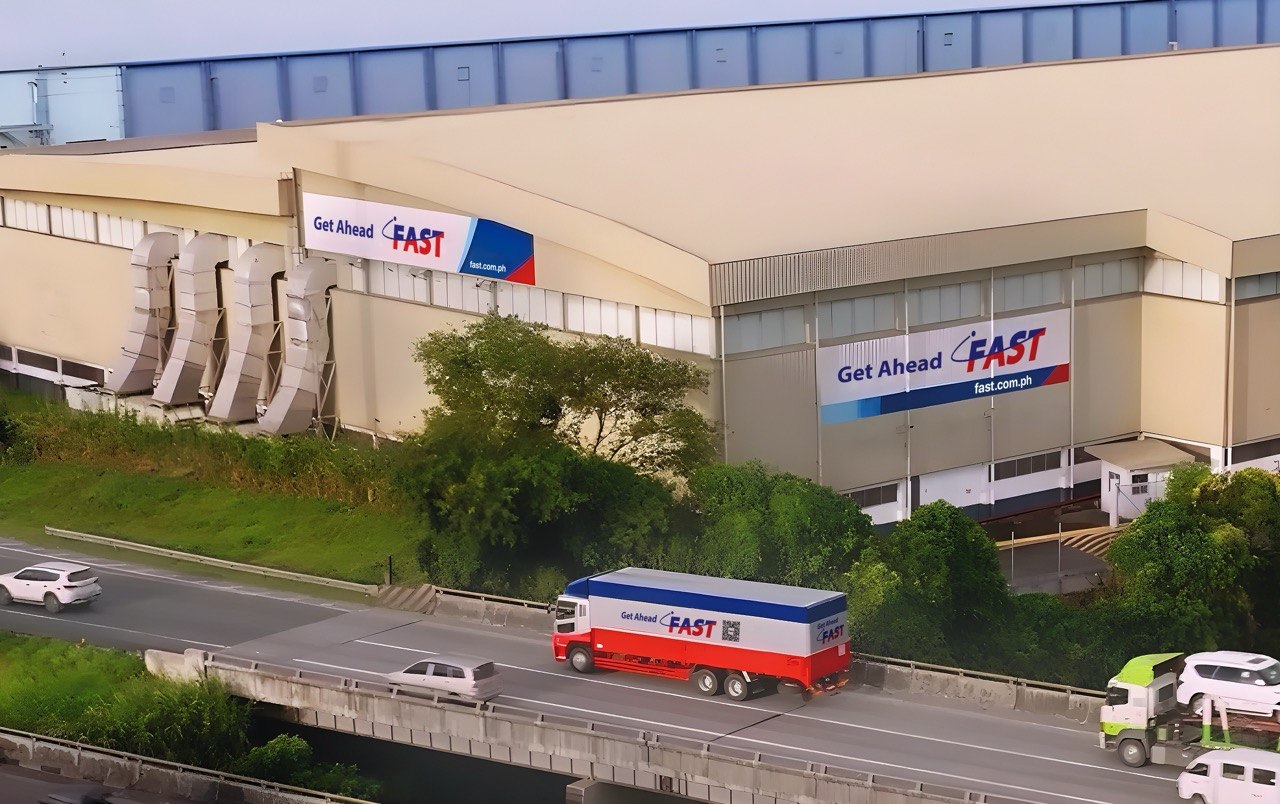
For FAST Logistics Group, the next leg of growth is not necessarily about moving more boxes faster. It is about making the entire journey work better.
The family-owned logistics company is doubling down on integrated services, digital tools and more flexible warehousing as fourth-generation family member Anton Chiongbian helps steer the business into its next phase.

Chiongbian, assistant vice president for customer revenue strategy and digital transformation, said FAST plans to build on more than five decades of logistics experience while becoming more responsive to increasingly demanding customers.
“Our direction is to continue building on our integrated end-to-end logistics capabilities, integrating best-in-class technology in our operations, and developing our people so we can serve our partners better,” he told Context.ph.
The strategy reflects how far FAST has moved from its shipping roots under William Lines. Today, the group combines trucking, RoRo shipping, sea and air freight, warehousing, cold chain, cross-docking, selling and distribution, allowing customers to tap several links in the supply chain through one provider.
That integrated model is becoming more important as companies look for fewer handoffs, better inventory visibility and tighter control over transportation costs.
Over the next three to five years, FAST sees room to deepen its warehousing, temperature-controlled storage, transportation and distribution businesses while expanding digital capabilities that can improve warehouse productivity, inventory tracking and transport coordination.
It is also looking beyond its traditional fast-moving consumer goods base, strengthening services for automotive, pharmaceuticals, agriculture and agribusiness, industrial and chemical manufacturers.
Technology, Chiongbian said, is being deployed with a decidedly unglamorous test: whether it actually fixes something.
FAST is already using artificial intelligence, automation and data analytics, but he said the company does not adopt technology simply because it is fashionable.
“We do not adopt technology for technology’s sake. We adopt it when it can solve a real problem, improve an existing process, or create measurable value,” he said.
That pragmatism extends to warehousing. Its FlexSpace service lets customers pay for storage by pallet and day, giving startups and small and medium-sized enterprises, as well as companies entering the Philippines, a way to add capacity without taking on a long-term footprint.
For FAST, flexibility may be the more useful measure of scale.
As the Chiongbian family prepares the business for its fourth generation, the challenge is less about abandoning what worked than making it work in a supply chain that moves at a very different speed.
“Simply put, we are preserving the values that built FAST while helping the organization embrace new capabilities that will keep it relevant and competitive for the next 50 years,” Chiongbian said.

Irma Isip is a seasoned business journalist covering corporate developments, international trade, and economic trends. A University of Santo Tomas graduate, she spent over 15 years as Business Editor at Malaya Business Insight, delivering clear, insightful reporting on key market and industry developments.