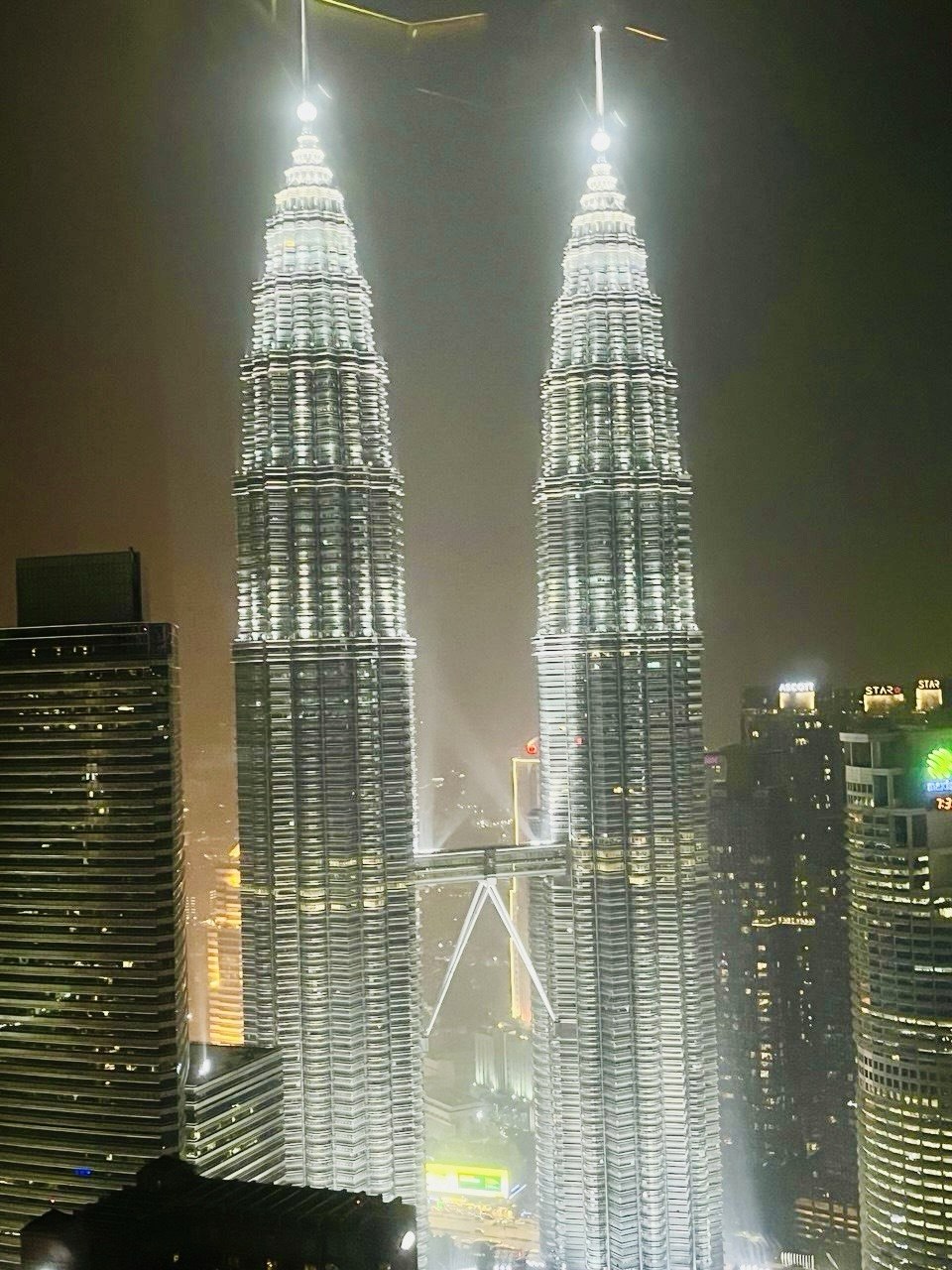
They said it couldn’t be done. Kuala Lumpur is a sprawling, sensory-overload metropolis where ancient heritage trades punches with ultra-modern skyline ambitions—a city built for leisurely exploration, slow-steeped kopitiam mornings, and tropical pacing. But where others see an impossible itinerary, a true traveler sees a challenge.
Armed with an iced latte, reliable walking shoes, and an aggressive disregard for rest, this is the story of how ten iconic landmarks fell in a single, breathless, 24-hour sprint across Malaysia’s beating heart.
The dawn raid begins at the foot of the Petronas Twin Towers. Piercing the morning sky like colossal, high-tech silver javelins, these steel-and-glass titans are a masterclass in modern architectural bravado, gleaming with a futuristic confidence that sets the tone for the entire capital.
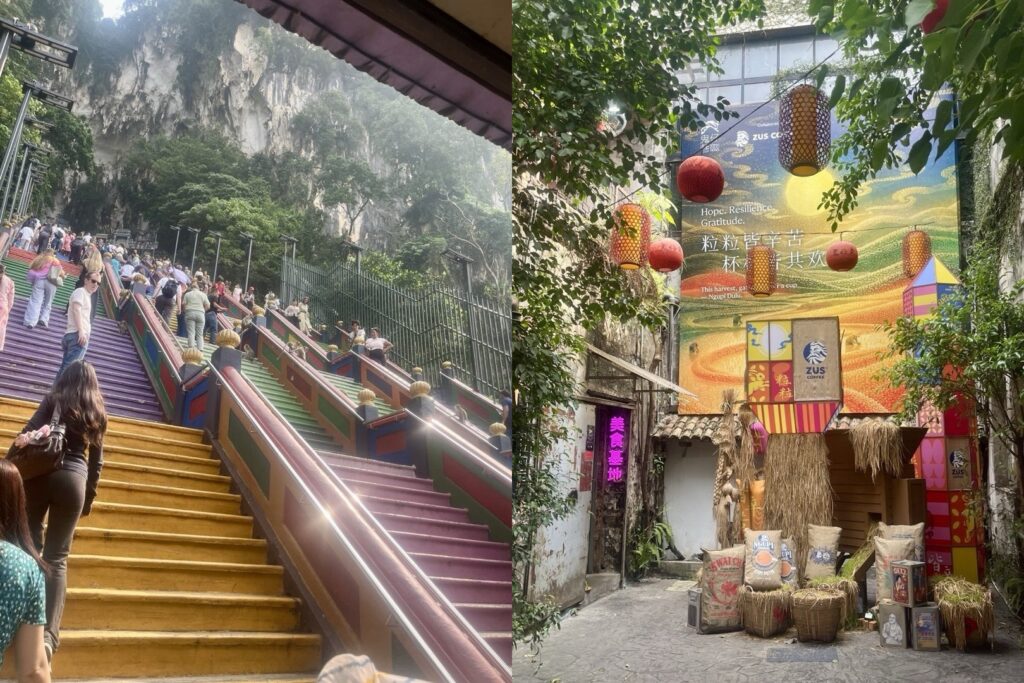
From the space-age to royal pageantry, a quick transition lands the journey at Istana Negara. The sprawling King’s Palace serves as a stately reminder of Malaysia’s constitutional monarchy, where ceremonial guards maintain an almost statue-like stillness beneath the equatorial sun, holding court over immaculately manicured grounds.
History comes rushing in next at Merdeka Square. Standing on the very patch of turf where the Union Jack was lowered and the Malayan flag was raised at the stroke of midnight in 1957, the gravity of independence hangs heavy in the air. Framing the square is the Sultan Abdul Samad Building, a stunning tapestry of Indo-Saracenic and Moorish architecture whose iconic clock tower has stood sentinel over the nation’s shifting eras.
Escaping the asphalt, the route dips down to the River of Life. True to Kuala Lumpur’s namesake translation as a muddy confluence, this ambitious urban renewal project has transformed a historic river intersection into a sleek, neon-lit waterfront promenade that pulses with evening energy.
Yet, nature and myth beckon just beyond the urban core. The Batu Caves rise like a limestone cathedral, daring visitors to conquer their 272 rainbow-colored steps under the watchful gaze of a towering golden Lord Murugan. It’s a lung-busting climb rewarded by mystical cavern echoes and, inevitably, a mischievous troop of resident macaques eyeing any loose snacks.
Swapping jungle mystique for retro nostalgia, the trail loops back into the city to slip through a 1960s time machine at Kwai Chai Lane. This lovingly restored Chinatown alleyway trades congestion for curated cool, brimming with interactive murals, preserved pre-war shophouses, and hidden cafes that feel like a secret society for art lovers.
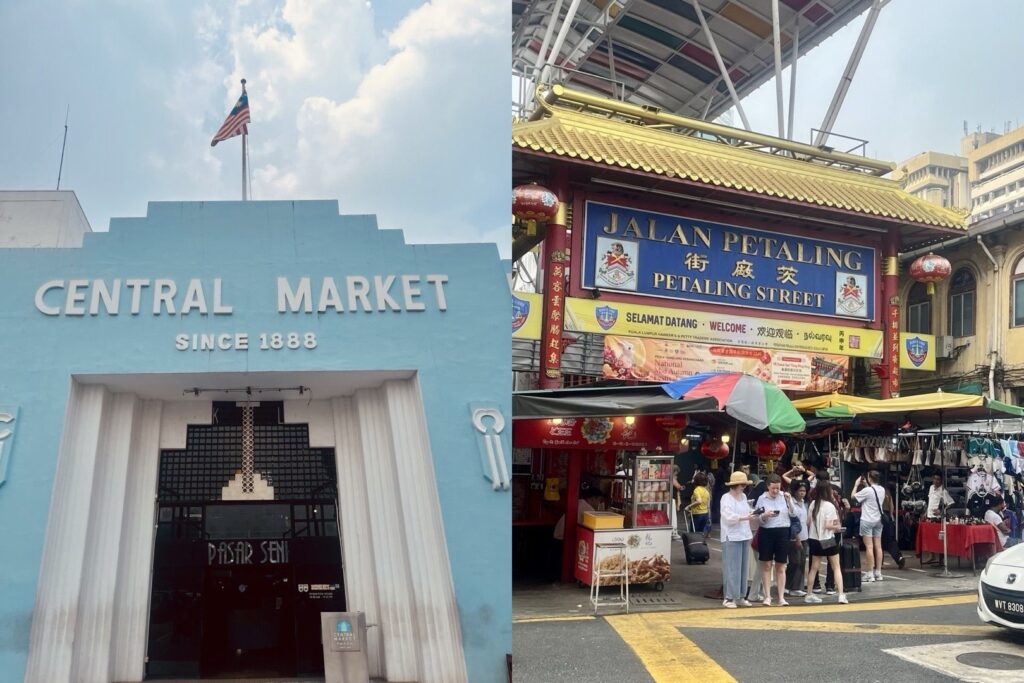
As the afternoon sun hits its zenith, the journey plunges deep into the chaotic, vibrant veins of Chinatown around Petaling Street. Neon signs flicker to life above bustling market stalls, where haggling is an art form and the scent of heritage cooking fills every alley. Salvation from the tropical humidity waits just around the corner inside Central Market. Born as a humble wet market in 1888, this Art Deco sanctuary offers a cool, air-conditioned haven of traditional batik, local handicrafts, and living culture.
The final leg of the gauntlet leads straight to Bukit Bintang, the flashpoint of the city’s modern retail and entertainment obsession. But the ultimate victory lap unfolds a few steps away at Jalan Alor. Amid billowing smoke, plastic stools, and the neon glow of open-air kitchens, a feast of sizzling street food and mango sticky rice proves that while surviving Kuala Lumpur in a day is an absolute extreme sport, the finish line has never tasted so good.
Editor’s Note: Pulling off this epic 24-hour sweep requires elite pacing, aggressive hydration, and absolute zero hesitation.

Irma Isip is a seasoned business journalist covering corporate developments, international trade, and economic trends. A University of Santo Tomas graduate, she spent over 15 years as Business Editor at Malaya Business Insight, delivering clear, insightful reporting on key market and industry developments.