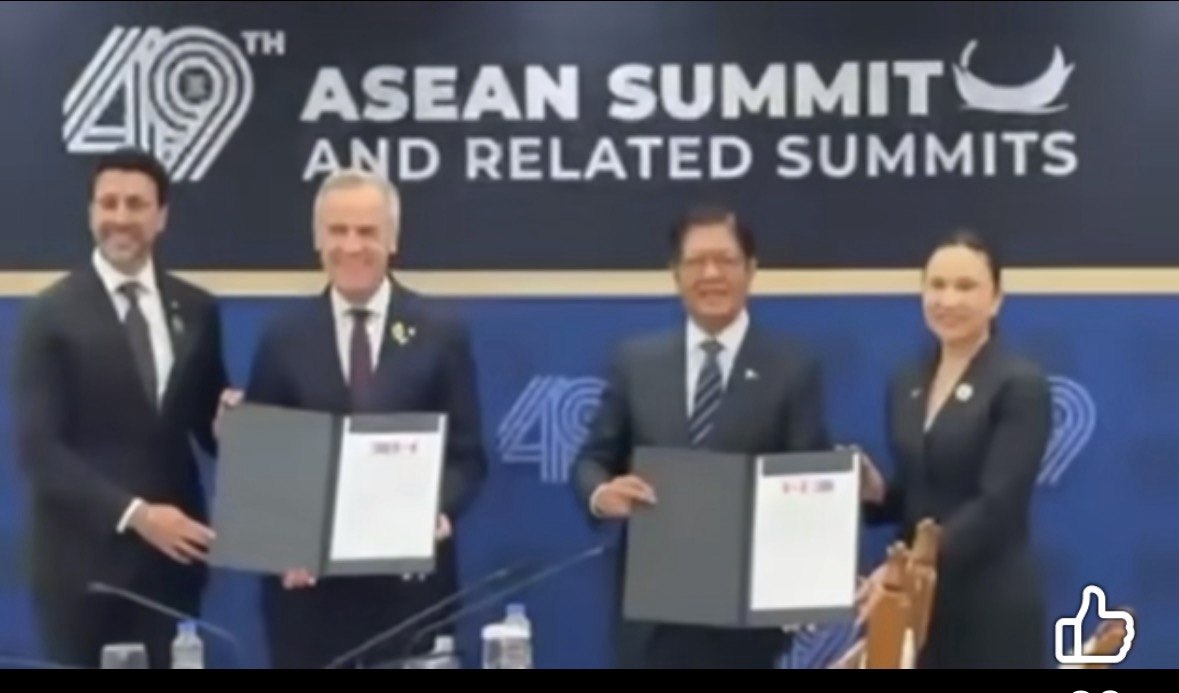
The Philippines expects two major trade initiatives, the ASEAN Digital Economy Framework Agreement (DEFA) and a free trade agreement with Canada, to expand export opportunities and help smaller enterprises participate more actively in international commerce.
Trade Secretary Cristina Roque described the initiatives as significant gains for Philippine businesses, but stressed that their benefits would depend on how effectively companies, particularly small and medium enterprises (SMEs), capitalize on the new market opportunities.
“These agreements won’t be successful unless we exhaust their full potential,” Roque said at the Philippines–Brazil Business Forum.
She described the conclusion of free trade negotiations with Canada as a “big win” for Philippine exporters, who stand to benefit from preferential tariff treatment in a major overseas market.
The agreement could also create opportunities for smaller enterprises to join export supply chains, even if they are not yet equipped to sell directly to foreign buyers.
“So the growth of the exporter becomes the growth also of the small and medium enterprises,” Roque said.
Meanwhile, DEFA could give Philippine businesses greater access to ASEAN’s digital marketplace of about 680 million people by easing cross-border digital transactions and making it easier to reach customers across the region.
Roque said e-commerce offered entrepreneurs a relatively accessible entry point into international trade, allowing even small businesses to market and sell products using mobile phones.
This could be particularly valuable in an archipelago where geography and logistics have traditionally made it difficult for smaller enterprises to reach customers beyond their immediate markets.
The Department of Trade and Industry plans to hold summits and trade shows next year to familiarize businesses with DEFA’s provisions and help them identify commercial opportunities.
Roque said better connectivity, business education and access to financing would be necessary to turn the agreements into actual sales, investments and jobs.
She cited financing programs of state-owned Small Business Corp., including loans of up to P5 million without collateral and a one-year grace period on principal payments, as support for entrepreneurs looking to establish or expand their operations.
Ultimately, she said, the challenge was to ensure that the gains from trade agreements reach beyond large exporters and translate into broader opportunities for smaller businesses.