Nestlé Philippines is preparing to increase coffee imports as El Niño threatens harvests in Sultan Kudarat, exposing how climate extremes could deepen the country’s dependence on foreign beans and disrupt a domestic supply chain concentrated in one major growing province.
Sultan Kudarat accounts for 80 to 90 percent of the coffee Nestlé buys locally. Donnel Tiedra, the company’s corporate affairs executive for agriculture, said field teams had already observed an initial production decline and were assessing the potential damage to local procurement.
Nestlé has yet to provide an import forecast but regularly sources beans from Vietnam and Indonesia to supplement domestic production.
Jose Uy III, senior vice president and head of corporate affairs, said the company adjusts foreign purchases according to the local harvest.
“The problem lies on the supply,” Uy said. “So it is now a balancing act.”
The threat illustrates the exposure of coffee production to prolonged heat and water stress, particularly in growing areas where farms lack adequate shade and moisture-retention measures.
Nestlé said years of promoting regenerative agriculture under its Nescafé Plan are helping growers in Sultan Kudarat cope with harsher conditions. Tiedra said most of the company’s coffee-growing areas in the province already have tree cover, while farms without shade trees or intercrops remain more vulnerable.
Shade trees and cover crops help retain soil moisture and moderate heat exposure, while composting improves soil health and water retention. Meg Anne Santos, Nestlé Philippines’ head of sustainability, said farms that adopted these practices earlier were already showing better protection against adverse weather.
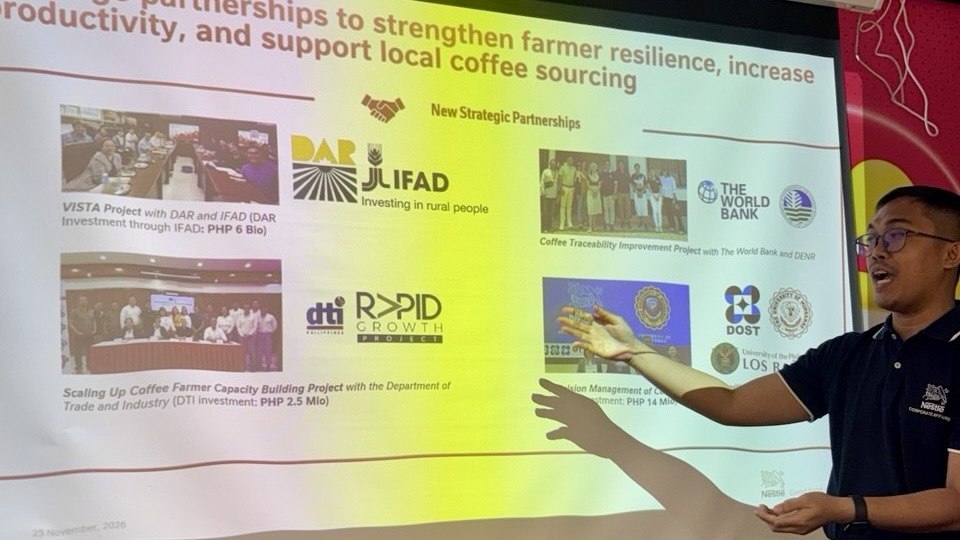
The company is also working with the University of the Philippines Los Baños on a field trial scheduled for 2027 to test ways of improving water availability for coffee farmers.
Tiedra said Nestlé plans to share the findings with local governments, which would finance irrigation systems.
The longer-term challenge is making coffee farms more resilient to increasingly unpredictable rainfall and prolonged dry spells. Regenerative practices can reduce climate risks, but sustained access to water and wider adoption of climate-resilient farming methods will be critical to protecting domestic production.
The immediate consequence of a weaker harvest for Nestle is a greater need for imported beans. The stakes are higher whether local growers can keep their farms productive as climate pressures intensify.