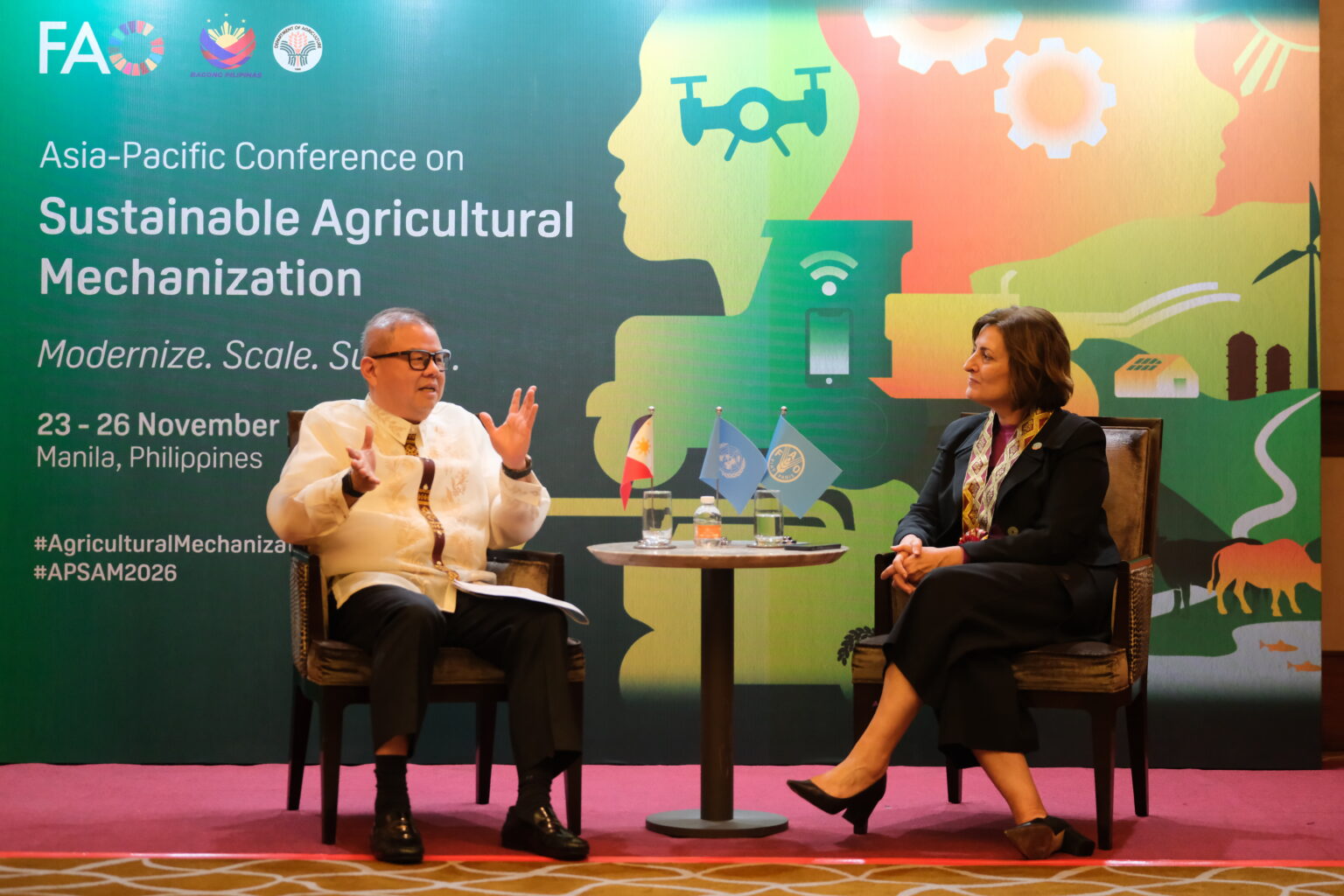
The Department of Agriculture (DA) has identified crop protection, soil testing, and disease surveillance as emerging priorities in the Philippines’ push for agricultural modernization, with plans to deepen cooperation with the United Nations Food and Agriculture Organization (FAO) to support local farmers.
DA Secretary Francisco Tiu Laurel Jr. made the announcement following a meeting this week with FAO Deputy Director-General Beth Bechdol, held on the sidelines of the inaugural Asia-Pacific Conference on Sustainable Agricultural Mechanization in Parañaque City. In a statement, Tiu Laurel noted that these three areas are now central to the country’s vision of modern, practical agriculture, alongside reliable irrigation and improved farm technology access. Drawing on his own experience as a farmer, he emphasized that preventing and addressing pests and diseases early is just as critical as investing in machinery, since outbreaks can lead to total harvest losses.
The two sides reviewed ongoing collaboration, particularly efforts to combat Fusarium wilt Tropical Race 4 affecting the country’s banana industry, and discussed expanding technical support to cover more crops including onions, coconuts, mangoes, and corn, as well as pest management for sugarcane. Bechdol outlined FAO’s focus on helping countries build coordinated response systems, including better surveillance, laboratory support, and training for veterinary and agricultural personnel. The FAO also noted the Philippines could serve as a regional hub for plant health cooperation within ASEAN, supporting shared efforts to address cross-border plant and animal disease risks.
Regarding soil testing, the DA confirmed the government has set up 16 soil laboratories and aims to establish coverage in every province nationwide. Regular soil testing helps farmers identify exactly what nutrients their crops need, cutting unnecessary spending on fertilizers while boosting harvest yields. The FAO expressed support for this initiative through its soil mapping and soil intelligence programs, which use scientific data to guide farming decisions. Both agencies agreed to ensure technical knowledge is turned into clear, practical guidance that farmers can easily follow, and that information remains accessible to young people entering the agriculture sector.