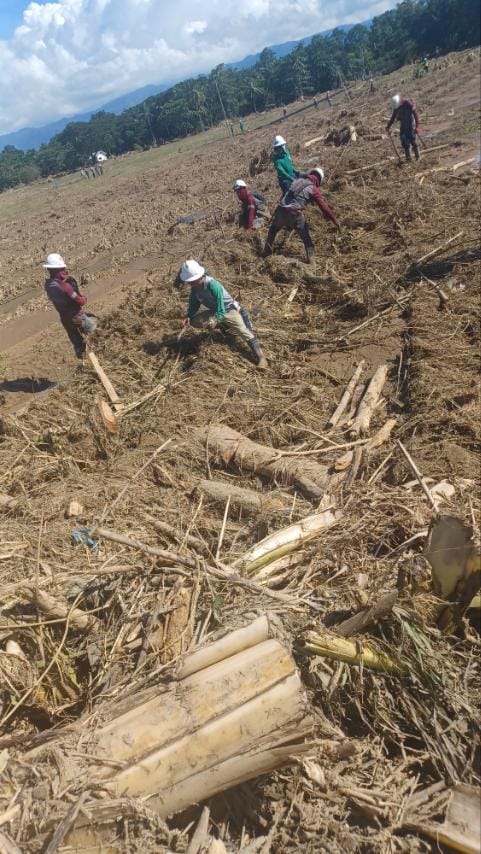
Efforts are in full swing to restore electricity to millions of homes left without power after Super Typhoon Uwan battered large parts of the country.
According to the National Electrification Administration (NEA), nearly three million households across 51 provinces in 12 regions lost power as Uwan caused massive flooding and toppled power lines.
NEA reported that 82 electric cooperatives were affected — 16 have fully restored service, 38 have partial power, 26 remain without electricity, and 2 are still unaccounted for. So far, more than half of the 972 municipalities have returned to normal operations. Damage to power infrastructure is estimated at ₱113.31 million.
NEA administrator Antonio Mariano Almeda said teams are inspecting all power lines and meters submerged by floods to ensure safety and prevent accidents. The agency remains on full alert to coordinate repairs and resource deployment.
Meanwhile, Meralco said its crews are working around the clock to restore service. As of Monday afternoon, outages had dropped to 166,000 customers, down from over 400,000 on Sunday night. Most remaining outages are in Cavite, Bulacan, and Rizal, with smaller numbers in Metro Manila, Laguna, Quezon, and Batangas.
Meralco spokesperson Joe Zaldarriaga asked for public patience and reminded residents to follow electrical safety measures, especially in flood-hit areas.
The National Grid Corporation of the Philippines (NGCP) also reported that 27 power lines in Luzon and Visayas remain down. Restoration work will continue once conditions improve. NGCP noted that power loss in some areas may stem from damage to either its transmission facilities or local utility lines.
The Department of Agriculture has yet to release updated figures on agricultural losses, but earlier said it has prepared ₱379 million worth of seeds and farm inputs, ₱1.24 million in animal feeds, ₱771,620 worth of fish fingerlings, and ₱2.57 million bags of rice from the National Food Authority for affected communities.