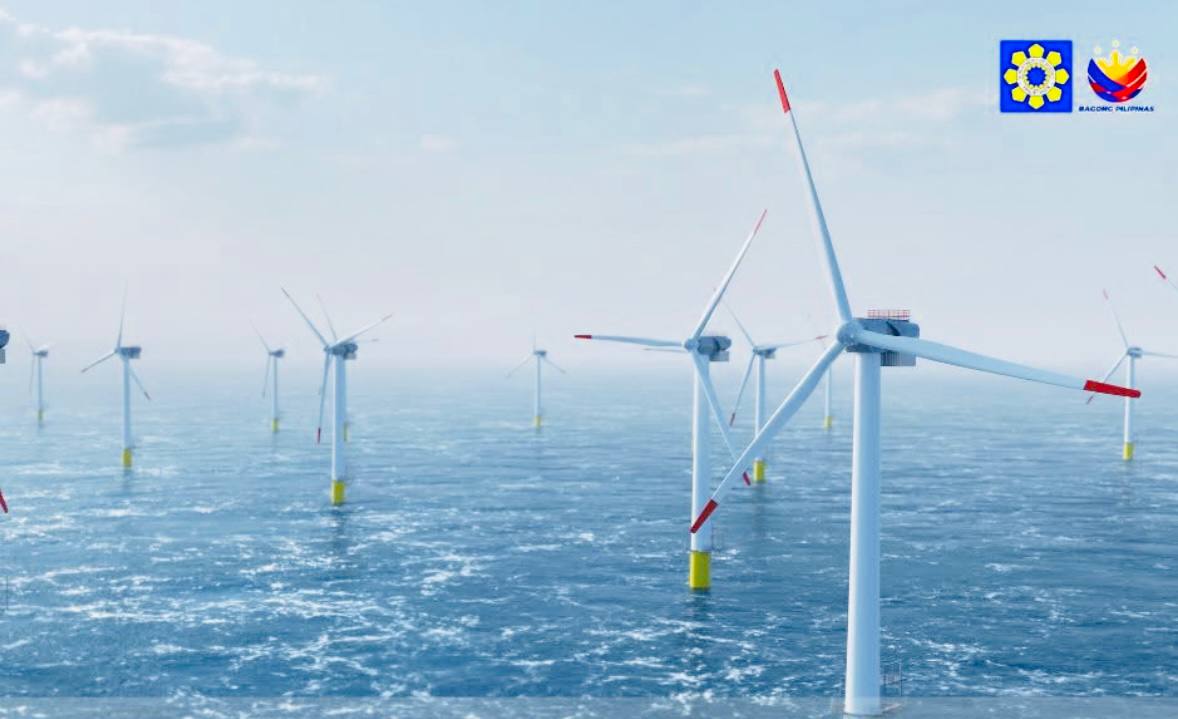
The Wind Energy Developers Association of the Philippines Inc. (WEDAP) has expressed optimism over the Energy Regulatory Commission’s approval of an initial P11 per kilowatt-hour (kWh) tariff for offshore wind (OSW) projects.
The rate, set as the Green Energy Auction Reserve (GEAR) price, is seen as potentially enough to attract credible investors to develop large-scale offshore wind farms in the country. WEDAP said the ERC struck a careful balance between keeping rates affordable for consumers and ensuring projects remain viable over their 20-year lifespan.
While the approved tariff is lower than the early offshore wind rates offered by countries such as Denmark and the United Kingdom—which were equivalent to about P14 to P15 per kWh in today’s terms—WEDAP noted that similar support levels helped jumpstart those markets. Japan and Taiwan also offered comparable initial rates when launching their offshore wind industries.
Industry leaders emphasized that offshore wind is not just about power generation. Projects are expected to create jobs, upgrade ports and logistics, and open opportunities for local manufacturing, helping boost regional economies and national industrial capacity.
WEDAP said it expects offshore wind to follow a similar path to the Philippines’ renewable energy feed-in-tariff program introduced in 2011, where initial incentives were higher but gradually declined as local supply chains and expertise developed. The group pointed to the United Kingdom’s experience, where offshore wind costs dropped significantly over a decade due to policy clarity and stable auction systems.
The ERC is also considering a one-time indexation mechanism to protect projects from foreign exchange and inflation risks, a move seen as improving investor confidence while helping maintain long-term price stability for consumers. Public consultations on the tariff indexation rules are scheduled next month.
Under the government’s Green Energy Auction Program (GEA-5), the Philippines aims to develop 3,300 megawatts (MW) of fixed-bottom offshore wind capacity between 2028 and 2030. Developers will compete by offering prices at or below the ERC-set GEAR price, with incentives tied to meeting project timelines.
The Department of Energy has also released an offshore wind guidebook to streamline the more than 80 permits required for projects, helping reduce red tape while ensuring environmental and social safeguards.
The Philippines has an estimated offshore wind potential of over 178,000 MW, with 92 service contracts already awarded covering more than 65,000 MW. Currently, however, the country’s installed wind capacity stands at 427 MW—just 1.3 percent of the power mix—and all of it comes from onshore projects.
With the new tariff in place, industry players say offshore wind could mark a transformative step toward expanding clean energy, strengthening energy security, and delivering long-term benefits to both the industry and consumers.