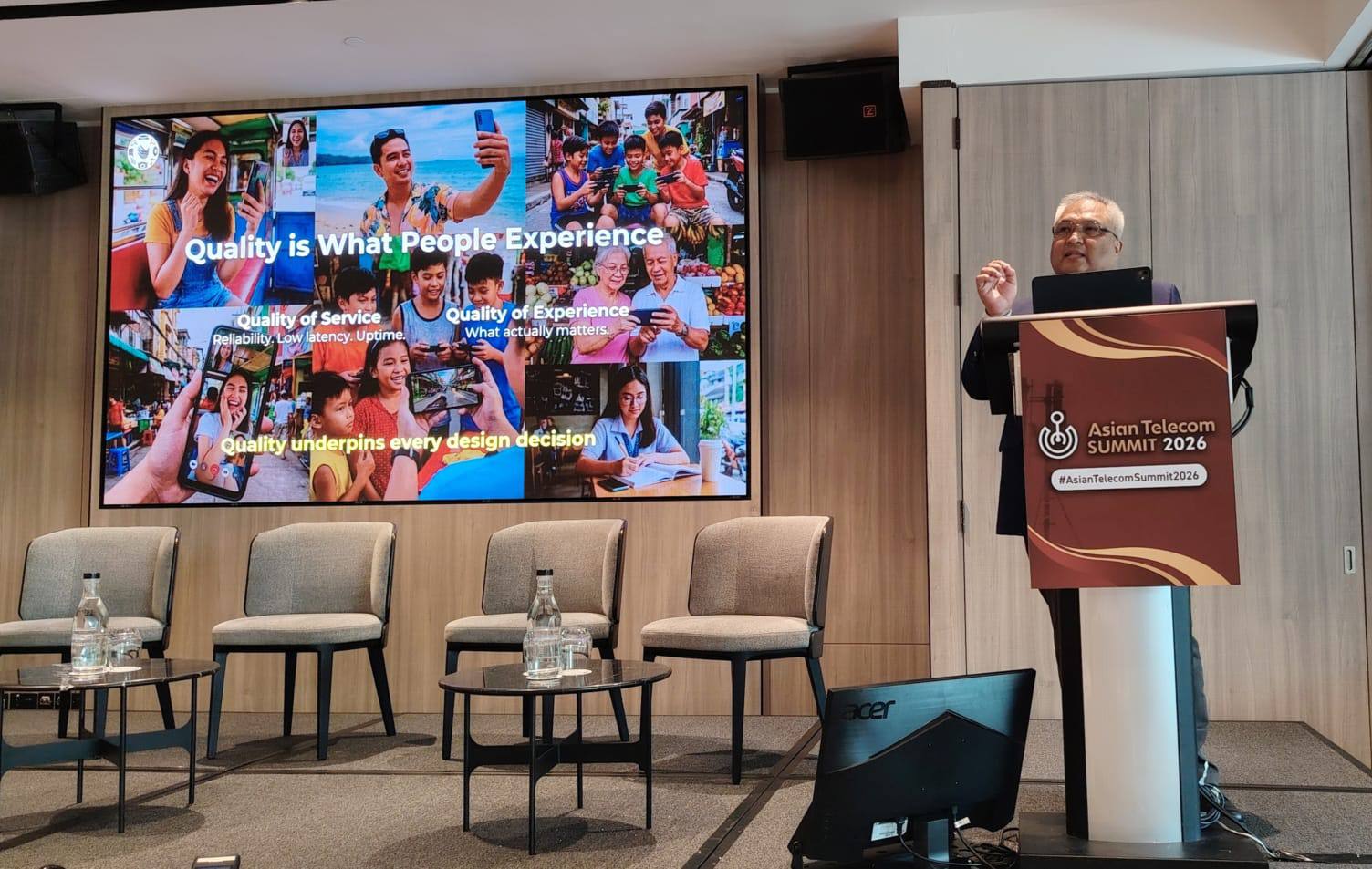
At the Asian Telecom Summit 2026 held at the Grand Copthorne Waterfront Hotel, Globe Telecom outlined major investments aimed at strengthening connectivity across the Philippines, positioning telecommunications as critical infrastructure for both businesses and consumers.
Speaking at the regional gathering of telecom leaders, Globe president and CEO Carl Cruz said reliable connectivity is essential in a country of more than 7,600 islands frequently hit by typhoons, floods, and earthquakes. He said the company’s strategy focuses on building resilient, inclusive, intelligent, and high-quality networks designed for real-world conditions.
Globe is pursuing a multi-network approach that combines mobile, fiber, fixed wireless, and satellite technologies. A key development is its Direct-to-Cell partnership with Starlink — the first of its kind in Southeast Asia — which integrates low-earth orbit satellite technology into Globe’s national network.
The move expands coverage to remote and disaster-prone areas, helping ensure that communication lines remain open during emergencies. For consumers, this means better access to mobile services in hard-to-reach communities. For businesses, it provides more reliable connectivity for operations, even in areas with limited infrastructure.
Globe said it is investing in low-latency, high-capacity, and redundant systems supported by artificial intelligence to monitor and optimize network performance. Portable solutions such as Network-in-a-Box and Cell-on-Wheels are deployed during disasters to restore service quickly.
The company is also strengthening its enterprise offerings through application programming interfaces (APIs), enabling companies and developers to securely access network capabilities. Platforms such as Nokia’s Network Exposure Platform, along with Globe’s own digital tools like Concati and M360, allow businesses to improve security, verify users, and create new digital services. Regional collaboration through the Bridge Alliance API Exchange extends these services across Asia.
These investments are expected to support industries that depend on stable connectivity, including finance, e-commerce, logistics, education, and emergency services.
Beyond infrastructure, Globe continues community programs such as Bayanihan SIM and Alagang Globe, which promote affordable access, digital literacy, and livelihood opportunities. In provinces like Bulacan and Cotabato, residents gain access to learning platforms like DepEd TV and Khan Academy, as well as financial services such as GCash and online marketplaces.
For consumers, these initiatives aim to make internet access more affordable and useful for education, small businesses, and everyday services. For corporations, wider digital adoption creates new markets and strengthens the overall digital economy.
Globe said its long-term investments are focused on building future-ready, energy-efficient, and AI-capable networks that can support both economic growth and public service needs across the Philippines.