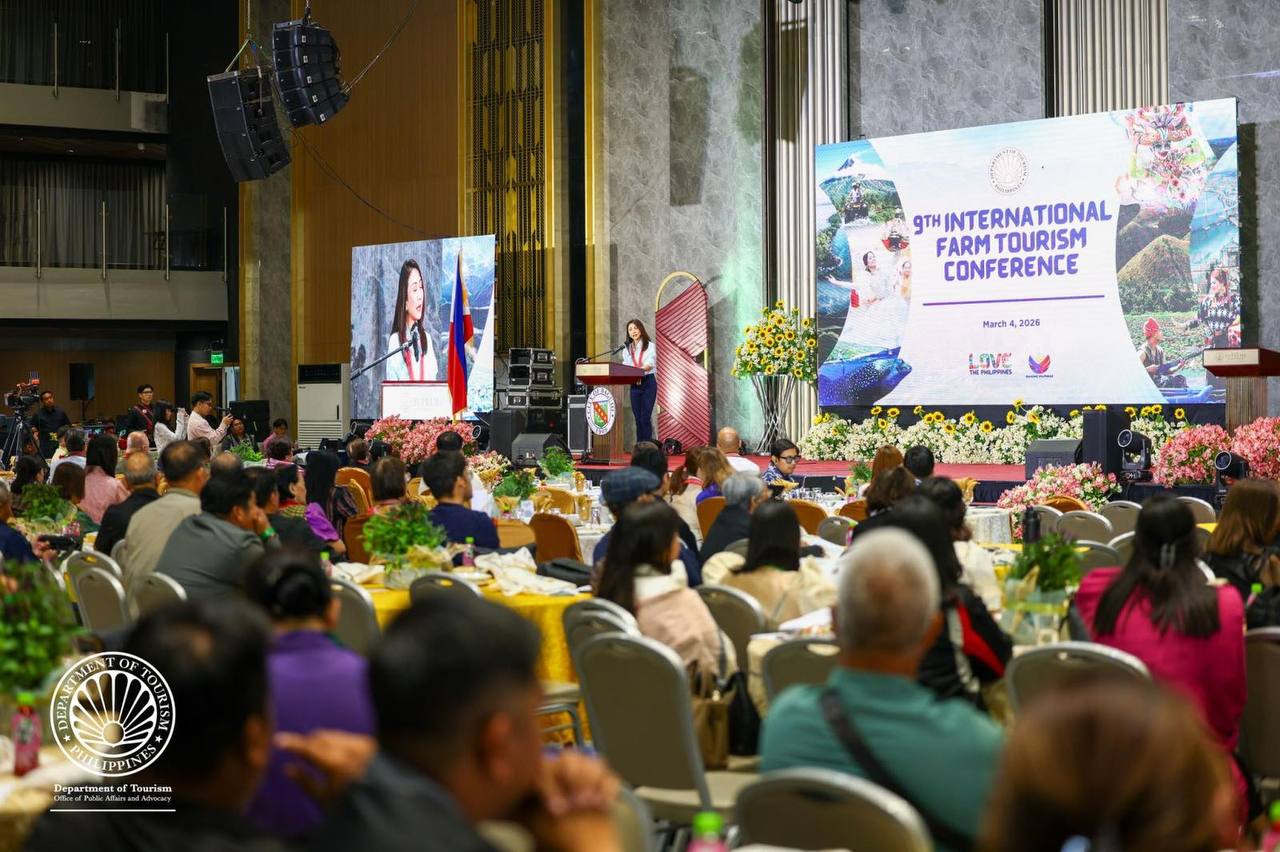
Fresh from unveiling the Farm Tourism Strategic Action Plan (FTSAP) 2026–2031, the government is shifting focus from policy design to execution, aiming to translate the roadmap into tangible gains for farmers and rural communities.
Momentum for implementation took center stage during the 9th International Farm Tourism Conference held March 4 in Baguio City.
Organized by the International School of Sustainable Tourism and led by tourism advocate Mina Gabor, the event gathered farm operators, tourism entrepreneurs, policymakers and development partners to align priorities for the sector’s next growth phase.
The Department of Tourism (DOT) described the conference as a key step in translating national strategy into concrete programs that can be implemented across rural destinations.
Developed in partnership with the Department of Agriculture and the Department of Trade and Industry, the FTSAP outlines measures to improve standards, strengthen infrastructure, expand enterprise development and integrate farm tourism sites into broader tourism markets.
Tourism Secretary Christina Garcia Frasco emphasized the natural synergy between agriculture and tourism. “Gastronomy begins with our farms, our fisheries, and the communities that produce the food that defines our national table,” she said, noting that farm tourism strengthens agricultural supply chains while embedding rural communities into the tourism value chain.
The economic potential is significant. According to the DOT, food and beverage services account for 17.1 percent of inbound visitor spending, making gastronomy-driven experiences a powerful channel for spreading tourism revenues beyond traditional urban hubs.
By linking farms directly to travel experiences—from farm stays and harvest activities to culinary tours—the government hopes to generate new income streams for rural enterprises.
The project, if executed effectively, could not only diversify tourism offerings but also support climate-resilient agriculture and position the Philippines as a leading destination for authentic farm- and food-based tourism.