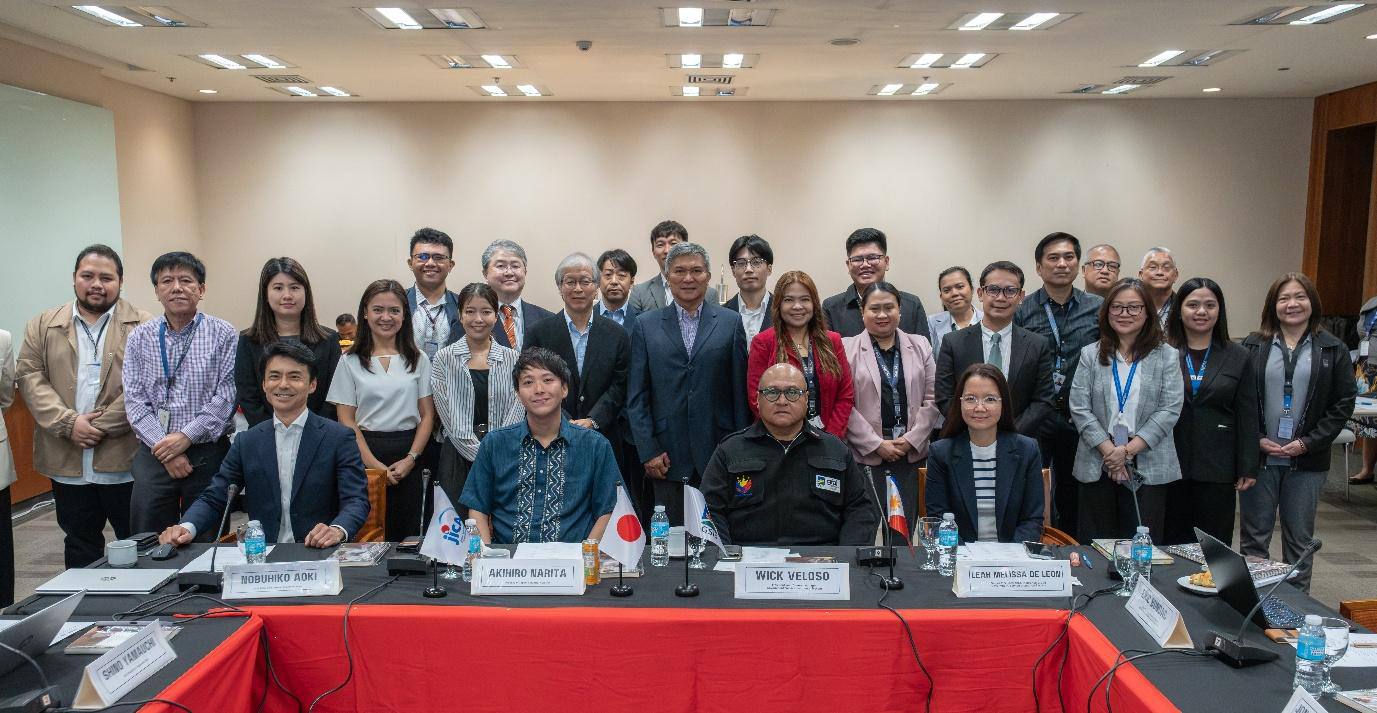
The Government Service Insurance System (GSIS) and the Japan International Cooperation Agency (JICA) are advancing a project to improve how government assets are valued and insured, following their second Joint Coordinating Committee meeting on March 5.
The initiative aims to create a standardized and science-based method for estimating the replacement cost of public assets insured by GSIS. This will help ensure more accurate insurance coverage and fairer risk-based premiums for government properties across the country.
GSIS president and general manager Wick Veloso said the project addresses long-standing gaps in government property records, noting that many agencies still have incomplete or outdated asset data. Establishing reliable valuations will help government agencies better protect their assets and recover faster after disasters.
GSIS insures thousands of public properties, including schools, hospitals, bridges, and municipal buildings. Accurate valuation is important to ensure that these assets are properly insured and that funds are available to restore services after damage from natural disasters.
JICA senior representative Nobuhiko Aoki said the project also supports the country’s disaster risk financing strategy by helping ensure that funding is available for recovery after major disasters.
The initiative will integrate hazard data from the GeoRiskPH Platform through a partnership with the Philippine Institute of Volcanology and Seismology (PHIVOLCS). The platform provides nationwide information on hazards such as earthquakes, volcanic eruptions, landslides, and liquefaction.
GSIS also plans to link the project with its upcoming General Insurance Information System (GIIS), a digital platform designed to modernize its insurance operations. Once integrated, the system is expected to allow automated asset valuation, more consistent underwriting, and better disaster risk analysis.
Officials said the project will strengthen the government’s ability to protect public assets and ensure quicker restoration of essential services after disasters.