The Philippines on Friday urged fellow members of the Association of Southeast Asian Nations (ASEAN) to reinforce policy stability and cooperation across the region, warning that rising geopolitical tensions are increasingly shaping investment flows and economic confidence.
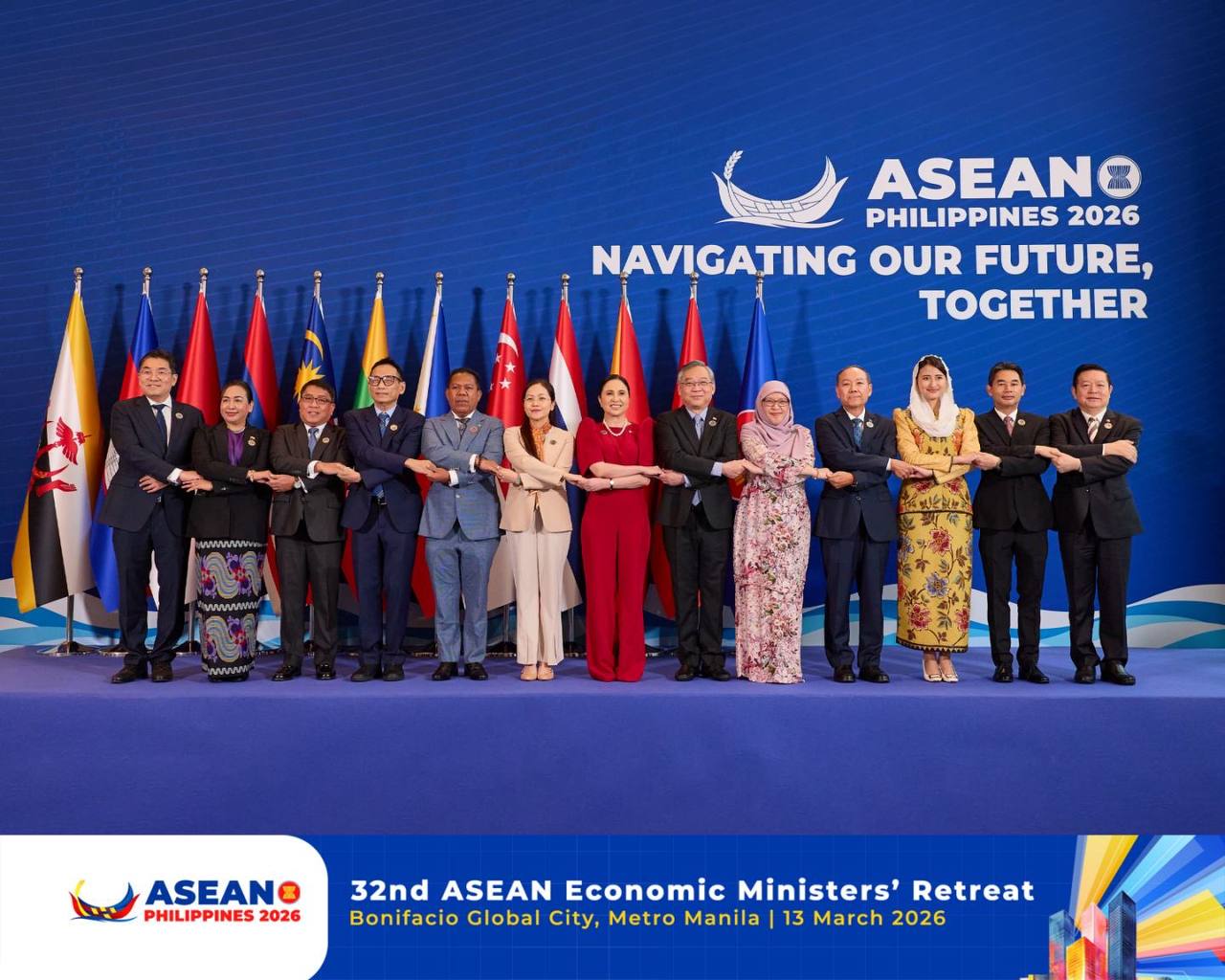
Speaking at the 32nd ASEAN Economic Ministers Retreat in Bonifacio Global City in Taguig, Trade Secretary Cristina Roque said ASEAN must ensure the region remains a reliable destination for investors despite growing global uncertainty.
Roque said recent developments in the Middle East highlight how geopolitical conflicts can quickly translate into economic shocks, from volatile energy prices to disrupted shipping routes and wavering investor sentiment.
“Geopolitical tensions are no longer distant headlines—they are immediate economic shocks,” Roque said, stressing that ASEAN economies must prepare collectively for a more unpredictable global environment.
She argued that maintaining investor confidence requires more than the bloc’s traditional commitment to open markets. ASEAN, she said, must strengthen coordination among its member states to anticipate risks and respond more decisively to global disruptions.
“For ASEAN, resilience is no longer an aspiration; it is our primary shield,” Roque said.
The Philippine trade chief also pushed for the transformation of the ASEAN Geoeconomics Task Force into a formal ASEAN Geoeconomic Group, which would work alongside the ASEAN High-Level Task Force on Economic Integration. The proposed body would help the region address strategic economic issues ranging from supply chain security to shifting investment patterns.
“We are not just reacting to global shifts—we are navigating them together,” Roque said.
The AEM retreat serves as a platform for Southeast Asian economic ministers to deepen regional partnerships, promote innovation and accelerate digital integration across the bloc.
Held under the theme “Navigating Our Future Together,” the meeting forms part of the Philippines’ ASEAN chairmanship under President Ferdinand Marcos Jr., which emphasizes stronger regional collaboration to sustain growth and competitiveness in an increasingly fragmented global economy.