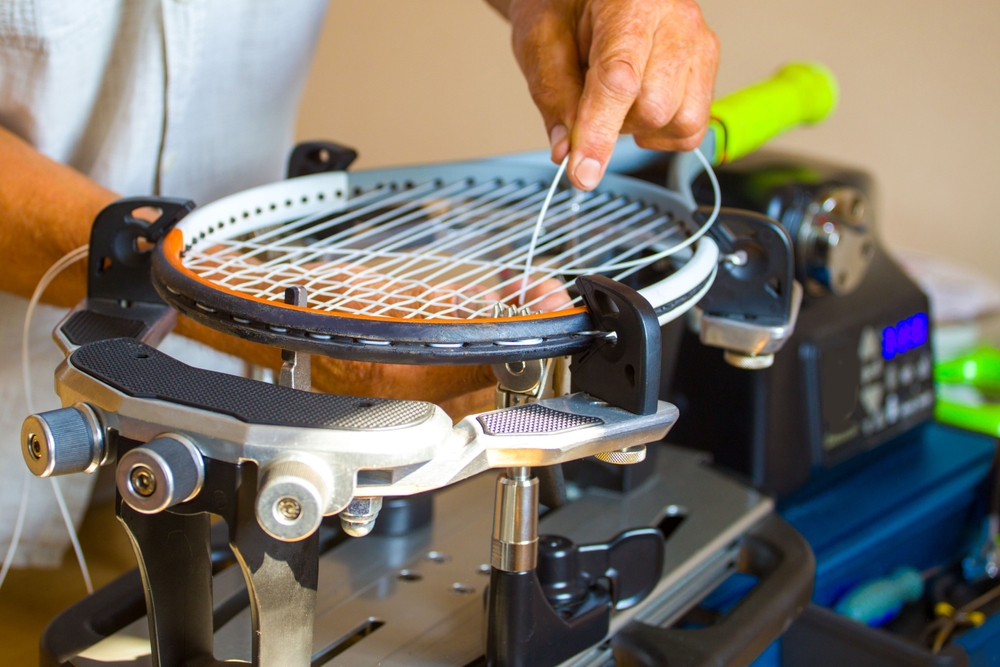
In tennis, winners are usually credited to timing, technique, and nerve. But a growing body of science is pointing to something far less visible and surprisingly influential. The real difference maker might be the strings inside the racket, quietly deciding how much of a player’s effort actually comes back as speed and spin.
That may sound like a technical detail best left to equipment rooms, but it is slowly becoming part of the competitive story. The next Alex Eala, for example, may not only be shaped by training blocks and match experience, but also by how her racket strings store and return energy on impact. At elite level, small equipment differences can travel a long way on the scoreboard.
The science behind this has been building for years. Studies have shown that stiffer rackets and lower string tension can increase ball rebound speed. Others have found that string patterns influence topspin and shot trajectory. Even the way strings rub against each other during impact can change how the ball behaves, which is a reminder that a racket is not just a frame with strings, but a small, responsive system.
A new study by Adjani S. Aguilar of the University of the Philippines Diliman, published in the April issue of the Philippine Journal of Science, takes this further. Using data from more than 4,400 tennis string samples, the study examines how string stiffness relates to energy return, or how efficiently a shot transfers energy from player to ball.
The results are not simple, and that is the point. Polyester strings tend to show a stronger link between stiffness and energy return than non polyester strings. Lower string tension strengthens this relationship, while faster swing speeds make it more pronounced. In practical terms, the same swing can produce different outcomes depending on how the racket is set up.
Earlier research helps explain why. Energy transfer in tennis depends on both the ball and the string bed, and small changes in stiffness can shift how much energy stays in the strings versus how much goes into the shot. That can affect pace, spin, and control in ways players feel immediately, even if they cannot see them.
Aguilar’s findings underline a simple but important idea. There is no single “best” string setup, only setups that behave differently depending on the player using them. Equipment is not neutral. It actively shapes performance, influencing how much of a swing becomes pace, spin, or control.
It also helps explain why players, including Eala, tend to stay loyal to setups like Babolat rackets. At this level, it is not just comfort or habit. It is predictability, how energy comes off the strings, how spin and pace behave, and how the same swing produces the same shot under pressure. In Harry Potter terms, it is simple enough: the wand chooses the wizard.
So while fans watch for the next breakout star, part of that rise may come from something almost invisible. Not just talent or training, but the quiet physics happening inside a tightly strung frame.