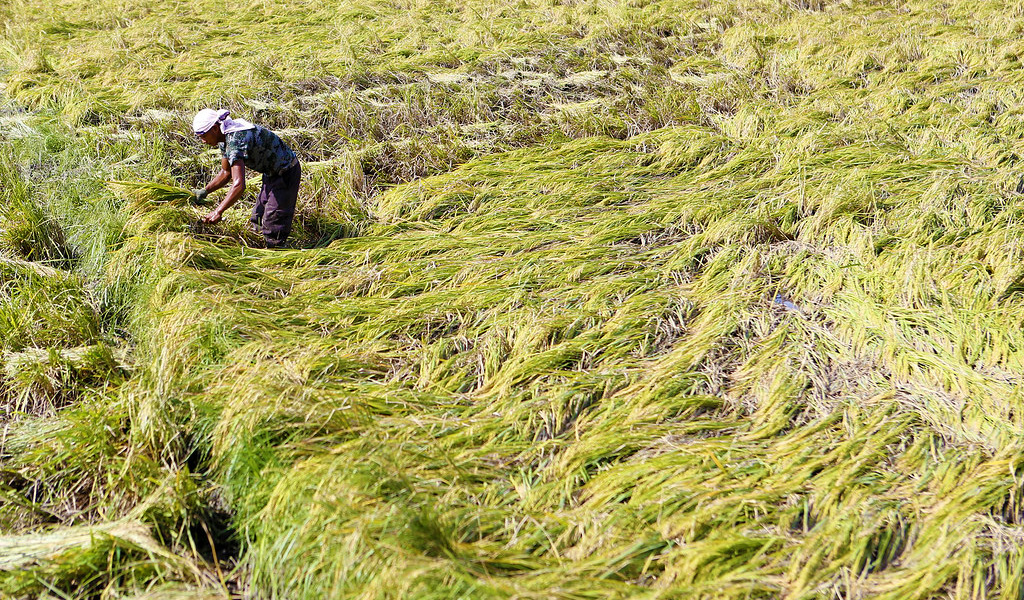
Rice and corn production declined in the first quarter of 2026, reflecting lingering damage from late 2025 typhoons that disrupted planting schedules and destroyed standing crops across key farming regions.
Data from the Philippine Statistics Authority showed palay output fell to 4.4 million metric tons from 4.69 million metric tons a year earlier, while corn production eased to 2.27 million metric tons from 2.4 million metric tons. The contraction highlights the continued sensitivity of agricultural output to extreme weather events, which remain a recurring constraint on production in major farming provinces.
The decline in rice and corn is particularly significant for overall farm sector performance, given that both commodities are core drivers of crop output, which accounts for a large share of agricultural value added. Weakness in these staples therefore has broader implications for first-quarter agriculture growth.
By segment, irrigated rice production slipped to 3.44 million metric tons from 3.66 million metric tons, while rainfed output recorded a steeper decline to about 967,235 metric tons from 1.04 million metric tons. The sharper drop in rainfed areas underscores heightened vulnerability to erratic rainfall patterns, flooding, and limited irrigation support in less resilient farming systems.
Corn production showed a mixed trend. White corn edged higher to 474,900 metric tons from 471,973 metric tons, but yellow corn fell to about 1.79 million metric tons from 1.93 million metric tons, pulling down overall output.
Most of the crops harvested in the first quarter were planted in the final quarter of 2025, when successive typhoons brought heavy rainfall, strong winds, and flooding that damaged crops in several major producing regions, including Cagayan Valley and parts of Western Visayas.
Improved weather conditions in early 2026 are expected to support recovery in the ongoing dry season harvest cycle, typically gathered from late March through May, although gains will depend on the extent of field recovery and replanting efforts following last year’s storm damage.