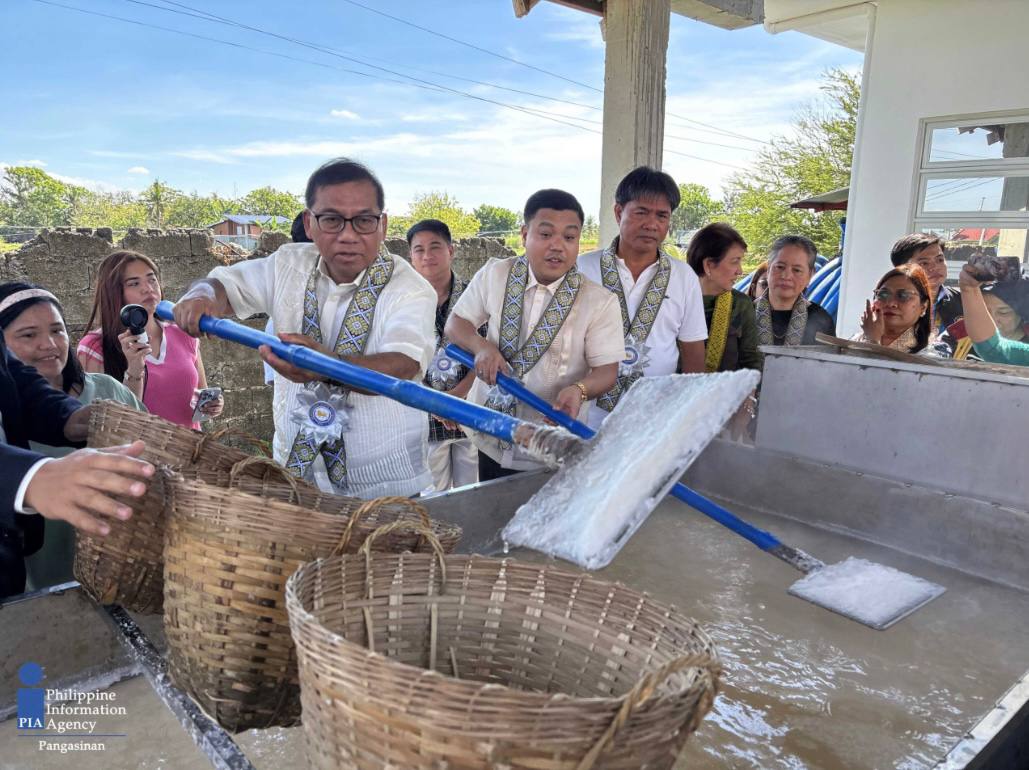
Government fisheries authorities are pushing for more support and safeguards for Filipino salt makers, as most of the salt used in the country comes from abroad.
At a recent industry forum in Zamboanga City, BFAR chief Elizer Salilig said urgent action is needed to strengthen local production. Data from the Department of Agriculture shows the Philippines imports around 550,000 metric tons of salt every year—this covers about 93 percent of total national demand.
Salilig noted that helping local salt farmers means ensuring the country has a steady supply of an essential item, while also supporting the income of thousands of families living in coastal areas. He encouraged consumers to buy locally produced salt as these programs take effect.
The government has lined up several measures to help the sector:
• Construction of a salt warehouse in Taguig to keep stocks in good condition
• Distribution of solar-powered ice machines and generators to modernize operations
• Provision of technical guidance, improved processing facilities, and loans for farming communities
Zamboanga and neighboring areas will play a big role in the national plan, given their abundant natural resources and long history of salt making.
Farmers also recently took part in a market matching activity, where they met directly with buyers, food manufacturers, and sellers to speed up delivery and reduce costs.
Earlier this February, the country’s first research center dedicated to salt development opened at Pangasinan State University. Funded with P43 million from the Department of Science and Technology, the facility will work on new methods and technologies to help the industry grow.