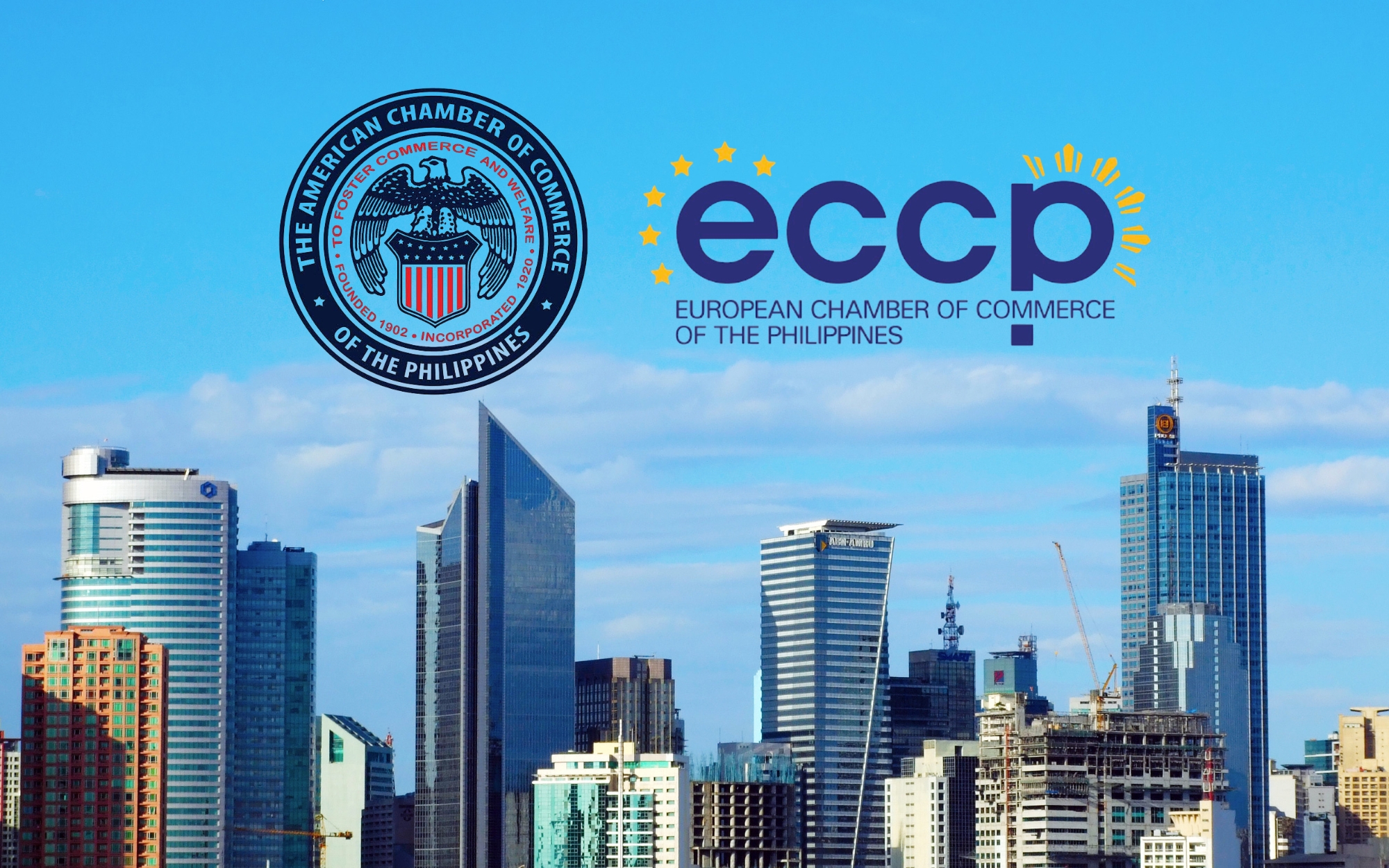
Foreign business groups welcomed the Philippines’ elevation to upper middle-income economy status as a strong endorsement of the country’s economic progress, while urging the government to accelerate reforms needed to convert the milestone into sustained investment and long-term growth.
The European Chamber of Commerce of the Philippines (ECCP) said the World Bank’s reclassification reflects the country’s resilience, policy reforms and steady development, adding that the timing could provide fresh momentum to ongoing Philippines-European Union free trade agreement (FTA) negotiations.
The chamber said an ambitious FTA would build on the benefits of the EU’s Generalised Scheme of Preferences Plus (GSP+), while opening new opportunities in sustainability, digitalization, innovation and resilient supply chains—areas that increasingly influence global investment decisions.
The American Chamber of Commerce of the Philippines (AmCham), meanwhile, said the upgraded income status enhances the country’s appeal to multinational firms reassessing investment destinations amid shifting global supply chains. It cited the Philippines’ young, English-speaking workforce, expanding consumer market and strong economic ties with the United States as key advantages for attracting investments in advanced manufacturing, digital services, healthcare and infrastructure.
Both groups cautioned, however, that the World Bank’s recognition should be viewed as a launching pad rather than a finish line.
They called for faster implementation of structural reforms, including improving transport and digital infrastructure, ensuring reliable and competitively priced energy, streamlining regulations, and expanding public-private partnerships to strengthen the country’s investment climate.
The message from foreign investors is clear: upper middle-income status enhances the Philippines’ international credibility, but future investment decisions will hinge less on income classification than on the government’s ability to sustain reforms, improve competitiveness and create a more predictable environment for doing business.