Jollibee Foods Corp. is preparing its biggest leap yet by exploring a New York listing for its international business. This move could give the Filipino restaurant giant greater firepower to accelerate global expansion and mark another Wall Street milestone for founder Tony Tan Caktiong.
The planned overseas listing follows Hotel101 Global, another company backed by Tan Caktiong, which debuted in July 2025 on Nasdaq, underscoring the growing confidence of Filipino companies in tapping the world’s deepest capital market.
Speaking to Context.PH after he attended the weekly meeting of the Tuesday Club, Jollibee Group Chief Integration, Sustainability, and Corporate Affairs Officer Jose Ma. Miñana said the company’s international business has reached a scale where new opportunities are opening up faster than ever.
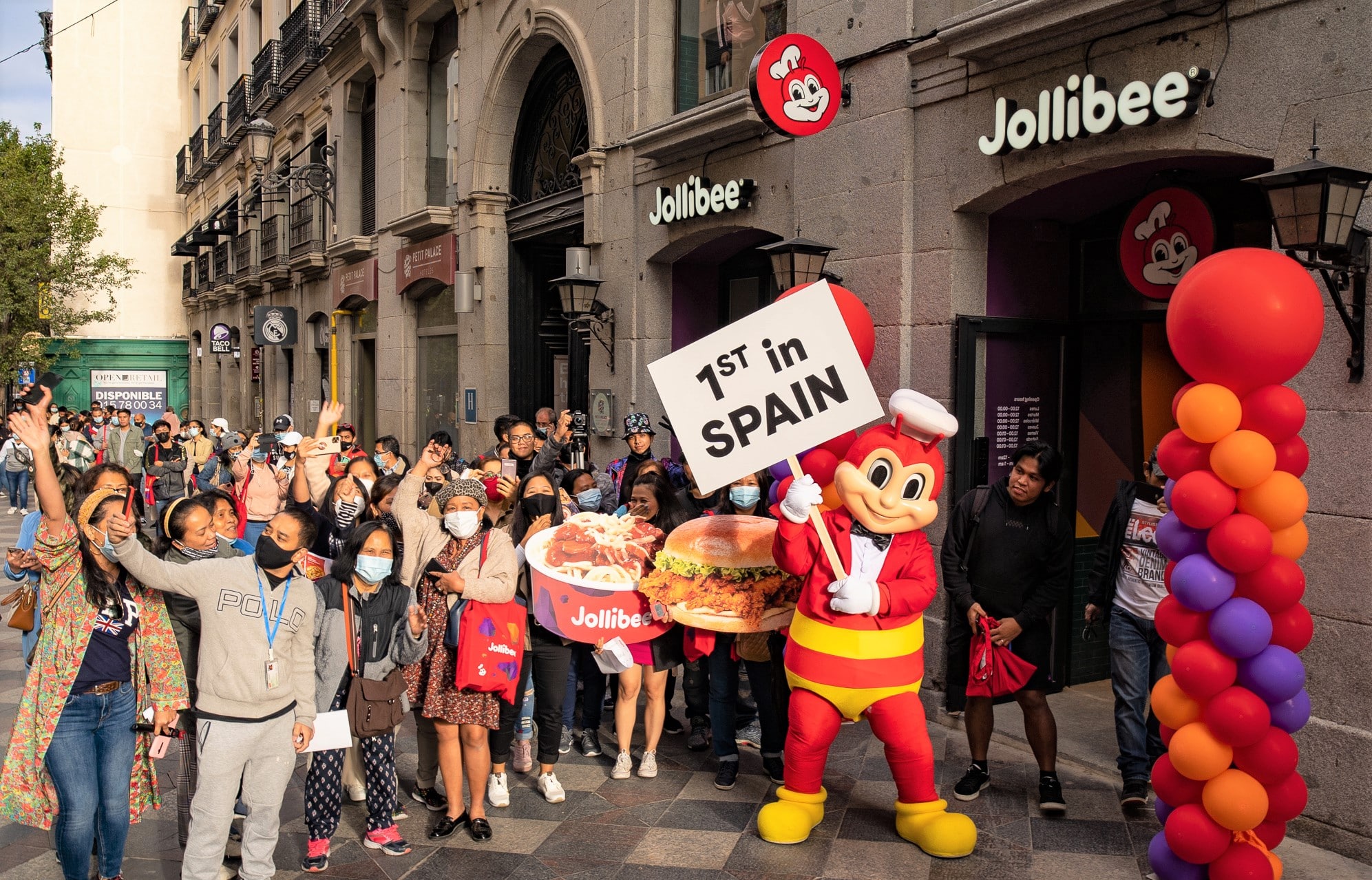
Founded in 1975 as a modest Magnolia ice cream parlor in Cubao, Jollibee reinvented itself three years later by serving burgers and spaghetti. Fifty years on, the once-lone busy bee has grown into a global swarm, with more than 10,000 stores, over 20 brands, and operations spanning 30 countries.
“The exciting part is that after all these years, we are growing even faster,” Miñana said. “When you think you have reached the top, there is another peak to conquer.”
The company’s international playbook has also evolved. Early expansion largely followed Filipino communities abroad, where homesick customers eagerly lined up for a familiar taste of home. One early gamble illustrates the strategy. Rather than opening first in Toronto or Vancouver, Jollibee chose Winnipeg, home to a large Filipino community.
“We opened when it was minus 30 degrees,” Miñana recalled. “Filipinos did not care. As long as Jollibee was open.”
Today, many overseas stores no longer rely on the Filipino diaspora alone. Markets such as Vietnam, where Jollibee now operates around 200 stores, show the brand can compete head-on for mainstream consumers. Yet for millions of Filipinos abroad, the sight of the familiar red-and-yellow bee still evokes a deep sense of pride.
“For Pinoys, whenever they go abroad and see Jollibee, it is a proud moment,” Miñana said. “I grew up with that feeling, and now we can show it to the world.”
A New York listing would reflect that evolution. Beyond raising capital, it would signal that Jollibee increasingly sees itself not merely as the Philippines’ favorite fast-food chain, but as a global restaurant company capable of standing alongside the industry’s biggest names. For Tan Caktiong, it would be another chapter in a remarkable journey from Cubao to Wall Street.