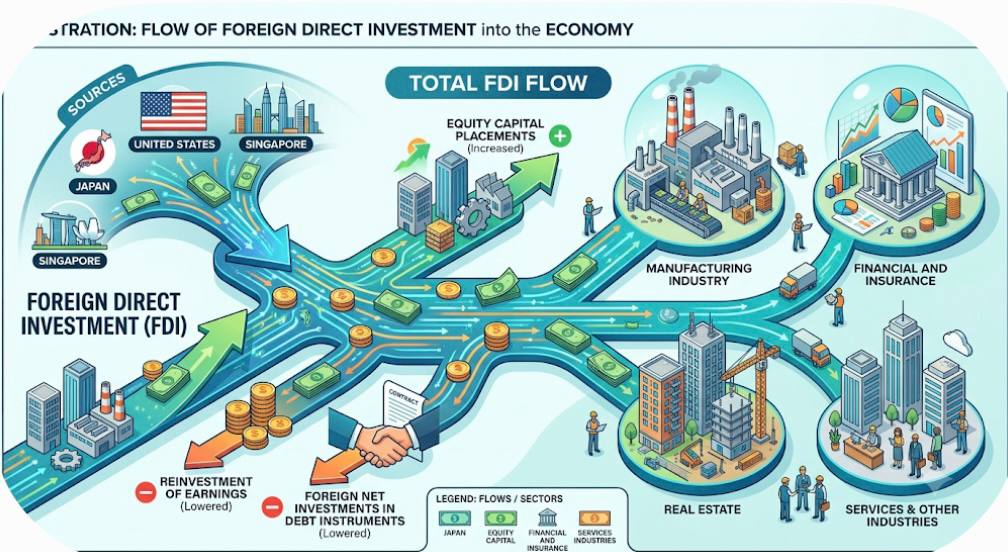
Foreign direct investment (FDI) slowed down during the first four months of the year, as international companies pulled back on lending and retained earnings, overriding a noticeable bump in fresh equity investments. According to the latest data from the Bangko Sentral ng Pilipinas (BSP), this dip reflects a shift in how multinational companies are funding their local operations rather than a total loss of interest in the country’s economy.
The BSP said the overall decline was primarily driven by a drop in two specific areas: intercompany debt instruments, which are essentially loans passed from parent companies abroad to their local affiliates, and the reinvestment of earnings. These cuts outweighed a healthy increase in new equity capital placements—the money foreign firms spend to buy into or establish local businesses.
Despite the lower overall total, international confidence remained highly visible in core sectors. Investors from Japan, the United States, and Singapore led the wave of new capital injections from January to April. This fresh money was heavily channeled into the manufacturing sector, financial and insurance activities, and real estate, signaling that long-term bets on the country’s industrial and corporate growth remain intact.
Economists track these specific central bank figures closely because they measure actual, realized cash moving into the economy, counting instances where a foreign investor holds at least a 10 percent stake. This differs fundamentally from government agency approval data, which only counts future investment pledges that may take years to materialize. The current dip serves as a reminder that while the country continues to successfully attract factory and finance investments from major global partners, shifting corporate credit conditions and dividend payouts can temporarily weigh down the total bottom line.