The Philippines is stepping up efforts to attract more Singaporean investments, with the Department of Trade and Industry (DTI) lining up a business mission that aims to convert growing investor interest into projects across manufacturing, digital services, agribusiness, and other high-growth industries.
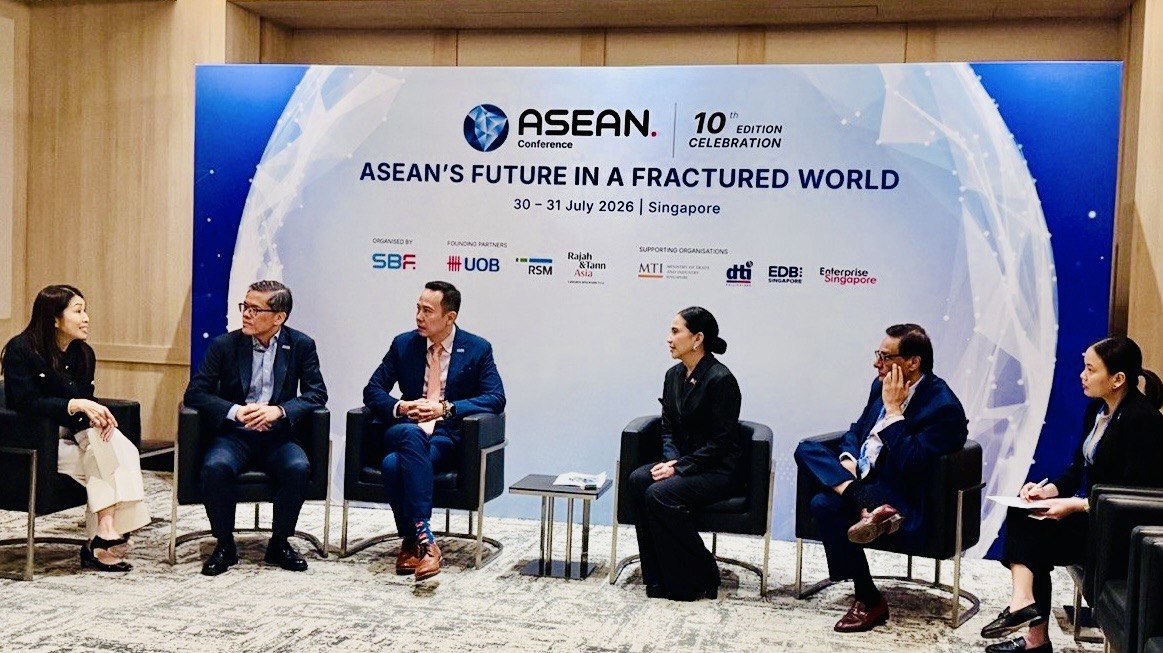
The initiative follows a July 31 meeting between Trade Secretary Cristina A. Roque and the Singapore Business Federation (SBF), as both sides sought to deepen commercial ties amid shifting regional supply chains and rising investment flows within Southeast Asia.
Roque said the Philippines offers Singaporean companies a strategic platform for serving both the domestic market and the broader ASEAN region, pointing to the country’s young workforce, expanding digital economy, and network of economic zones.
The DTI identified advanced manufacturing, semiconductors, agritech and food processing, business process outsourcing, digital services, retail, and green industries as priority sectors for investment. It also promoted New Clark City and the Luzon Economic Corridor as key destinations for technology-driven manufacturing, logistics, clean energy, and digital infrastructure projects.
The discussions laid the groundwork for an SBF business mission to the Philippines later this year, with participating companies expected to explore opportunities in business process outsourcing, agritech, manufacturing, retail, food and beverage, talent development, and digital services.
SBF officials also sought greater clarity on the proposed Digital Economy Framework Agreement (DEFA), saying the pact could create new opportunities for cross-border digital trade and investment. They likewise encouraged more business missions and regular bilateral engagements to accelerate commercial partnerships.
Roque said the DTI is prepared to support Singaporean investors throughout the investment process, from identifying suitable sites and local partners to facilitating permits, incentives, and workforce requirements.
The planned mission reflects the Philippines’ broader strategy of positioning itself as a regional investment hub as companies diversify production and supply chains across ASEAN. For Manila, translating business interest into actual investments will be critical to generating quality jobs, fostering technology transfer, and reinforcing the country’s role in regional economic integration under its 2026 ASEAN Chairship and Prosperity Corridors agenda.