The East Java Multipurpose Terminal is seeking to strengthen logistics links between East Java and Eastern Indonesia, a move that could widen market access, improve cargo flows, and give businesses more options for moving goods across the archipelago.
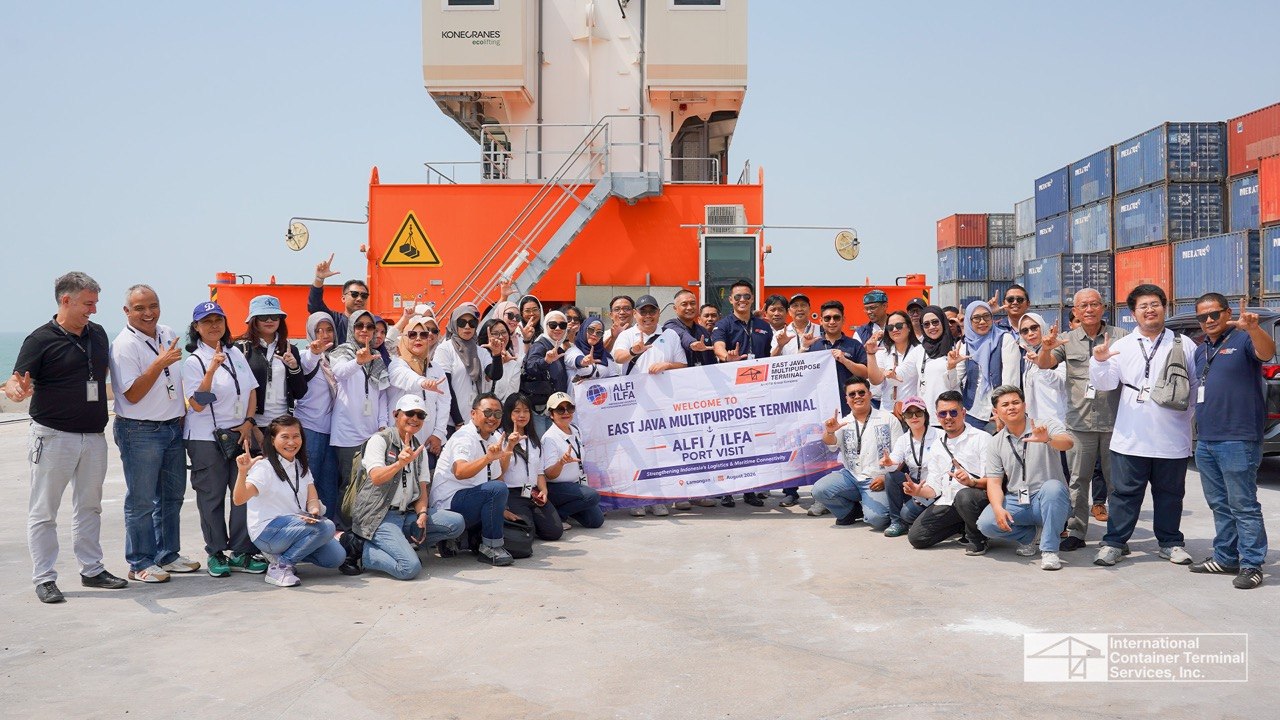
EJMT, the Lamongan operation of International Container Terminal Services Inc., recently met with members of the Indonesian Logistics and Forwarders Association East Java to discuss freight development, transport connectivity, and emerging trade opportunities.
EJMT Chief Executive Officer John Largo said the discussions offered insights into changing freight patterns and where demand is emerging.
“We are seeing growing interest in shipping routes linking East Java and Eastern Indonesia,” Largo said. “These conversations help us understand where demand is growing and how Lamongan can facilitate the movement of goods.”
Stronger links could benefit manufacturers, cargo owners, and logistics operators by creating additional routing options and improving connections between production centers and consumer markets.
ALFI/ILFA East Java Chairman Sebastian Wibisono said connectivity, competitive costs, and reliable transport remain critical to keeping cargo moving efficiently across Indonesia’s sprawling island network.
“For the logistics industry, connectivity, competitive costs and reliable transport options help keep freight moving efficiently,” Wibisono said.
The push comes as businesses look for more efficient ways to move goods across regions, particularly in a market where geographic fragmentation can add time and cost to supply chains.
Located within the Lamongan Shorebase complex, EJMT provides port, warehousing, and bonded logistics facilities and is connected to nearby industrial developments, including the Jakamitra Industrial Park i-sentra project.
Since starting operations in October 2024, the terminal has handled containerized, bulk, project, and heavy-lift cargo serving Lamongan, Tuban, and surrounding areas.
For ICTSI, the effort also highlights the broader role of its port investments in supporting regional supply chains. By strengthening links between ports, industrial centers, and inland markets, terminals such as EJMT can help companies gain more flexibility in sourcing and distribution.
The success of the strategy, however, will depend on whether stronger connectivity translates into competitive freight costs, reliable schedules, and enough cargo demand to sustain new routes.
For East Java and Eastern Indonesia, that could determine whether improved port infrastructure becomes simply an added logistics option or a meaningful driver of wider regional trade.