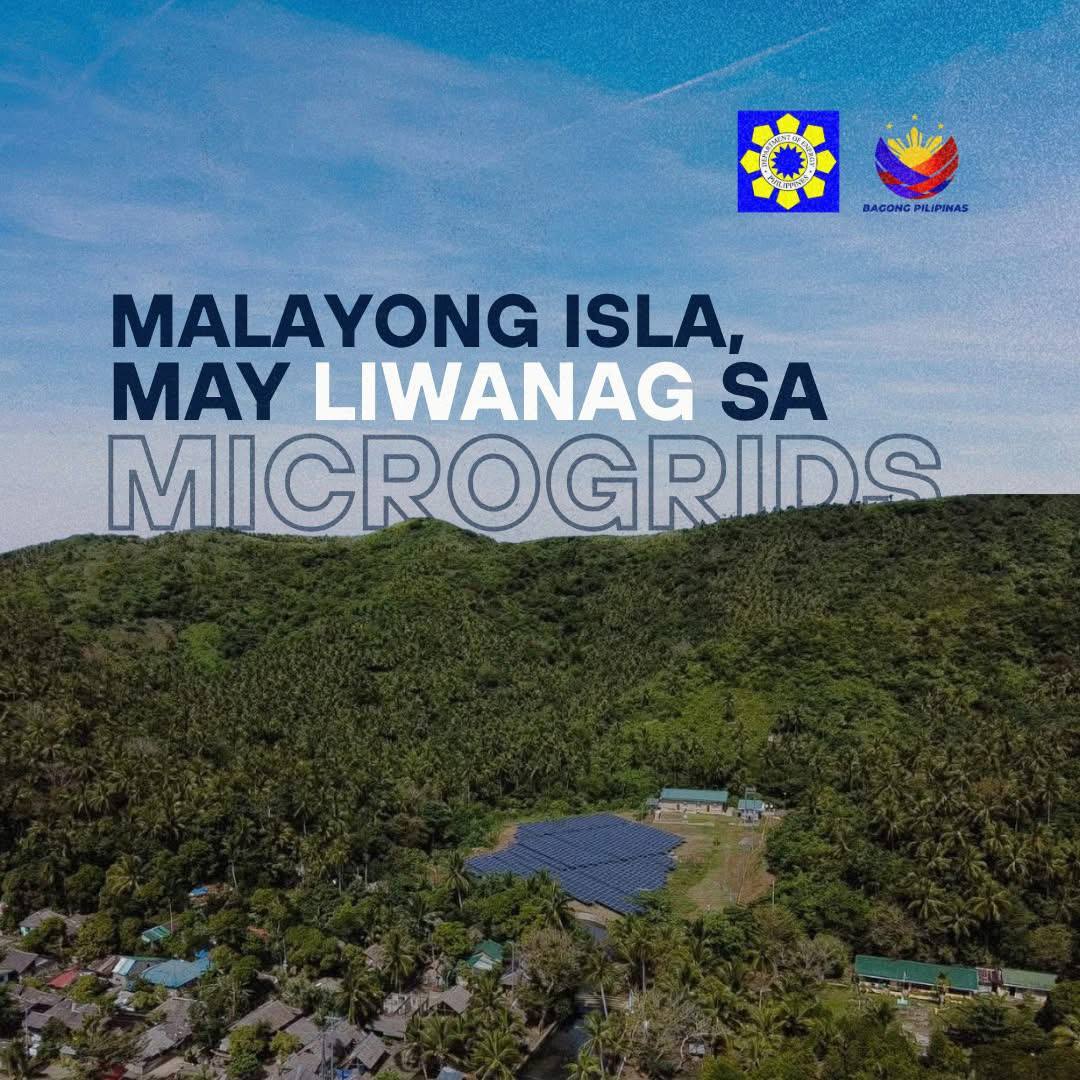
The Department of Energy (DOE) is moving forward with plans to bring electricity to more than 100,000 currently unenergized households across the Philippines, through an upcoming competitive bidding process for microgrid services.
The agency has identified an initial 369 underserved areas spanning 23 provinces as potential sites for development under the Microgrid Systems Act. This list is being released early to give prospective service providers time to complete technical checks and plan their investments ahead of formal selection rounds.
While the areas cover about 101,468 households, the DOE noted the list is still subject to final validation and updates. A microgrid operates as a self-sufficient local power network that can function even when disconnected from the national grid—making it ideal for remote and last-mile communities.
“For these families, electricity means more than just lighting—it supports education, health services, livelihood, and economic growth,” said Energy Secretary Sharon Garin. “This process will deliver reliable, affordable power to unserved communities while giving investors a clear, transparent path to participate.”
The initiative forms part of the DOE’s broader electrification roadmap and is supported by updated rules designed to make the bidding process more efficient and attractive. To reduce project risks and improve planning, the agency has partnered with the UK’s Partnering for Accelerated Climate Transitions (UK PACT) program. A site-assessment framework has been developed, with detailed studies already completed for areas in Camarines Sur and Palawan. A second phase of technical support is also being prepared for additional sites.
The DOE emphasized that the initial list is not final—areas may be added, adjusted, or removed based on further data and consultations. A confirmed list aligned with national electrification goals will be issued before each bidding round. The process remains open to qualified providers, who may also propose projects outside the published list, subject to regulations.
This effort ultimately aims to expand power access to communities beyond the reach of main utility lines, ensuring wider energy inclusion across the country.