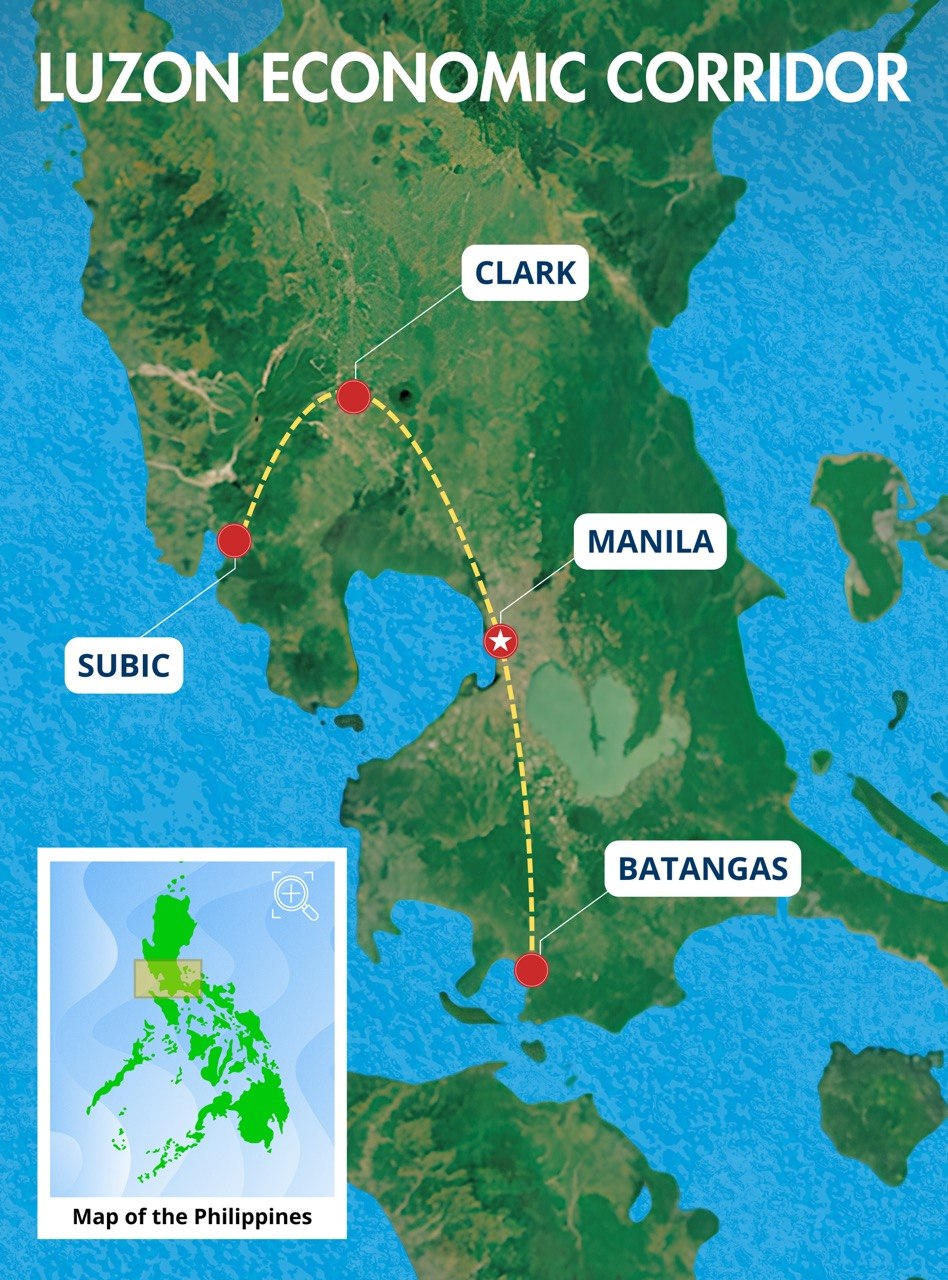
The 212-kilometer Subic-Clark-Manila-Batangas freight railway is emerging as a key test of whether the Luzon Economic Corridor can turn investor interest into actual infrastructure, with the government targeting tangible progress within the next 12 to 18 months.
Finance Undersecretary Angela Ignacio said the port-to-port railway is a cornerstone of the LEC, with the government working to complete its feasibility study and project design and establish a timetable for procurement and construction.
“The key milestone that we want to see, perhaps in the next 12 to 18 months, is really tangible progress on the Subic-Clark-Manila-Batangas freight railway,” Ignacio said.
Construction could potentially begin by the end of 2027 or in 2028, subject to the completion of preparatory work, she said.
The US Trade and Development Agency financed the railway’s feasibility study, with the final report expected to be delivered to the Department of Transportation shortly.
The proposed railway would connect major ports and economic centers across Luzon, potentially improving the movement of cargo between Subic, Clark, Metro Manila, and Batangas while supporting manufacturing and export-oriented industries.
Ignacio said the government would judge the LEC not by the number of investment announcements but by four outcomes: actual investments deployed, quality direct and indirect jobs created, infrastructure delivered on schedule, and export growth.
“We’re talking about actual investments deployed, not announced, not registered, but actually deployed into productive investments,” she said.
Turning the railway from a feasibility study into a construction project, however, will require the government to overcome familiar infrastructure bottlenecks, particularly right-of-way acquisition, permitting, and coordination among national agencies and local governments.
Ignacio said measures such as the Accelerated Reform Right-of-Way Act and policies covering strategic railways should help reduce delays and improve project execution.
The railway’s development could also provide a practical measure of whether those reforms are working.
“It’s really up to us now to implement these steps first, so that we can really translate the investor confidence that we have been seeing into an actual project,” Ignacio said.
For the LEC, the next 12 to 18 months will therefore be less about announcing another investment and more about showing that one of its flagship projects can move from planning to procurement and, eventually, construction.