What started as government livelihood support has grown into a self-sustaining business, transforming traditional Ayangan tribal farmers into empowered entrepreneurs and forest caretakers. Their turmeric, long grown locally, now earns higher value as processed tea and powder, backed by lasting management skills and market access.
For generations, this mountain community relied on labor-intensive farming with unpredictable earnings—vulnerable to bad weather, dependent on middlemen, and unable to add value to their harvest due to lack of tools, funds, and know-how.
The shift began in August 2005, when the Department of Environment and Natural Resources-Cordillera Administrative Region (DENR-CAR) awarded a 25-year Community-Based Forest Management Agreement (CBFMA) to their people’s organization, running until 2030. A key milestone came in July 2022: the Eastern Aguinaldo and Community Development Association (EACODEA) received aid under the CBFM-Comprehensive Agrarian Reform Project’s Hunger Mitigation component. Instead of introducing new, unfamiliar work, the program built on their existing knowledge and resources.
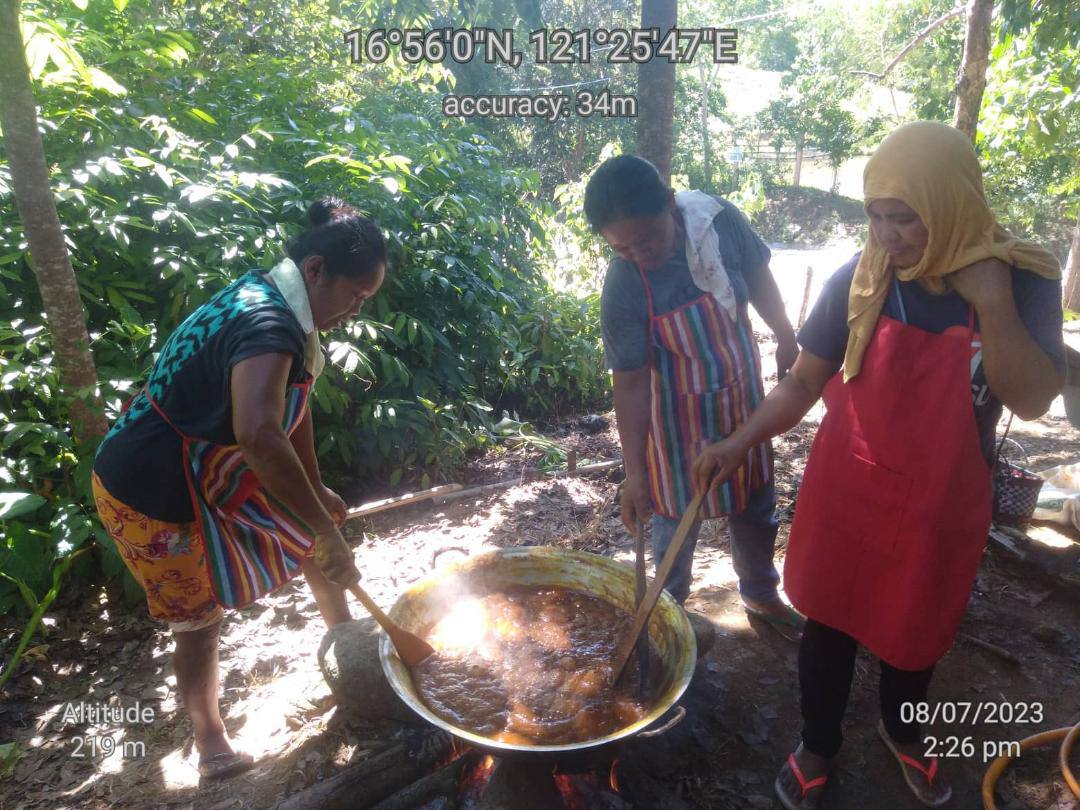
With support, the community focused on processing turmeric and ginger into higher-value goods, launching a turmeric tea enterprise. Organized in 2005, EACODEA now stewards 1,170 hectares of forest, tying livelihood growth to forest protection.
DENR Secretary Juan Miguel “Mitch” Cuna noted the program’s goal is true empowerment: “We want communities under CBFM to run self-sustaining enterprises that support both their families and their forest stewardship. This aligns with President Ferdinand R. Marcos Jr.’s directive to strengthen agricultural value chains so farmers earn more through processing and post-production work.”
Beyond providing grinders, dehydrators, and packaging tools, the DENR trained EACODEA’s 155 members in production, finance, marketing, and overall business management—skills designed to endure beyond direct aid. In April 2026, the group secured ₱2.33 million in CBFM-CARP funding for its Agroforestry Development Project, and partnered with the Department of Trade and Industry (DTI) to boost enterprise capacity.
Products are now sold at Ubao Market and via digital platforms, reaching customers outside the area. This success has also helped protect the forest: lands once threatened by “kaingin” (slash-and-burn) farming and fires are now planted with trees, community members said.
“CBFM gave us skills, steady income, and sustainable livelihoods. Our plantations also shield our lands from damage,” said EACODEA President Juanito G. Maguiwe. Fellow member Noli G. Maguiwe added: “Before, forests were being cleared for other uses. Now, those areas are being restored with forest and fruit trees.”
Maguiwe expressed deep gratitude to the DENR: “Thank you for visiting us, tracking our progress, and acting promptly on our concerns.”
The Ayangan experience demonstrates how government support can evolve from short-term aid to lasting community strength—turning traditional crops into sustainable businesses while protecting the environment.