The Department of Agriculture is backing a proposed P210-per-kilo floor price for live hogs as farmgate prices plunge to P120 to P160 in some areas, but Agriculture Secretary Francisco P. Tiu Laurel Jr. said the government has no legal authority to impose such a floor price for now.
Tiu Laurel stressed that the P210 figure came from the hog industry, not the DA, although the department supports the proposal as producers struggle with depressed farmgate prices.
“The one who suggested P210 per kilo is the industry, not the DA,” Tiu Laurel said in a recent interview. “Of course, we support that because the farmgate price of hogs is very low.”
He said farmgate prices currently vary by location, with some producers receiving only P120 to P160 per kilo.
The proposed floor, however, remains a target rather than an enforceable price. Tiu Laurel said no existing law authorizes the DA to impose a mandatory farmgate floor, while a presidential price cap would require its own legal and procedural steps.
“There is no legislation available. There is no law that allows us to put a floor price as of the moment,” he said.
Instead, the DA is pursuing trade measures that could provide some support to local hog producers. Tiu Laurel said he is discussing with the administration’s economic managers the possibility of restoring pork tariffs to previous levels. The department is also considering higher special safeguard duties, although these measures would take time to put in place.
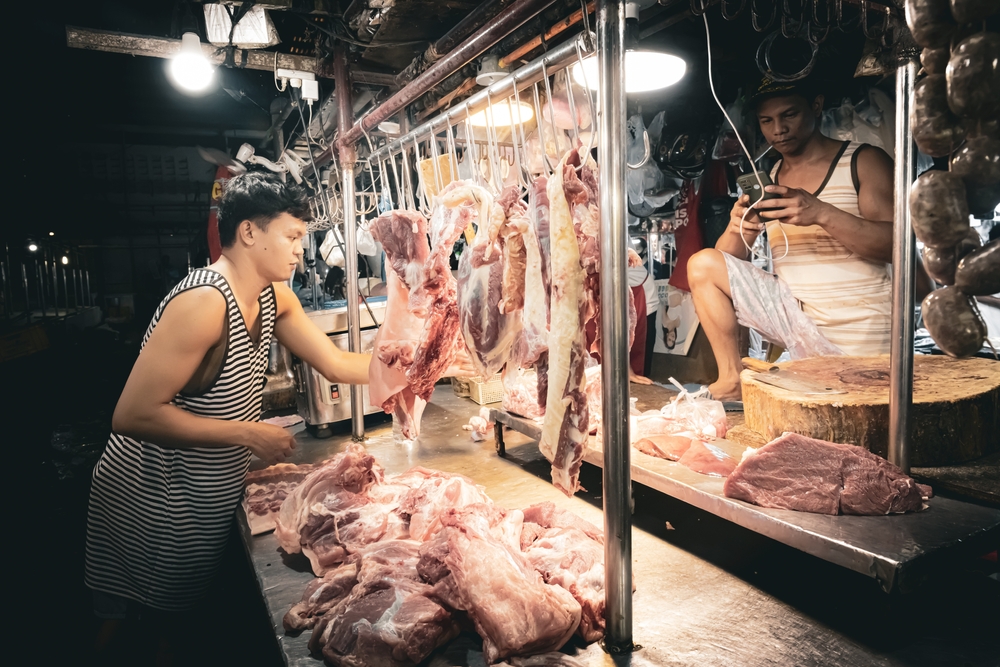
The DA is also stepping up enforcement against improperly handled imported meat in wet markets. Tiu Laurel said the National Meat Inspection Service (NMIS) of the Bureau of Animal Industry has been conducting inspections for nearly a month, particularly checking vendors required to keep imported meat in freezers.
He said the inspections had already uncovered meat that failed to meet NMIS standards.
The department is meanwhile monitoring meat prices ahead of the Christmas season, when demand typically rises. Tiu Laurel said some increase is expected but should remain limited.
“Higher demand means higher price,” he said, adding that a seasonal increase of around 1 percent to 3 percent would be preferable.
“Araw-araw, ’yun ang tinitingnan ko pagpasok ko sa opisina,” Tiu Laurel said, underscoring the DA’s effort to balance producer concerns over low hog prices with consumer concerns over food costs.