



KUALA LUMPUR, Malaysia (September 30, 2026)—The Philippines is pushing for a coordinated ASEAN approach to illicit tobacco trade, proposing that exporting countries require cigarette shipments to comply with the regulatory and tax requirements of their declared destination markets.
The proposal would extend regionally a safeguard already applied in the Philippines, where tobacco products manufactured domestically for export must meet the rules of the country to which they are shipped.
Japan Tobacco International (JTI) executives say reciprocal requirements could narrow loopholes exploited by criminal networks that move cigarettes through multiple manufacturing, transit and distribution points before reaching consumers.
“The Philippines is one of the only countries in Asia that has that rule,” said Shaiful Mahpar, director for Corporate Affairs and Communications at JTI Philippines. He argued that harmonizing similar requirements across ASEAN could create reciprocal protections against diversion.
With the Philippines holding the ASEAN chairship in 2026, JTI is urging Manila to place the issue on the regional agenda and build momentum for Singapore, which assumes the chair in 2027, to sustain.
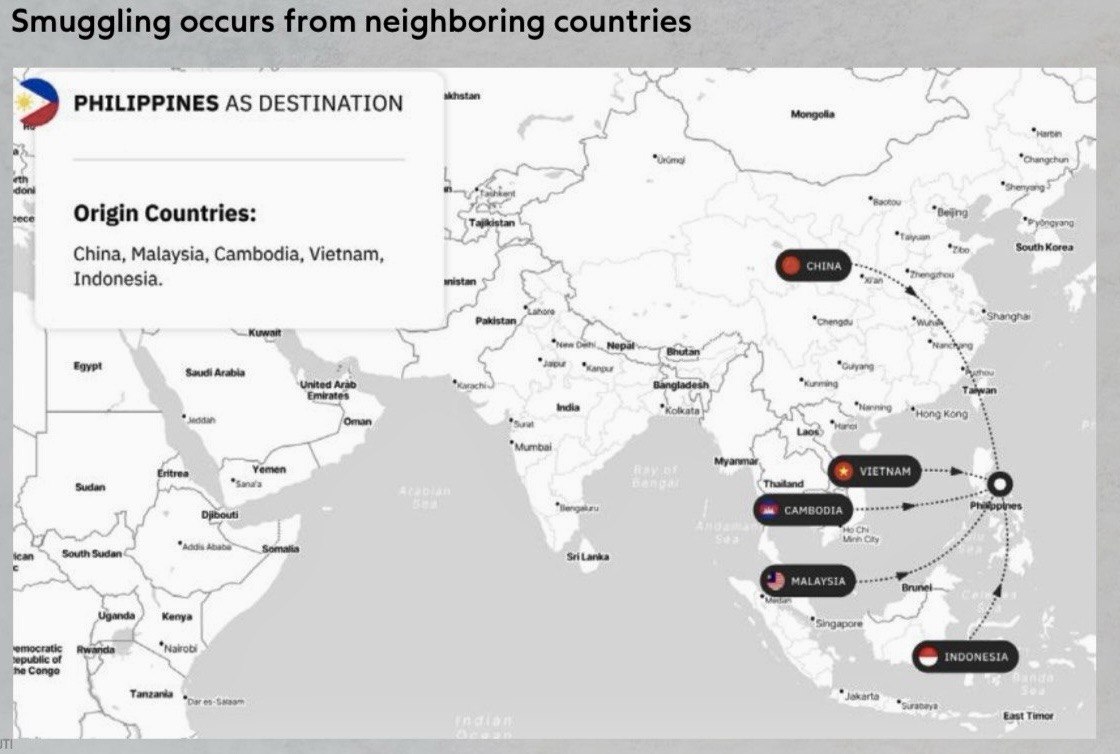
Valentin Dinca, JTI’s regional director for Anti-Illicit Trade Operations, said domestic enforcement alone is insufficient because illicit production, transshipment and distribution can span several jurisdictions. He cited Vietnam, Cambodia, Indonesia, Malaysia and China among markets identified as source or transit points for products entering the Philippines, while shipments originating elsewhere can also move through regional hubs.
Dinca said destination-market compliance would not eliminate illicit trade, as criminal groups could adapt. However, he argued that harmonized export rules, combined with customs cooperation, cargo verification and faster intelligence sharing, could reduce vulnerabilities in regional supply chains.
The broader challenge, he said, is converting individual enforcement successes into sustained, coordinated ASEAN action.




