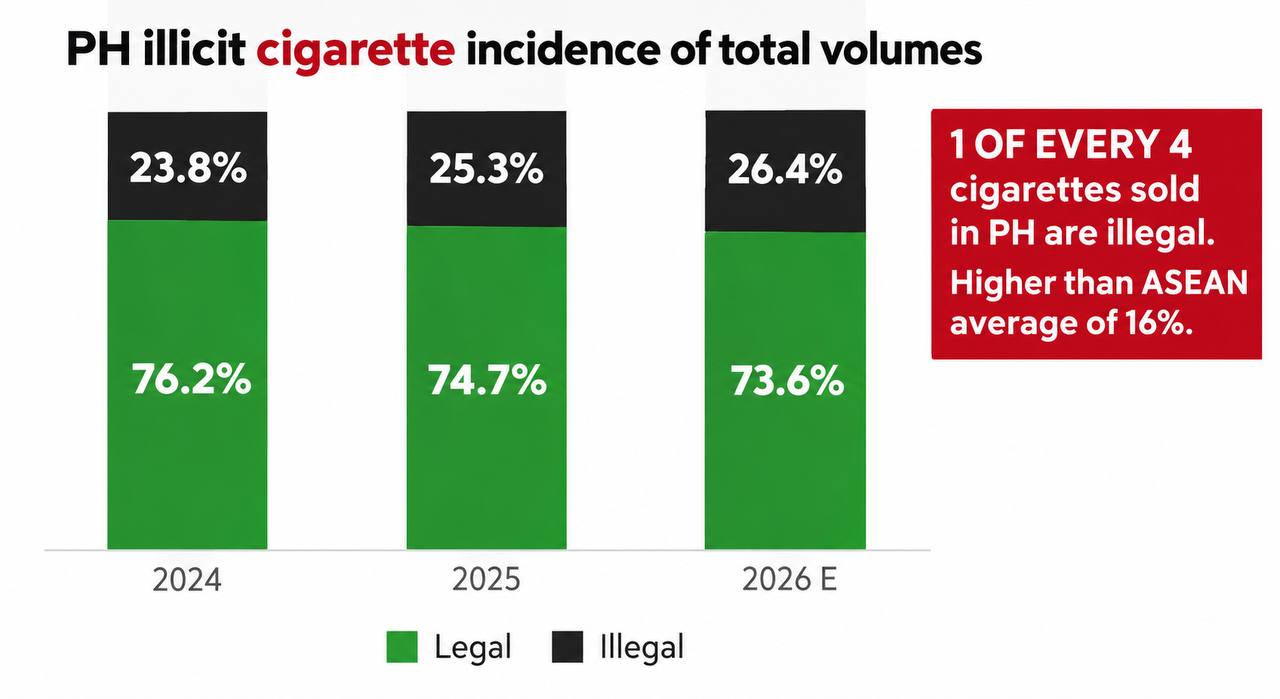
KUALA LUMPUR, Malaysia (October 1, 2026)—A proposed tobacco-specific anti-illicit trade law could give Philippine authorities additional tools to pursue smaller shipments and target the machinery, raw materials and distribution networks used in illegal cigarette production, industry representatives said.
House Bill 10288, authored by Rep. Rolando Valeriano, seeks to strengthen enforcement against the illegal importation, manufacture, possession, sale and distribution of tobacco products.
Shaiful Mahpar, JTI Philippines director for Corporate Affairs and Communications, said the existing Anti-Agricultural Economic Sabotage Act (AAES) is broad in scope but does not specifically address some mechanisms involved in illicit cigarette production.
“The AAES law is a general law,” Mahpar said, citing machinery, raw materials, tax stamps and other components that may require more targeted controls.
A tobacco-specific framework could allow authorities to intervene at multiple points in the illicit supply chain, rather than concentrating enforcement on finished cigarette products.
Valentin Dinca, JTI Anti-Illicit Trade Operations regional director, pointed to another potential gap involving the value threshold under existing legislation.
Smaller seizures can generate intelligence on suppliers, logistics networks and links to larger criminal operations, he said. If such cases fall outside the reach of existing legal provisions, investigators may have fewer options for pursuing those leads.
Mahpar said the current law applies to cases involving more than P10 million worth of products, leaving smaller-scale transactions with less coverage under the existing framework.
HB 10288 would also seek to strengthen case-building and coordination among the Bureau of Internal Revenue, Bureau of Customs, Philippine National Police and Department of Justice.
The proposed framework would broaden enforcement beyond finished products to the wider supply chain, potentially covering production equipment, importers, wholesalers and retailers.
Its practical impact, however, would depend on the bill’s final provisions, implementation and the capacity of agencies to coordinate investigations and build cases.
The proposal comes as authorities and industry groups seek ways to disrupt illicit cigarette operations earlier in the supply chain, including cases that may begin with relatively small shipments but provide leads to larger networks.