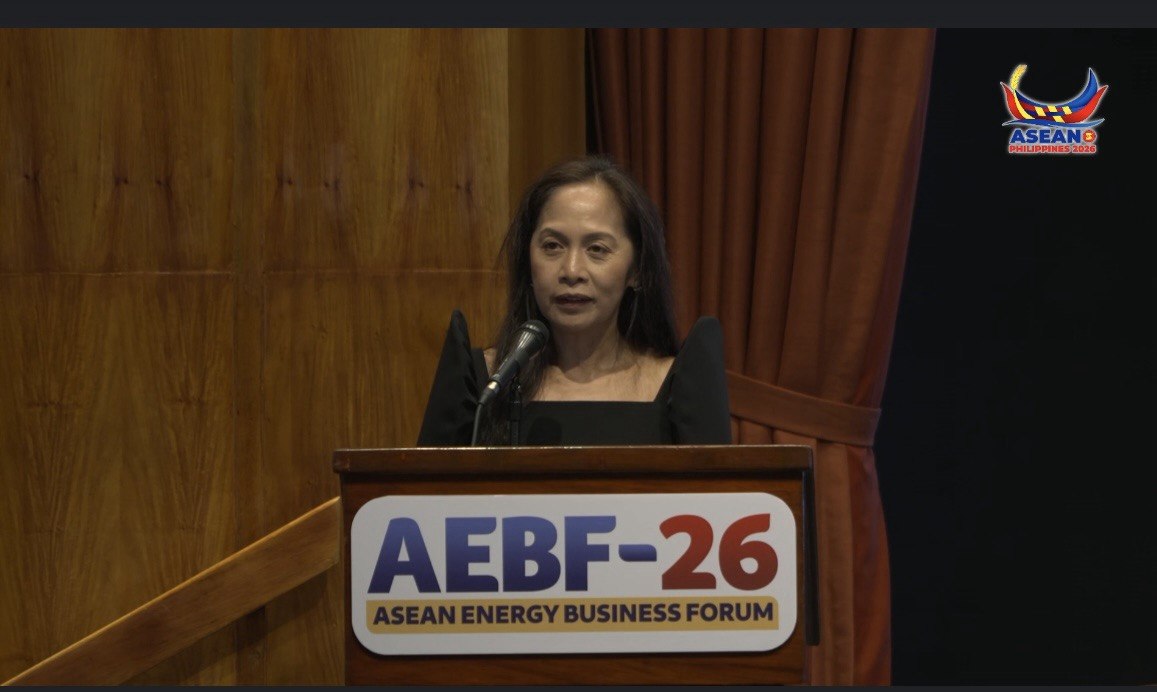
Energy transition within Southeast Asia must keep pace with economic growth while allowing member states to pursue different routes based on their resources and circumstances, Energy Secretary Sharon Garin said Tuesday, as countries within the Association of Southeast Asia Nation faces surging power demand and mounting pressure to decarbonize.
Speaking at the 2026 ASEAN Energy Business Forum in Manila, Garin said the region’s transition would need to balance emissions reduction with investment, innovation, energy security and resilience.
“As energy demand grows alongside our economies, ASEAN must ensure that the transition supports inclusive economic growth, attracts investment, harnesses innovation and emerging technologies, and strengthens the security and resilience of our energy systems,” Garin said.
Garin cautioned against a one-size-fits-all approach, noting that ASEAN economies differ widely in their energy resources, existing systems and socioeconomic conditions.
“There will be no single pathway for every country,” she said, while stressing that the region shares an interest in becoming “more connected, resilient, energy secure” and increasingly capable of meeting rising energy needs through cleaner sources.
“Our pathways may differ, but our progress will depend on how effectively we move together,” Garin added.
She also underscored the gap between regional ambitions and the capital needed to deliver the transition, saying policy commitments alone would not be enough to drive the shift.
Investment, innovation and partnerships will be critical to converting those ambitions into projects, she said.
The ASEAN Center for Energy estimates that the region will need about $200 billion in annual energy investment by 2030, including roughly $150 billion for clean energy.
Mobilizing that level of funding will require a pipeline of credible projects, supportive policies, effective risk-sharing mechanisms and investment frameworks that can channel capital to areas with the greatest need, Garin said.
The challenge for ASEAN, she suggested, is not to force economies onto a common timetable, but to build enough regional coordination to allow different national pathways to contribute to a shared energy security and sustainability agenda.