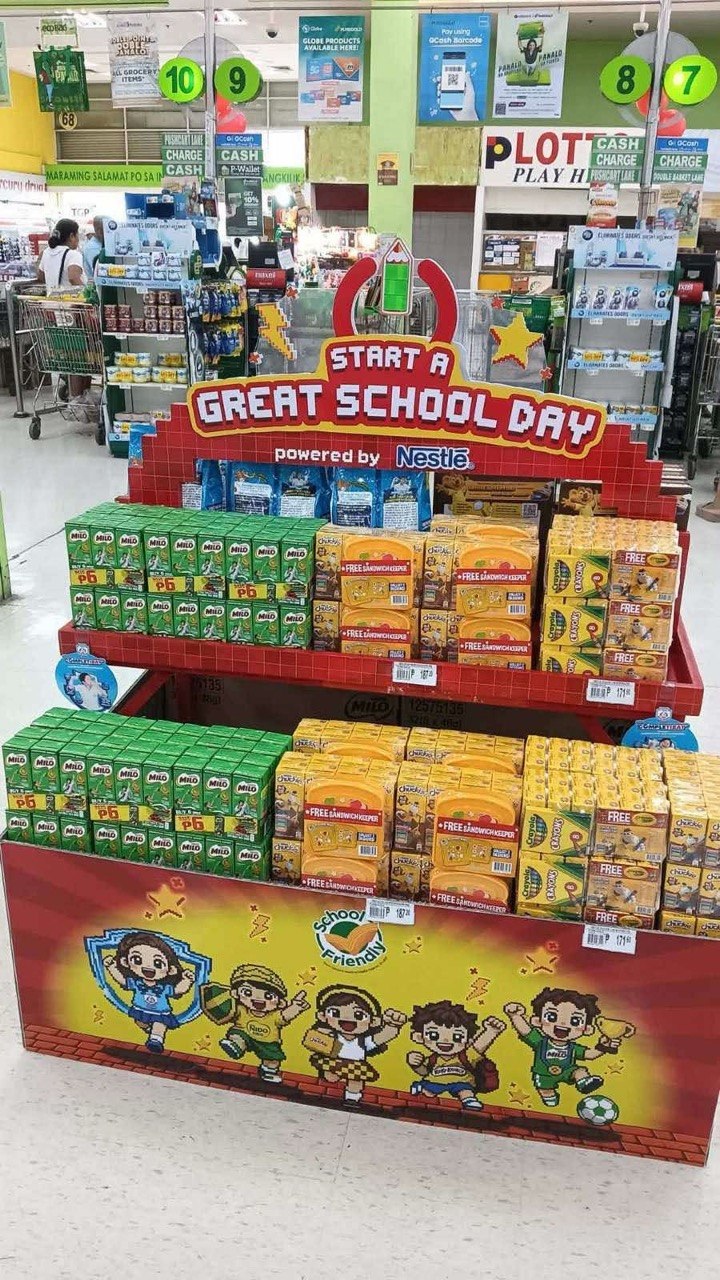
Nestlé Philippines and Puregold Price Club Inc. are giving millions of used plastic sachets a second life as retail display materials, putting circular-economy practices directly into supermarket aisles while cutting demand for virgin materials and reducing distribution trips.
The companies have repurposed 3.3 million recovered sachets into 525 pallet wraps for Nestlé’s back-to-school display shelves in Puregold stores.
The initiative also shifts Nestlé’s display materials away from original wood components toward lighter, Forest Stewardship Council-certified corrugated D-boards. A total of 244 merchandise display units made from the certified material have been deployed.
Beyond materials substitution, the pilot is designed to reduce the environmental cost of getting displays into stores. Nestlé consolidated delivery routes, cutting the number of trips and fuel consumption under the original deployment plan and, in turn, lowering the emissions footprint associated with distribution.
The effort illustrates how brands and retailers can move circular-economy initiatives beyond collection and recycling programs and into everyday commercial operations.
“Collaboration has always been central to our sustainability efforts, and we are glad that through this pilot project, we can bring our retail partners with us on the journey of Choosing Good,” Nestlé Philippines SVP and Head of Corporate Affairs Jose Uy III said.
For Puregold, the partnership positions retail stores as a practical link between companies seeking to improve packaging outcomes and consumers making purchasing decisions.
“Retailers can serve as a bridge between brands and consumers in promoting better waste management practices,” Puregold Senior Marketing Manager Ivy Zharisse Piedad said.
“We are proud to join hands with Nestlé in this as we support their circular economy goals and make more informed choices more accessible for everyone starting right in our aisles,” she added.
Nestlé Philippines said the project forms part of its net-zero roadmap and its commitment to collect and responsibly divert an equivalent volume of plastic to what it puts into the market through its packaging.
The pilot also underscores a broader business challenge: making packaging circular requires solutions that extend beyond waste recovery itself. By incorporating recovered materials into retail infrastructure and optimizing how those materials are transported, companies can address material use and logistics emissions within the same initiative.