


Cars have become remarkably good at worrying about us. They can warn when we are drifting out of a lane, tell us when another vehicle has entered our blind spot, apply the brakes when we fail to notice something ahead, and, in some cases, even keep themselves pointed in the right direction while traffic crawls along. It is an extraordinary development, particularly in a country where driving is akin to participating in a live-action negotiation with several hundred strangers. The problem is that the smarter the car becomes, the greater the temptation for us to become slightly less smart ourselves.
Modern driver-assistance systems are designed to help, not to replace the person behind the wheel. The difference sounds obvious until you watch someone staring at a phone while the car is doing most of the worrying. The technology is impressive. The assumption that it is infallible is not. This matters even more as advanced safety features become increasingly common in cars sold in the Philippines. What used to be the preserve of expensive luxury models is now finding its way into more affordable vehicles. Adaptive cruise control, automatic emergency braking, lane-keeping assistance, and blind-spot monitoring are no longer exotic features you demonstrate to your friends before complaining about how much the car costs. They are becoming part of normal motoring. Which is a good thing.
That said, technology also has a curious way of changing behavior. Give someone a parking sensor and, suddenly, the space behind the car becomes a suggestion rather than a physical object. Give someone a 360-degree camera and the rear-view mirror begins to look like an unnecessary piece of glass. Give someone lane assistance and there is a danger of forgetting that the steering wheel should still have a pair of hands attached to it.
Philippine roads make this a particularly interesting phenomenon. The systems are developed and tested against defined situations. Our roads, meanwhile, specialize in scenarios that seem to have been concocted five seconds ago. A motorcycle can appear between two lanes that don’t seem to have any space between them. And then another, and another, all in utter defiance of the laws of physics. A pedestrian can step off a curb while looking in the opposite direction. A jeepney can stop where there is no obvious reason to, except that someone wants to get off. The car can process a remarkable amount of information. It cannot process Filipino unpredictability quite as well as a Filipino driver who is actually paying attention.
This is not an argument against technology. Quite the opposite. The more safety systems we have, the better. If a car can prevent a collision because its driver looked away for half a second, that half-second may be the difference between an inconvenience and a tragedy. The danger is not that the technology works. The danger is that it works often enough to make us believe it will always work.
We would all do well to remember what these systems are really meant to do. They are a second pair of eyes. An extra set of reflexes. A safety net. They are not a substitute for judgment. The best feature in and of any car remains the person who notices the fool in an e-skate before the blind-spot warning does. The driver who slows down because a passerby wants to cross, or criss-cross, the road while posting on TikTok. The one who leaves enough space because the vehicle ahead has been braking suspiciously often.
And the last may be the most important. Because no computer, however sophisticated, has yet developed the uniquely Filipino ability to look at the vehicle three cars ahead of his, the tricycle beside it, the bike squeezing through the gap, and the dark clouds gathering over the horizon—and then prepare for something, anything, that can happen.
Sometimes, the smartest thing a car can do is help us. Always, the smartest thing we can do is simply pay attention. The technology is getting better.
We should try to keep up.
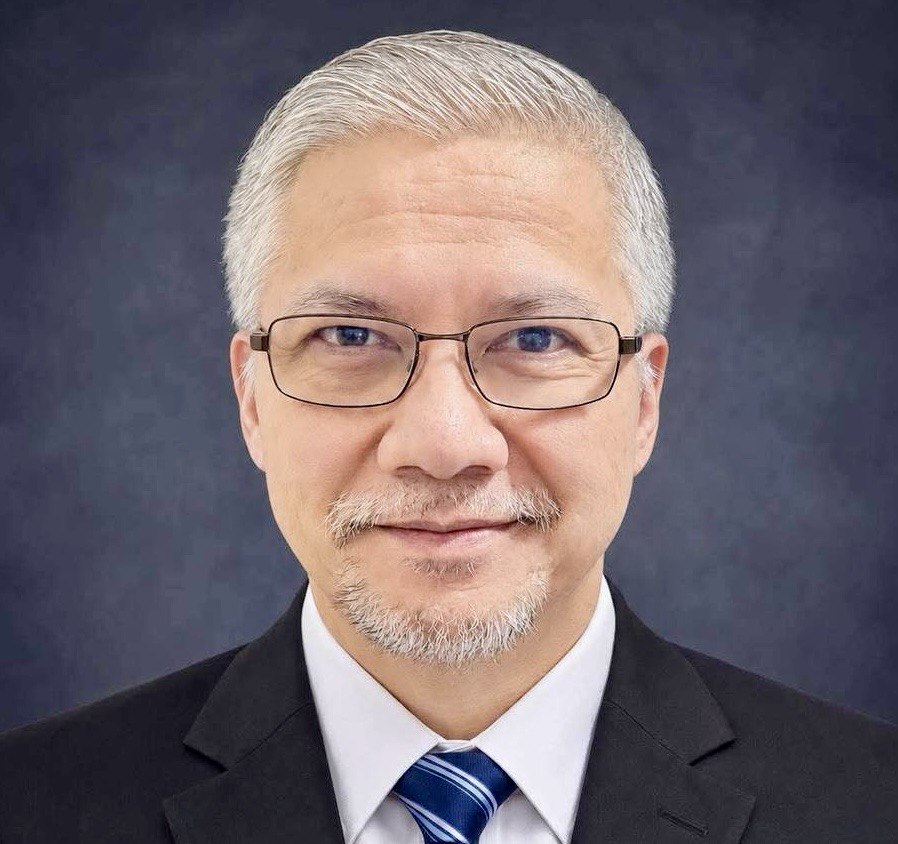
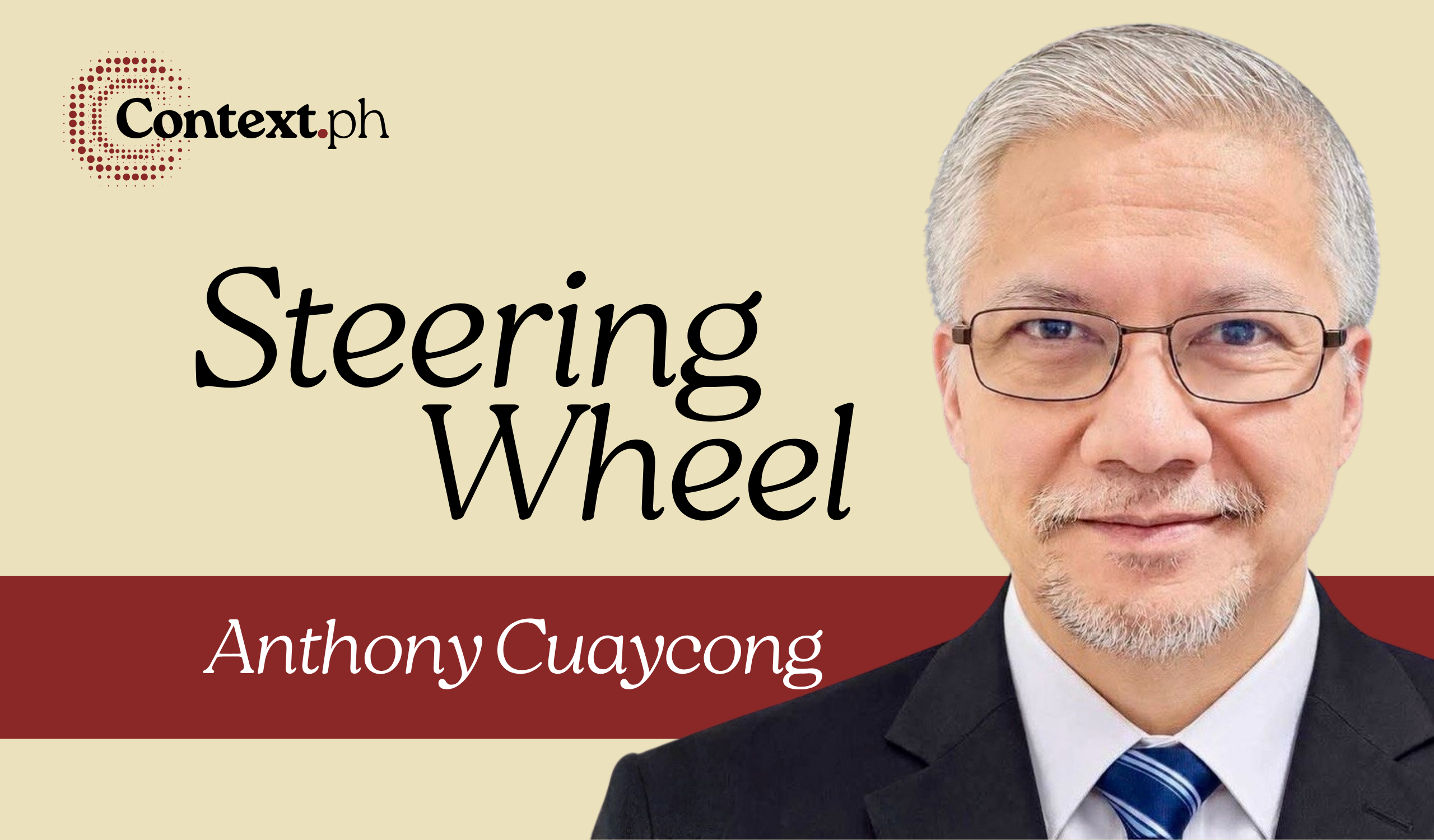
Steering Wheel is a commentary from Anthony Cuaycong, publisher of Context.ph and a longtime motorist who believes cars are meant to get us somewhere, although getting there is often the most complicated part. He follows cars, roads, traffic, technology, and the peculiar habits of people behind the wheel. His views are entirely his own, including the ones formed while looking for parking.



