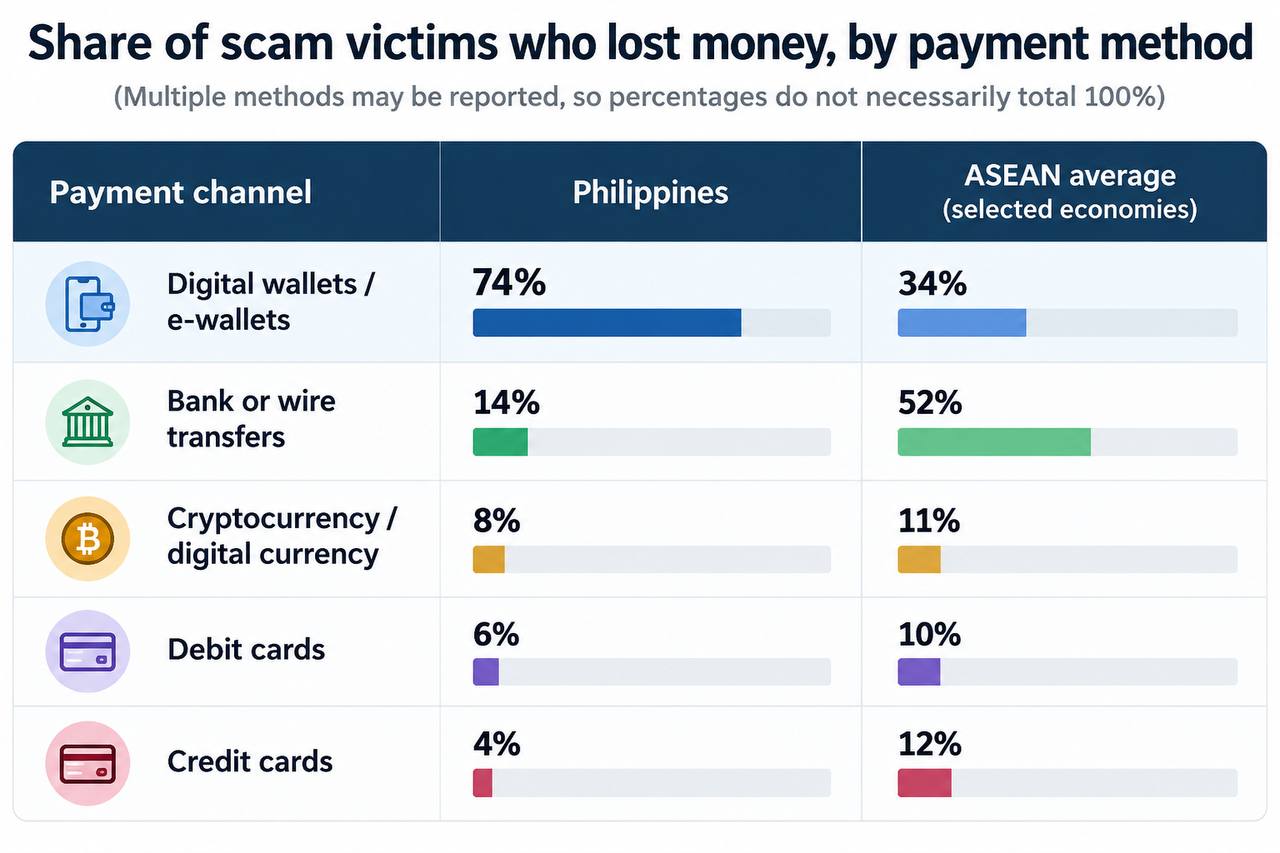
The Philippines recorded the region’s highest reported use of e-wallets for scam payments, with 74 percent of Filipino scam victims who lost money saying they paid through digital wallets, compared with a 34 percent ASEAN average, according to a report by the ASEAN+3 Macroeconomic Research Office (AMRO).
The findings, published in AMRO’s October 2026 report, Managing Digital Scam Risks in ASEAN+3: Regulatory Frameworks and Policy Responses, distinguish the Philippines from the broader regional pattern, where bank transfers remain the leading channel for scam-related losses.
Only 14 percent of Filipino respondents who lost money reported using bank or wire transfers, against 52 percent across the ASEAN economies surveyed. The figures point to the importance of e-wallet safeguards in the Philippines, but do not establish that digital wallets are the country’s most-used payment method overall or that they account for most scam incidents.
The findings come as the rapid adoption of digital payments raises questions about how effectively providers can detect suspicious transactions, protect consumers and recover stolen funds. Instant payments can allow fraudsters to move money across accounts before institutions have time to intervene.
Across selected ASEAN economies, 72 percent of victims reported scams to their payment providers, yet only 20 percent recovered money or had fraudulent payments blocked, highlighting a gap between reporting and effective redress.
The figures strengthen the case for faster fraud reporting, better information-sharing among financial institutions and mechanisms to freeze suspicious accounts promptly. Cross-border coordination is also critical when funds move through multiple institutions or jurisdictions.
AMRO warned that scam losses can extend beyond individual victims, straining household finances, dampening consumer spending and reducing working capital for micro, small and medium enterprises.
As digital financial services expand, the challenge for regulators and providers is to preserve their convenience while strengthening protections against fraud. More effective safeguards and regional cooperation will be essential to maintaining public confidence in digital payments.