There are few things in life that can transform a perfectly reasonable Filipino into an aggrieved Elizabethan actor quite as quickly as a traffic dispute. The most demure women become tigresses. Soft-spoken gentlemen discover that their vocal cords have capabilities they never knew existed. People who would ordinarily apologize when someone steps on their shoes suddenly develop an unshakable conviction that the entire road system has been personally entrusted to their care. And the language. My goodness, the language.
A minor disagreement over who has the right of way can unleash a vocabulary of dirty words so inventive that Shakespeare himself might have put down his quill and asked for a notebook. There are insults delivered with the precision of a prosecutor, hand gestures that require no translation, and the occasional performance that makes you wonder whether the driver has been rehearsing for this moment since childhood.
Road rage is real. Anyone who has driven regularly in Metro Manila knows it. The pertinent question is not why people get angry behind the wheel; it is how quickly otherwise ordinary people can become entirely different versions of themselves once they are seated inside a car.
Part of the explanation is that driving gives us a peculiar sense of righteousness. We believe we know the rules, we believe we are following them, and we believe that the other driver is either ignorant, inconsiderate, or deliberately trying to ruin our day. Once we have decided that we are right, it becomes surprisingly easy to summon the courage to stand our ground. We honk. We gesticulate. We refuse to yield. Sometimes, we even open the window to deliver a lecture on road etiquette to someone who has demonstrated absolutely no interest in attending one.
The car becomes a kind of mobile courtroom, and we appoint ourselves judge, jury, and executioner. The other driver is guilty, naturally. The evidence is obvious. The sentence is a sustained blast of the horn.
Of course, the other driver has a different version of events. He may have been trying to avoid a pothole, looking for an opening, or simply compounding a mistake. Perhaps he really was being selfish. But from the driver’s seat, we rarely entertain the possibility that there might be more than one interpretation of what just happened. We see the offense, pronounce judgment, and proceed directly to punishment.
This is how a moment of irritation becomes a contest of wills. Neither driver wants to concede because yielding is akin to admitting defeat. It no longer matters that the incident itself may have cost everyone only a few seconds. The issue has become personal. Somebody has been disrespected, and somebody else must answer for it.
The zarzuela can be particularly impressive in our tropical heat. Imagine a man sitting comfortably in his air-conditioned car, windows up, enjoying the modest pleasures of modern motoring. Another driver cuts him off. The horn sounds. A hand emerges from the window, followed by an assortment of pantomimes that would not be apt in polite company. Then comes the grand finale: The seemingly aggrieved party opens his door, climbs out into the sweltering heat, and marches toward the other vehicle to prove his point in person.
This is an extraordinary development when you consider the circumstances. The driver seeking redress has voluntarily abandoned the one place on the road where he enjoys some protection from the heat. He is now standing on hot pavement, breathing exhaust fumes, and exposing himself to a confrontation with a stranger whose temperament he knows nothing about. All this to establish that he was right about a traffic maneuver that, by now, has probably been forgotten by everyone except the two people determined to settle it.
Meanwhile, the other driver may still be sitting in air-conditioned comfort, watching the approaching figure with an expression somewhere between amusement and disbelief.
The person who got out of the car has surrendered the practical advantages of his vehicle to win an argument that will clearly have no resolution.
There is a lesson here, although it is not the one either driver is prepared to learn. Being right and getting what you want are not necessarily the same thing. Even if the other driver was indisputably at fault, confronting him on the road does not make the traffic move faster, repair the damage, or restore the time you have lost. It merely introduces a new set of risks into an already unpleasant situation.
And, make no mistake, the risks are not theoretical. A road confrontation can escalate quickly, especially when both parties feel insulted and neither is willing to back down. What begins with a horn and a middle finger can end in a physical altercation, damaged property, or an encounter featuring a deadly weapon. No minor traffic dispute is worth gambling your safety, your livelihood, or your future on the assumption that the other person will eventually recognize your superior argument.
Of course, this is not tantamount to motorists simply accepting dangerous driving or allowing others to bully their way through traffic. There are legitimate reasons to use the horn, report reckless behavior, document an incident, or seek help when a driver threatens you. But there is a difference between protecting yourself and insisting on the last word. One serves a purpose. The other is often pride wearing the costume of principle.
Perhaps the most useful thing we can do is recognize the moment when our anger begins to take over. The first impulse is usually to respond immediately: Honk again, wave more emphatically, close the gap, or make sure the other driver knows exactly what we think of him. Yet the ability to refrain from doing any of these things is not weakness. It is a form of control, and one that matters considerably more than winning a roadside debate.
The next time someone cuts you off, consider the possibility that he is an inconsiderate driver, a distracted driver, or simply a driver having a bad day. You do not have to excuse the behavior. You only have to decide whether it deserves the rest of yours.
Take a breath. Keep your distance. Let the other driver go if doing so is safe. If the incident is serious, deal with it through the proper channels rather than turning the road into a boxing ring.
And, please, think twice before getting out of the car to make a point. The air-conditioning is working, the seat is comfortable, and there is probably somewhere you need to be. Besides, the person who insists on having the final word in traffic rarely gets the satisfaction he imagines. He gets hotter, angrier, and later for whatever comes next.
On Philippine roads, there are already enough things we cannot control. The least we can do is avoid becoming one of them.
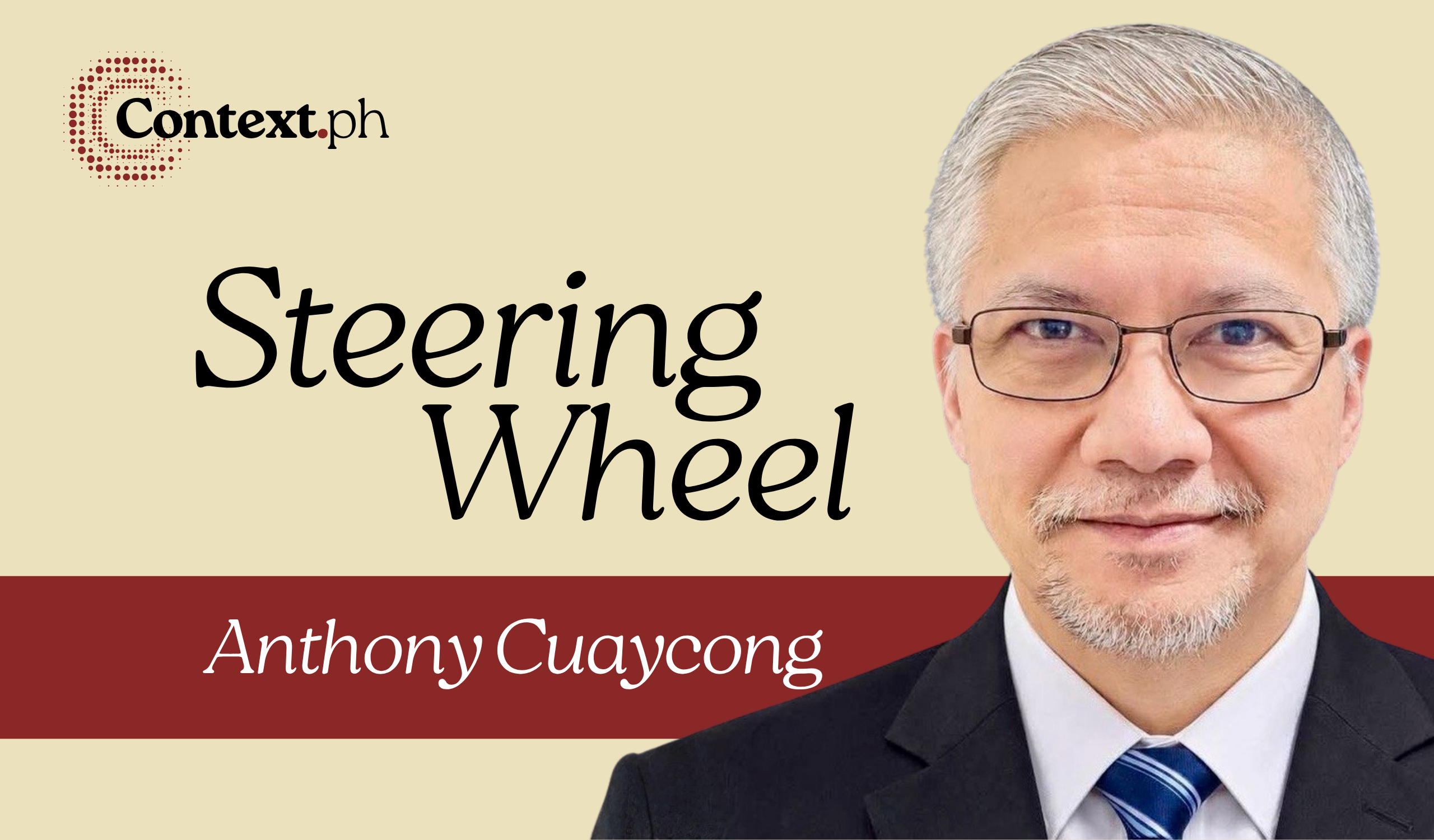
Steering Wheel is a commentary from Anthony Cuaycong, publisher of Context.ph and a longtime motorist who believes cars are meant to get us somewhere, although getting there is often the most complicated part. He follows cars, roads, traffic, technology, and the peculiar habits of people behind the wheel. His views are entirely his own, including the ones formed while looking for parking.