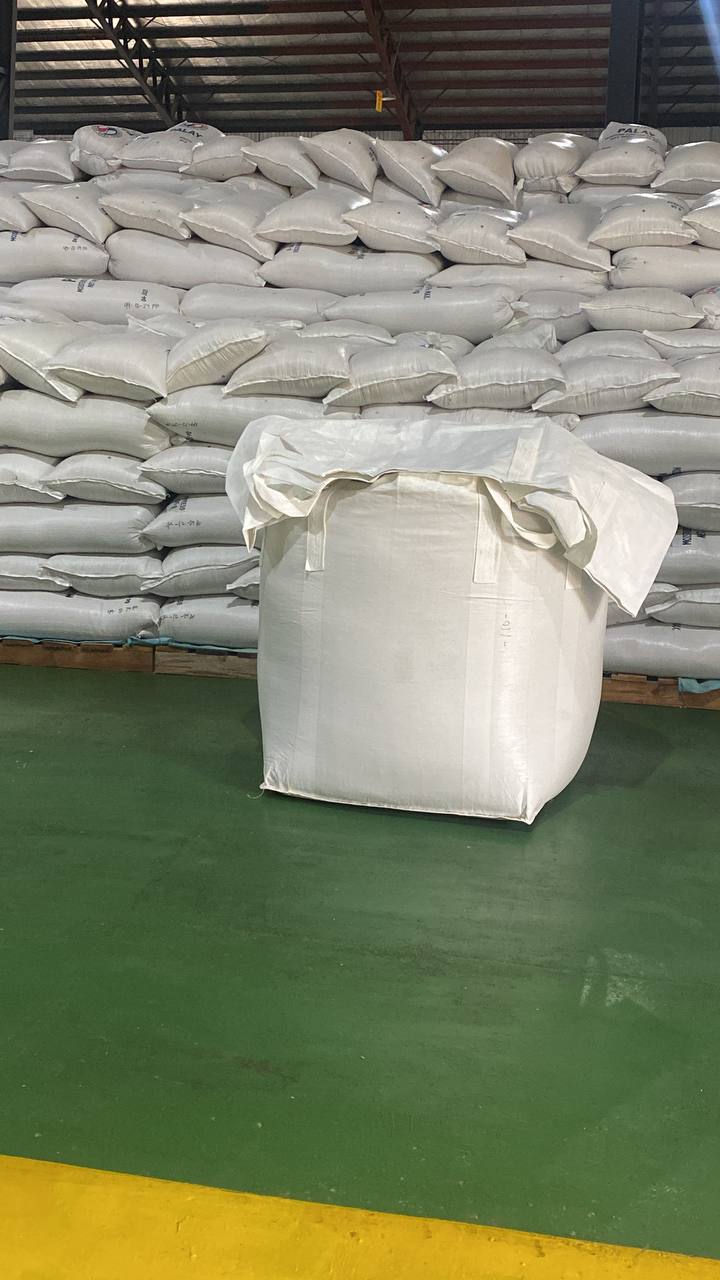
The National Food Authority (NFA) has substantially reduced palay handling time and costs in a pilot test of one-ton bags, replacing conventional 50-kilogram sacks in a system that could speed up grain procurement, maximize warehouse capacity, and free up funds for buying more palay.
“Our pilot test showed a 75 percent reduction in handling time and a 50 percent cut in handling costs. Work that used to take an hour can now be completed in just 15 minutes, while handling costs are halved. Using tonner bags also allows us to make better use of warehouse space,” NFA Administrator Larry R. Lacson said.
Agriculture Secretary Francisco P. Tiu Laurel Jr., who chairs the NFA Council, said the potential savings could ultimately benefit rice farmers by allowing the agency to stretch its procurement budget and buy more palay from local producers.
“For our rice farmers, this means we can potentially procure more palay with the same resources. If we can lower handling costs and use our warehouses more efficiently, more of the NFA’s resources can go toward buying palay at a fair market price from our farmers,” Tiu Laurel said.
Lacson inspected the system at the agency’s Triplex Warehouse in Davao del Sur on Thursday, October 29, to assess its performance and identify improvements in palay procurement and storage.
Launched on October 16, 2025, the pilot uses flexible intermediate bulk containers, commonly called tonner bags, in three NFA branches in Nueva Ecija, Occidental Mindoro, and Davao del Sur. The Davao del Sur trial covers receiving, weighing, handling, and stacking, but excludes milling and distribution.
Each bag holds one metric ton of palay and is made of woven polypropylene designed to resist moisture and dust. Reinforced lifting loops allow forklifts to move the bags, reducing manual lifting, sack sewing, and stacking.
“This is part of our efforts to ensure that our stocks are food-safe and to make NFA operations more efficient and modern,” Lacson said. He added that the agency aims to set warehousing standards that the private sector can emulate.
The pilot also found that moisture levels remained within safe limits and spillage was minimal during the observation period. Pest infestation ranged from light to moderate and remained manageable.
However, the trial identified operational gaps that must be addressed before wider adoption. These include standardizing fumigation procedures for bulk stacks, testing bag compression and structural strength to establish safe stacking limits, and developing pest-control protocols suited to bulk storage.
The NFA said it would continue monitoring the system and refining its procedures before considering broader implementation.
The initiative forms part of the agency’s modernization drive to improve palay procurement, reduce post-harvest losses, and strengthen management of rice buffer stocks for emergencies and other authorized government needs. While the initial results point to potential savings and more efficient warehouse use, further work on storage safety and pest control remains necessary before the system can be adopted more widely.